


5 Days a week from 8:30 am to 5:30 pm

Material Certificates and XRF Checks for Stainless Steel Grease Filter Orders

A stainless steel grease filter order should be verified against its agreed material specification through traceable documentation and, where necessary, suitable material-identification testing. For OEM purchasing managers and quality engineers, the difficult part is connecting a certificate for raw material to the finished frame, baffles, handles, and other components actually delivered. Stainless steel grades can appear similar after forming and finishing, while a certificate identifying the correct alloy does not prove that every part in a shipment came from the certified batch. Material certificates and X-ray fluorescence (XRF) testing provide different forms of evidence. A reliable purchasing procedure establishes the required grade, component coverage, traceability, and acceptance criteria before production begins.
What Should Purchasing Teams Verify on a Stainless Steel Material Certificate?
A material certificate is useful when its identity and contents can be connected to the material supplied for the order. Receiving a document that names the required grade is not sufficient if the buyer cannot determine which batch it describes.
The review should begin with the material requirement stated in the approved drawing and purchase order. The certificate is then checked against that requirement rather than used as a substitute for a clearly defined specification.
Material Grade and Certificate Identity
Depending on the agreed documentation requirements, the certificate may identify the material designation, applicable specification, producer, batch or heat reference, chemical composition, and relevant test results.
Purchasing teams should confirm that the material designation matches the order and that the reported information is consistent with the applicable material requirements.
A certificate does not establish the performance of the finished grease filter. Material identification, grease-removal performance, and equipment compatibility are separate acceptance questions and require their own supporting evidence where specified.
Traceability From Raw Material to Finished Components
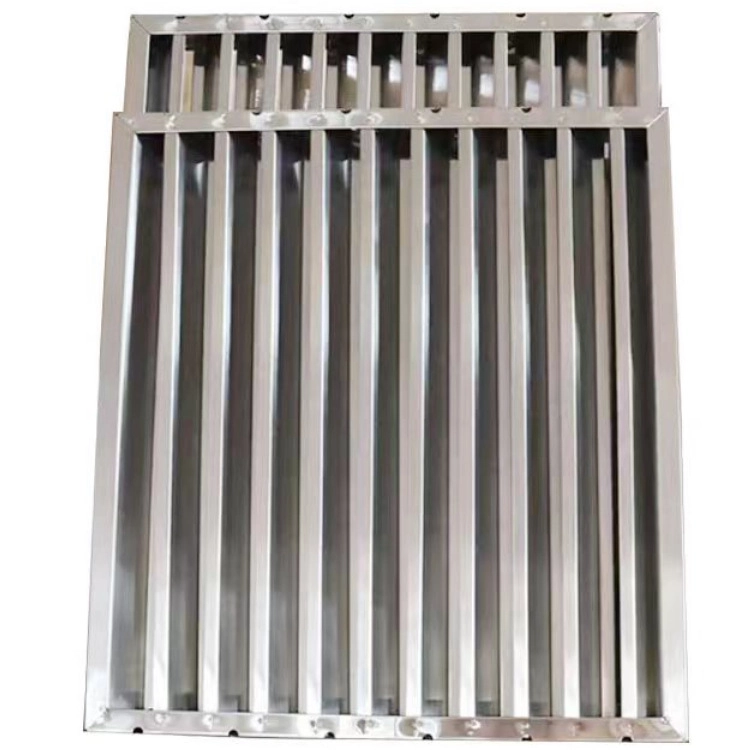
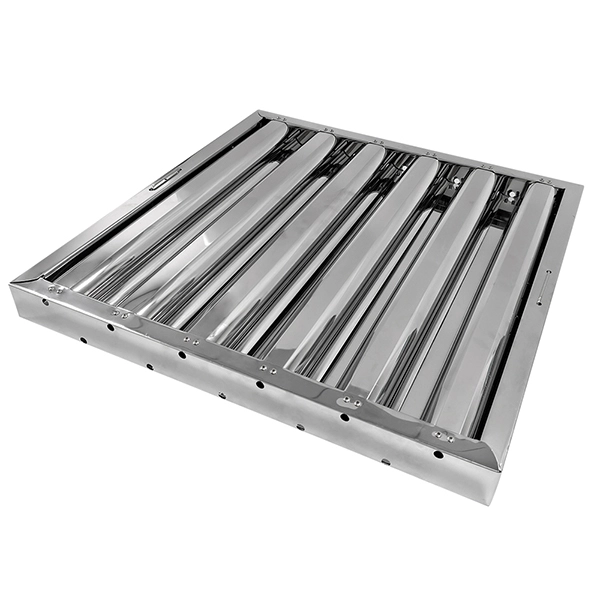
A fabricated filter may contain several metal components that do not all originate from the same material batch. Its frame, baffles, handle, and fixing elements should therefore be considered separately where the purchasing drawing specifies their materials.
If a certificate covers only the frame material, it should not automatically be presented as proof that the internal baffles use the same grade.
The supplier’s traceability arrangement should establish how raw-material references are maintained during forming, joining, finishing, and packing. Where different batches are combined, the records must be sufficiently clear to identify which components are covered by each certificate.
How Does XRF Testing Complement Material Certificates?
XRF can help identify certain alloying elements in a metal sample. It provides information about the material at the location tested, whereas a material certificate reports information associated with a particular material source or batch.
These forms of evidence answer related but different questions. Neither should automatically replace the other when the project requires both documentation and physical verification.
What an XRF Result Can Establish
When used appropriately by a qualified operator, an XRF instrument can provide elemental information that helps evaluate whether a tested component is consistent with the specified alloy.
The report should identify the component and measurement location. A result obtained from the outer frame does not establish the composition of every internal baffle or handle.
The instrument, calibration, surface condition, measurement geometry, and elements being evaluated all affect the interpretation of the result.
Buyers should therefore request a documented test procedure rather than relying only on an instrument’s automatic grade identification.
What XRF Cannot Prove
Conventional handheld XRF cannot reliably determine the carbon content of steel. It may therefore be insufficient to distinguish grades whose specification depends on a particular carbon limit.
A favorable result also does not prove that the finished component meets every requirement of the applicable material standard.
Surface contamination, coatings, and unsuitable test locations may complicate interpretation. Where the available method cannot establish the required grade, additional documentation or an appropriate laboratory method may be necessary.
Which Components Should Be Included in an XRF Inspection Plan?
The inspection scope should be determined by the actual purchasing requirement, not by an assumption that one measurement represents the complete filter.
Before testing, the buyer should identify which components require a specified stainless steel grade and whether substitutions are permitted.
For commercial kitchen grease filters , this distinction matters because the material requirements for the frame and internal components may be defined separately.
Component-Level Inspection References
| Inspection item | Information to define | Purchasing purpose |
| Material specification | Required grade and applicable standard | Establishes the acceptance reference |
| Component | Frame, baffle, handle, or other specified part | Identifies what must be verified |
| Batch reference | Material traceability information | Connects records with delivered goods |
| Test location | Defined surface on the specified component | Makes the result traceable |
| Test method | Instrument and applicable procedure | Establishes how evidence is obtained |
| Acceptance criteria | Agreed evaluation requirements | Prevents subjective decisions |
| Discrepancy procedure | Steps when records and results disagree | Supports controlled resolution |
The applicable numerical requirements should come from the material specification and agreed inspection procedure. A general purchasing article cannot establish acceptance limits for every stainless steel grade.
Sampling and Surface Preparation
The number of components to test should reflect the project’s quality requirements, supplier history, batch structure, and material risk. There is no universal sampling percentage suitable for every order.
Test locations should be accessible and appropriate for the selected method. Where surface condition could affect measurement, the inspection procedure should address preparation without unnecessarily damaging the finished component.
The inspection record should preserve the relationship between each result, the tested component, and the relevant shipment or batch reference.
What Should Happen When a Certificate and XRF Result Disagree?
A discrepancy needs investigation before the affected material is released. It does not automatically establish that every filter in the shipment uses the wrong material.
The first step is to determine whether the certificate and test result actually refer to the same component and material batch.
Separate Documentation Errors From Material Nonconformity
A supplier may attach the wrong certificate to an otherwise correctly identified shipment. Alternatively, the certificate may be accurate for one raw-material batch while some finished components originate from another batch.
These situations require different corrective actions.
The purchasing team should review certificate identity, batch records, component traceability, measurement conditions, and the applicable material specification.
Affected goods should remain controlled under the buyer’s quality procedure while the discrepancy is resolved.
Decide Whether Additional Verification Is Needed
If the available evidence cannot establish conformity, the buyer and supplier should agree on an appropriate additional method of verification.
This may involve further traceability records, additional component testing, or qualified laboratory analysis.
A new general supplier declaration should not automatically close a discrepancy that has not been explained. Similarly, one unexpected instrument reading should not be used to reject an entire shipment without considering the method and inspection scope.
The final decision should follow the acceptance procedure established for the order.
What Material Verification Requirements Belong in the RFQ?
The most effective time to establish material verification requirements is before the supplier purchases raw material or begins fabrication.
A request stating only “stainless steel grease filter” leaves the grade, component coverage, certificate requirements, and testing expectations open to interpretation.
For customized configurations, the OEM customization process provides a route for communicating drawings and project-specific requirements.
Define Documentation and Testing Separately
A complete RFQ should establish the material grade for each relevant component, applicable material requirements, certificate information, batch traceability, and any required physical verification.
Before approving the quotation, confirm that the supplier understands the following:
-
Required material grades are identified.
-
Components covered by each grade are defined.
-
Certificate requirements are agreed.
-
Batch traceability is established.
-
XRF testing is specified where required.
-
Test locations and sampling scope are defined.
-
Method limitations are understood.
-
Discrepancies have an agreed resolution procedure.
These requirements should remain connected to the controlled drawing and purchase order.
If a requested certificate or testing method is unavailable, that limitation should be disclosed during quotation rather than discovered when the goods arrive.
Professional Technical Support from Foshan Simple Technology Co., Ltd.
Foshan Simple Technology Co., Ltd. supplies commercial kitchen components for OEM manufacturers, distributors, and replacement-parts buyers, including grease filters, fryer baskets, adjustable legs, bullet feet, and range hood lights. Its grease-filter range includes stainless-steel constructions with different frames and internal baffle arrangements. The BH223 Stainless Steel Industrial Grease Baffle Filter provides a product-level reference when reviewing a particular configuration. For orders with defined alloy requirements, purchasing drawings should identify the required grade and the components covered by that requirement. Material certificates, batch traceability, and requested XRF verification should be confirmed as separate documentation and inspection requirements. Public product descriptions alone do not establish that a particular production batch has undergone XRF testing.
Conclusion
Material certificates and XRF testing provide complementary evidence in stainless steel grease-filter procurement. Certificates describe material associated with a documented source or batch, while XRF helps evaluate the elemental composition of a particular tested location within the limitations of the method. Buyers should define grade requirements, component coverage, traceability, inspection scope, and acceptance criteria before ordering. Where documentation and test results disagree, the affected material should be investigated through a controlled quality procedure. The resulting verification record provides a stronger basis for approving the shipment and maintaining consistency across future orders.
FAQs
1. Can one XRF reading prove that every part of a grease filter uses the specified stainless steel?
No. An XRF result applies to the tested location under the stated measurement conditions. A finished filter may contain components from different material batches, so the inspection plan must identify which parts require verification and how the results relate to them.
2. Is a material certificate sufficient to confirm the grade of a finished grease filter?
A certificate provides useful material evidence, but its relevance depends on traceability to the finished components. The buyer should confirm that the document covers the material actually used in the order rather than an unrelated batch of the same nominal grade.
3. Can handheld XRF distinguish every stainless steel grade?
No. Conventional handheld XRF has limitations, including its inability to reliably determine carbon content. Some material distinctions require additional documentation or another analytical method. Buyers should confirm that the selected technique can verify the particular grade requirements before using it for acceptance.
4. Should XRF testing be required for every stainless steel grease-filter shipment?
That depends on the project’s material requirements, supplier risk, batch traceability, and quality plan. There is no universal inspection frequency suitable for every order. The scope and acceptance procedure should be agreed before production or shipment.
5. What should buyers do when an XRF result conflicts with the supplied material certificate?
Identify the affected components, review certificate and batch references, and check the test method and measurement conditions. If the discrepancy remains unresolved, obtain appropriate additional evidence before deciding whether the shipment meets the agreed material specification.
