


5 أيام في الأسبوع من الساعة 8:30 صباحاً إلى الساعة 5:30 مساءً

430 vs 304 Stainless Steel Grease Filters: Which Material Should You Choose?
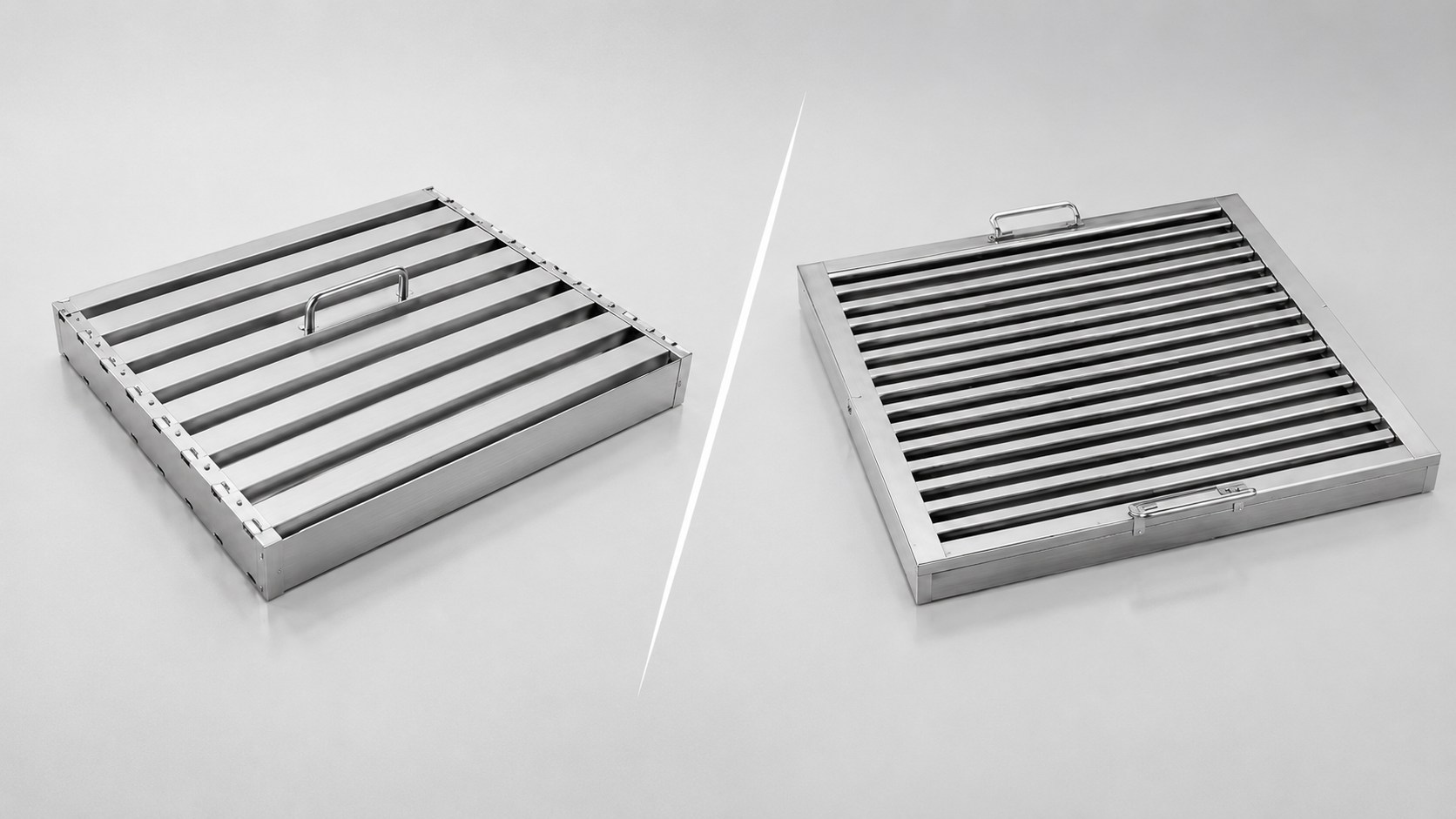
اختيار الحق Stainless Steel Grease Filters for your application as a restaurant operator, kitchen contractor, distributor or commercial equipment buyer is more than just comparing the cost of the different materials. A grease filter is a piece of equipment that has to fit into your kitchen hood, be easy to clean, withstand corrosion, remain rigid during use and support the fire safety of your kitchen. In order to make the right choice between 430 and 304 stainless steel, you first have to compare the different options for your specific kitchen environment and then choose the material that best fits your needs.
Why does stainless steel grade matter for commercial grease filters?
430 and 304 stainless steel can be used in commercial kitchen products. However, both are different materials, and the most suitable material is dependent on grease, moisture, cleaning products, heat, and frequency of replacement.
How are 430 and 304 stainless steel different?
Grade 304 is an austenitic stainless steel and Grade 430 is a ferritic stainless steel. Both are commonly used in food processing but note that their corrosion resistance is not equal. In terms of general corrosion resistance Grade 304 is greater than Grade 430 and Grade 316 greater than Grade 304. The British Stainless Steel Association provides more information on stainless steels used for food processing.
It is very important to note that grease filters get washed frequently. Therefore, the material used for making grease filters is subject to many influences of water, of alkaline cleaning agents, of food acids, of salt, and of heat. The sooner unsuitable material develops stains or starts to corrode the better.
Why does magnetism confuse buyers?
The use of a magnet by many buyers to determine if a stainless steel is of any value is generally a misnomer. 430 stainless steel is typically magnetic in nature due to it being a ferritic stainless steel. 304 stainless steel on the other hand is generally non-magnetic, however due to the process of forming and/or welding it can exhibit some level of magnetic response.
A magnetic filter is not automatically poor quality. It may simply be 430 stainless steel. The better question is whether the grade fits the kitchen’s cleaning schedule, humidity, budget, and expected service life.
When should buyers choose 430 stainless steel grease filters?
430 Stainless Steel is another economical grade that is suitable for a moderate kitchen environment as long as filters are regularly cleaned and never subjected to severe corrosion.
What are the practical advantages of 430?
430 stainless steel material has the least cost of all of the stainless steels due to lower nickel content than 304. The material delivers a clean stainless steel look for buyers that need a cost effective commercial grease filter.
A medium duty product such as 430 can be offered to distributors as a potential alternative for new replacement work and price competitive projects, eg. medium size kitchens, normal cooking, cleaning and maintenance procedures.
What are the limitations of 430?
The trade-off is corrosion resistance. In humid kitchens, coastal areas, or operations using strong cleaning chemicals, 430 may stain or rust faster than 304. Buyers should also check frame rigidity, baffle design, handle strength, and edge finishing instead of judging only by steel grade.
For applications requiring longer service life under very harsh washing conditions, 304 may provide value to the buyer above the initial cost of material.
When is 304 stainless steel a better choice?
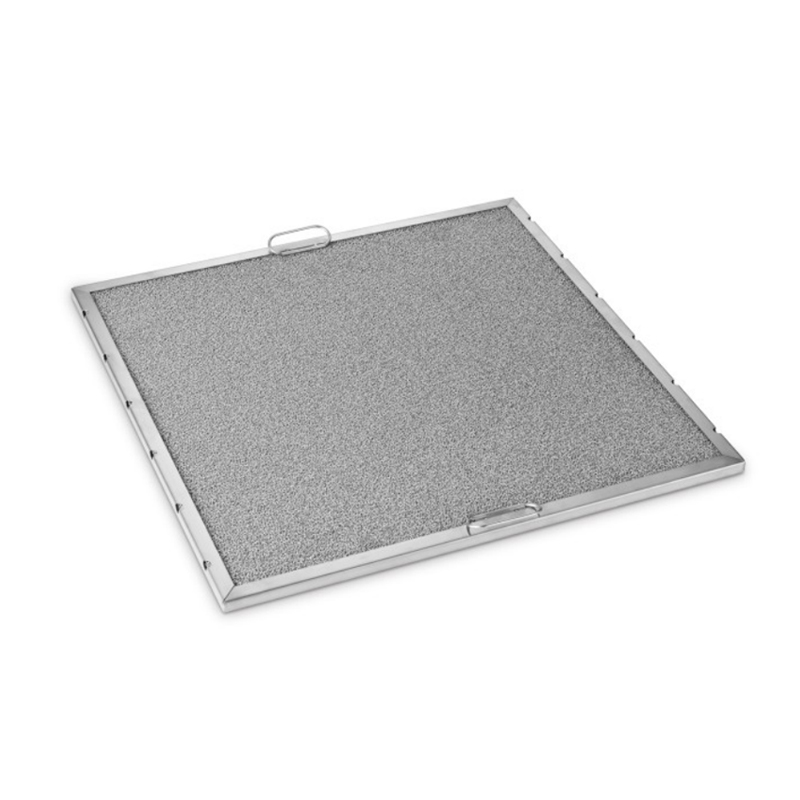
304 stainless steel is chosen by the buyer that requires stronger corrosion resistance, a cleaner looking finish over time and can better handle the demands of a busy commercial kitchen.
Which kitchens benefit most from 304?
304 stainless steel is often recommended for high volume restaurants, hotel kitchens, central kitchens, large catering operation, very humid or coastal environments. It is also recommended for filters that are frequently washed in dish tanks or subjected to stronger cleaning solutions.
304 has better corrosion resistance than 430, and so will reduce the pressure on replacement in particularly aggressive situations. However, the grease filters will still require regular cleaning, drying, and handling.
What should buyers check before paying more?
While a higher material grade does not excuse poor construction, the buyer should also look at the thickness of the walls, the angle of the baffles, the welds on the frame, the design of the handles, the path of water out of the unit and whether the filter actually fits inside the hood.
|
عامل |
430 stainless steel |
304 الفولاذ المقاوم للصدأ |
|
التكلفة |
أسفل |
أعلى |
|
Corrosion resistance |
معتدل |
Better |
|
Magnetism |
Usually magnetic |
Usually less magnetic |
|
Best use |
Standard kitchens, cost control |
Heavy-duty, humid, or frequent washing |
|
Buyer risk |
Staining if conditions are harsh |
Higher purchase cost |
What compliance and safety points should buyers verify?
Important note about Grease Filters. These are part of a Kitchen Ventilation System and should not be treated like some simple piece of sheet-metal and thus just judged by price. Fit, Rigidity, Cleaning access etc, and more importantly what are the listing requirements in the market you are buying for.
What standards may apply?
UL 1046 covers single-stage grease filters as well as multi-stage grease filters for installation in exhaust ducts. These grease filters are intended for use in conjunction with NFPA 96 as well as the International Mechanical Code. In markets where listed grease filters are required, the buyer must confirm whether a particular product, size or construction of grease filter meets a particular requirement.
Specifying the material grade of ‘stainless steel’ from a supplier is not the same as seeing the item listed on the supplier’s product list, nor is it the same as the listed item’s fire performance, or the local building codes that permit use of that item.
What documents should buyers request?
Documents that can be useful are: material specifications, product drawings, size tolerance, packaging details, for cleaning instructions supplier declarations. For a listing, test report or market specific approval a document is needed that matches the exact product that is ordered.
For replacement filters please double check Width, Height, Thickness, Handle Position, Airflow Direction and Hood or No Hood System when purchasing.
How should buyers compare lifecycle cost?
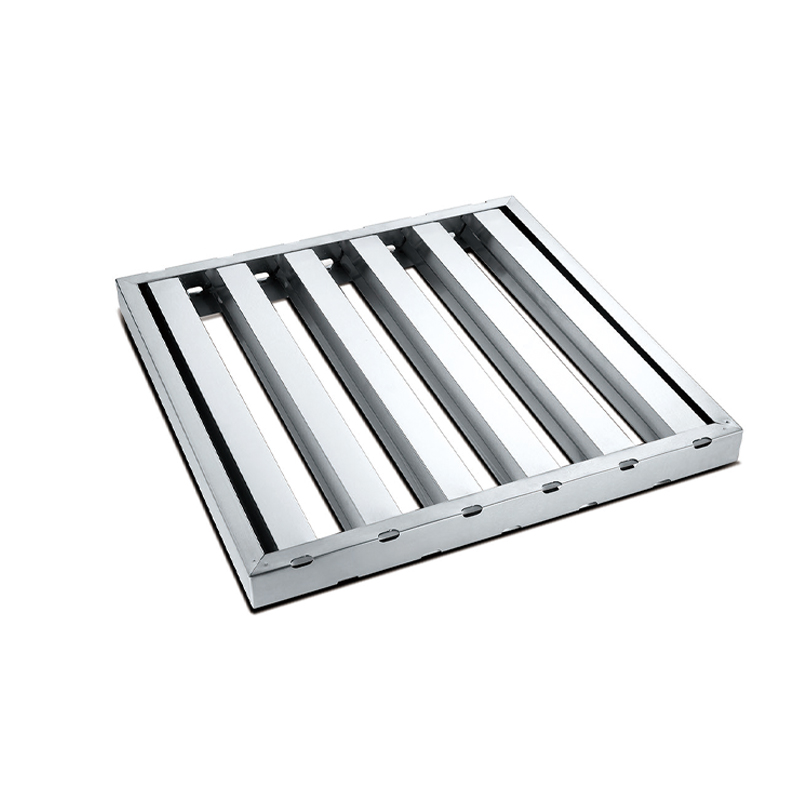
The cheapest filter is not necessarily the lowest cost option. Lifecycle cost includes the cost of the filter at purchase, the cost of the labor to clean the filter, the frequency at which the filter must be replaced, the frequency of freight damage due to poor filter fit, and the cost of downtime due to filter failure.
What should be tested during sample approval?
Some aspects to check during the sample review by the buyer are the welds, the frame, the baffle spacing, the surface finish, the drainage and sharp edges. The filter has to be easy to remove, wash, dry and to put back into place again.
Also check against hood opening. Even small discrepancies in dimensions can cause air to bypass, create rattling or cause installation delays.
How can buyers reduce replacement risk?
To mitigate potential risks when purchasing, common sizes should be standardized, a stock of replacement items should be held, goods should be packaged in a manner to protect corners and handles and the steel grade chosen based on the use in the kitchen.
304 may be worth the extra cost in very heavy use environments. 430 may be acceptable for normal commercial kitchens where there is reasonable cleaning regimen in place and lower cost is desired.
Who can support sourcing for stainless steel commercial grease filters?
شركة فوشان للتكنولوجيا البسيطة المحدودة is a China Manufacturer of Commercial Kitchen Equipment Parts & Accessories like Grease Filters, Adjustable Legs, Range Hood Bullet Feet, Frying Baskets & Range Hood Parts, Range Hood Lights, etc.. This Kitchen Equipment Parts Supplier also provides OEM/ODM services on the kitchen equipment parts & accessories for the ventilation, kitchen tools & kitchen utensils, etc.. This company supports the buyers who are comparing 430 Stainless Steel Grease Filters with 304 Stainless Steel Grease Filters by providing various commercial kitchen equipment parts & accessories produced by Simple Technology, such as kitchen ventilation accessories & kitchen equipment parts. However, before making decision on which supplier to choose, buyers should compare each supplier’s samples, specifications, commercial invoice, packing list, bill of landing, product prices, delivery terms, after sales services, etc..
استنتاج
430 and 304 stainless steel are both suitable commercial grease filters. The main difference between the two is price and the environment in which they are used. 430 is generally more cost effective and is used in moderate environments. 304 is more corrosion resistant and is used in environments where filters are washed frequently or in very humid environments. The filters are also used in applications where a long service life is required. When selecting grease filters by material grade, do not rely solely on the grade. Also check the filter construction, fit, documentation, packaging, etc. and other local requirements. The best grade of stainless steel for grease filters is the grade that can best perform in the kitchen’s operating environment and with the buyer’s maintenance regime.
الأسئلة الشائعة
1. Is 304 always better than 430 for grease filters?
No. Although 304 has better corrosion resistance than 430, 430 may be considered suitable for normal kitchen environment, taking into account cost combined with normal maintenance.
2. Why is 430 stainless steel magnetic?
430 ferritic stainless steel is magnetic. Being magnetic alone does not necessarily mean that a filter is of poor quality.
3. When should buyers choose 304 stainless steel grease filters?
304 Stainless Steel is ideal for use in humid kitchens, coastal homes, or in any area where cookware will receive frequent washing. It has a heavy-duty service life and is perfect for high usage. Also ideal for projects where you want the cookware to last longer.
4. What should buyers check besides stainless steel grade?
One checks the dimensions, the frame, the baffle, the handle, the edges, the drainage, the packaging and the documents.
5. Are material certificates enough for compliance?
A material certificate for stainless steel only confirms the stainless steel grade stated on the certificate. It does not confirm a product listing, fire-safety approval or local code compliance.
