


5 jours par semaine de 8h30 à 17h30

Commercial Fryer Basket Size Guide for Busy Kitchen Menus
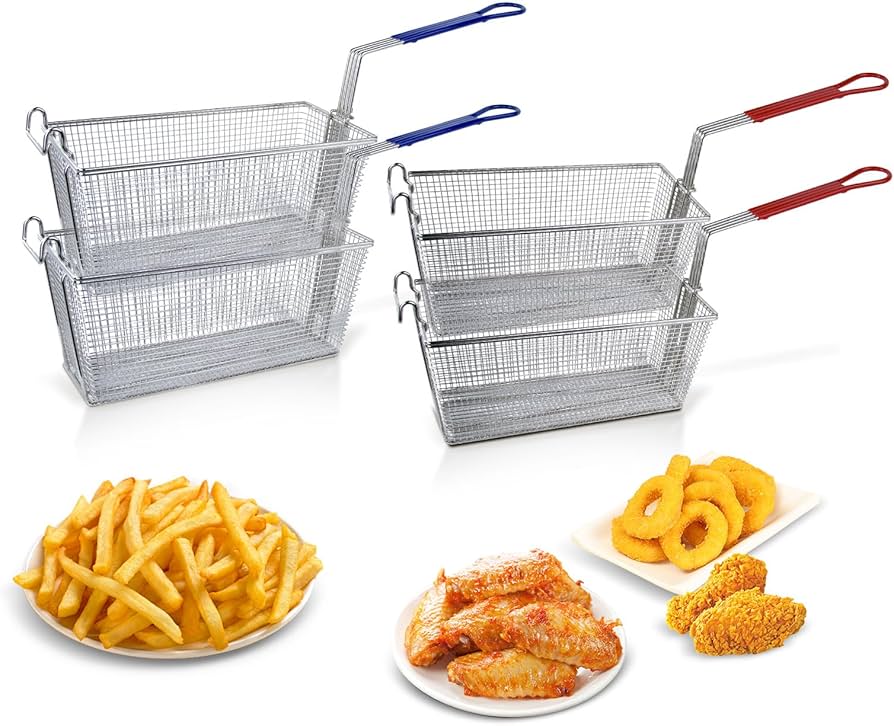 A commercial fryer basket does more than hold food in hot oil. In a busy fry station, basket size and shape affect batch output, drain time, product separation, crew safety, and food consistency. Many kitchens replace baskets only when the handle loosens or the mesh bends. That is usually too late. A basket that does not match the menu often leads to slow ticket times, uneven color, broken coatings, and wasted labor. How basket choice should follow menu mix, peak volume, and fryer layout instead of product photos alone.
This fryer basket size guide focuses only on commercial kitchen use. It covers fryer basket dimensions, round vs square fryer basket decisions, and the best fryer basket for fries, chicken, and seafood. It also addresses single basket vs double basket fryer setups, because basket selection is tied to production flow, not just fit. Foshan Simple Technology Co.Ltd products show that custom sizes and multiple basket styles are already part of its offering, which makes this topic especially relevant for buyers comparing standard replacement baskets with custom options.
Why fryer basket size and shape matter in commercial kitchens
Choosing basket size by habit causes problems during service. Leading guides in this space consistently start with output, menu items, and fryer vat fit. They also warn against overloading, because a larger load does not always produce more usable output if oil flow and safe handling are compromised.
A basket that is too small forces extra drops. A basket that is too large can crowd the vat, slow oil circulation, and make lifting harder during peak periods. In mixed-menu operations, the wrong basket shape can also reduce product separation and create flavor transfer issues when foods that should stay apart end up sharing the same fry zone.
Four ways basket choice affects daily output
Before getting into menu-specific advice, it helps to break the decision into four working factors.
-
Batch capacity: More food per drop only helps when oil can still circulate well.
-
Product movement: Shape affects how fries, chicken, or seafood sit and move during frying.
-
Drain speed: Mesh openness and basket depth change how fast food clears excess oil.
-
Staff handling: Heavy baskets slow down the line and raise the risk of strain or spills.
Start with the menu, not the basket catalog
Most high-ranking commercial fryer articles do one thing right: they begin with peak demand. The first question is not “What basket size is popular?” It is “What food hits the fryer during the busiest 30 to 60 minutes?” That approach works because fries, breaded chicken, seafood, and snack items do not place the same demands on basket depth, wire support, or drop frequency.
A menu with one main fried item usually has a simpler answer. A menu that rotates between fries, chicken tenders, fish, shrimp, and sides needs a more deliberate setup. Some kitchens perform better with twin baskets for one main product. Others need separate baskets or separate vats to keep flavors and cooking times under control.
Menu-first sizing table
| Menu focus | Basket priority | Typical shape choice | Main risk if basket is wrong |
|---|---|---|---|
| French fries | Fast drain, steady batch volume | Rectangular or twin baskets | Soggy texture, slow turnover |
| Fried chicken | Strength, depth, stable lifting | Deeper rectangular basket | Crowding, broken coating, heavy lifts |
| Seafood | Gentle support, separation | Smaller or dedicated basket | Breakage, flavor transfer |
| Mixed snacks | Flexibility, quick changeovers | Single or twin baskets | Bottlenecks during rush |
Best fryer basket for fries
Fries are usually the highest-frequency fried item in a commercial kitchen, so the best fryer basket for fries is often the one that can repeat clean, even cycles without overloading the vat. Industry guides commonly point to twin baskets for dedicated fries stations because they allow either two products at once or a steady flow of the same product in smaller, more controllable batches.
That matters for three reasons. First, fries need space for hot oil to move around the pile. Second, fast drain time affects final texture. Third, smaller repeated loads are often easier to manage than one overloaded bulk drop. A basket that looks efficient on paper can still produce pale, soggy fries if product packs too tightly.
What to look for in a fries basket
For fries-focused kitchens, buyers usually get better results when they check:
-
Medium-to-large usable volume without forcing a dense load
-
Rectangular geometry that matches common commercial vats
-
A handle design that allows fast lift, shake, and drain
-
Stainless steel construction for repeated high-heat use
-
Consistent weld quality for long service life
Best fryer basket for chicken
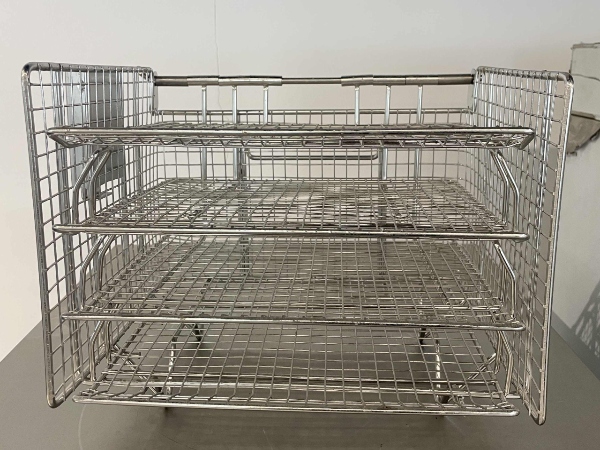
Chicken places different demands on a commercial fryer basket. It is heavier than fries, often cooks longer, and can damage weak mesh or poor welds over time. Chicken baskets need enough depth for portions to sit securely, but not so much that product stacks too tightly and blocks even frying. Commercial fryer guidance also notes that chicken may require dedicated vats or separate handling from seafood and vegetables to avoid flavor carryover.
A kitchen that sells high volumes of bone-in pieces, wings, or tenders should pay closer attention to lifting weight and structure. SPC Kitchen’s own product category includes larger-capacity frying baskets and double-handle options, which aligns with the needs of chicken-heavy operations that prioritize strength and control during lifting.
Signs a chicken basket is undersized
The basket may be wrong for the job when staff notice:
-
Product crowding and patchy browning
-
Batter loss from rough movement
-
Baskets getting too heavy to lift smoothly
-
Handles heating up too quickly during continuous use
-
Faster wear around weld points or frame edges
Best fryer basket for seafood and delicate foods
Seafood is where many kitchens make avoidable basket mistakes. Shrimp, fillets, and delicate breaded items need support, separation, and less aggressive handling. A large basket is not always the best answer. In many cases, a smaller or dedicated basket produces a cleaner result because it reduces breakage and helps keep products from tangling or sticking. Mixed-menu fryer guides often recommend separate fry capacity for seafood for both quality and flavor reasons.
This is also where fryer basket dimensions matter more than buyers expect. A basket that is too deep can slow retrieval and make delicate items harder to unload cleanly. A basket that is too wide may tempt staff to combine products that should be fried separately.
Round vs square fryer basket
Buyers often search round vs square fryer basket because shape seems like a simple design choice. In practice, the answer usually depends on fryer layout and product mix. Commercial buying guides list round, single, and double basket formats because each serves a distinct workflow.
For most standard commercial kitchen vats, square or rectangular baskets make better use of space. They usually fit the fryer opening more efficiently and support higher repeat volume. Round baskets still have uses, especially in certain fryer setups or for specific products, but they are generally less common in busy line cooking where square footprint and vat coverage matter. Simple’s fryer basket category also leans strongly toward rectangular commercial styles.
Quick shape comparison
| Basket shape | Best fit | Main advantage | Main limitation |
|---|---|---|---|
| Round basket | Select fryer setups, lighter or specialty use | Smooth movement in some applications | Less space efficiency in many vats |
| Square/rectangular basket | Standard commercial fryer lines | Better vat use and batch planning | Can be overloaded more easily if depth is ignored |
| Twin baskets | High-turn fries or mixed drops | Better flow and separation | Not ideal for very large heavy loads |
Single basket vs double basket fryer setups
The single basket vs double basket fryer question is really about workflow. Twin baskets are common because they allow simultaneous frying of two separate products or two smaller loads of the same item. That helps line cooks control pace and avoid oversized drops. This setup is often recommended for fries operations in particular.
Single larger baskets still make sense in some commercial kitchens, especially when one item dominates the menu or when product size makes twin loading awkward. The main point is that basket count does not automatically equal higher capacity. Several top-ranking fryer guides stress that the fryer vat, recovery performance, and separation needs matter just as much as basket count.
How to check fryer basket dimensions before buying
A replacement fryer basket should never be ordered by appearance alone. The right approach is to check fryer basket dimensions against the vat, the working batch size, and the menu’s heaviest product. Commercial fryer sizing guides repeatedly warn buyers not to choose equipment by width alone or assume that more basket space always means better output.
A practical check should include:
-
Basket top length and width
-
Basket depth
-
Handle length and angle
-
Hanging points or support tabs
-
Working clearance inside the vat
-
Target load per batch during peak service
Kitchens that run several fryer formats often benefit from custom fryer basket options rather than forcing a near match. SPC Kitchen highlights custom sizes within its fryer basket pages and product center, which is useful for operators that need non-standard dimensions or dedicated basket formats.
A brief note on Foshan Simple Technology Co., Ltd.
Foshan Simple Technology Co., Ltd. presents itself as a commercial kitchen accessories supplier with fryer baskets, grease filters, range hood lights, adjustable legs, and OEM/ODM support across its product center. Its company page states that it serves more than 100 countries and operates a 10,000 m² factory, with a foreign trade team and factory staff supporting export business. For buyers searching for a fryer basket supplier that can handle both regular replacement demand and custom basket requests, that mix of product range and manufacturing scale is relevant.
Conclusion
The right commercial fryer basket is not the largest one on the shelf and not the cheapest replacement that happens to fit the fryer opening. It is the basket that matches peak menu demand, product type, fryer layout, and daily handling needs. Fries usually perform best with repeatable smaller loads and strong drain performance. Chicken needs depth and frame strength. Seafood benefits from careful separation and cleaner unloading. When fryer basket size guide decisions are based on real service conditions, kitchens usually get faster output, steadier color, and fewer replacement problems.
Questions fréquentes
What size fryer basket is best for a commercial kitchen?
The best commercial fryer basket size depends on the menu, batch volume, and fryer vat dimensions. A fries-heavy station often works well with twin baskets, while heavier chicken programs may need a deeper, stronger basket with better lifting control.
Is a round or square fryer basket better?
For many commercial kitchens, a square or rectangular fryer basket is the better fit because it uses vat space more efficiently and supports repeat batch work. A round vs square fryer basket decision should still follow the fryer layout and product type.
What is the best fryer basket for fries?
The best fryer basket for fries usually supports quick drain time, manageable batch sizes, and steady oil circulation. Twin baskets are often preferred in fries stations because they help control output during rush periods.
When should a replacement fryer basket be ordered?
A replacement fryer basket is usually needed when the mesh bends, welds crack, the frame warps, or the handle becomes unsafe. SPC Kitchen’s own blog notes that many stainless steel fryer baskets in heavy commercial use last around 1 to 3 years, depending on volume and maintenance.
Can custom fryer basket dimensions help a busy kitchen?
Yes. Custom fryer basket dimensions can help when standard baskets do not match the vat correctly, when a kitchen needs dedicated baskets for specific products, or when safer handling is needed for high-volume loads. SPC Kitchen lists custom sizes in its fryer basket offering, which is useful for these cases.
