


5 giorni alla settimana dalle 8:30 alle 17:30

Why LED Hood Lights Flicker Even After Replacement
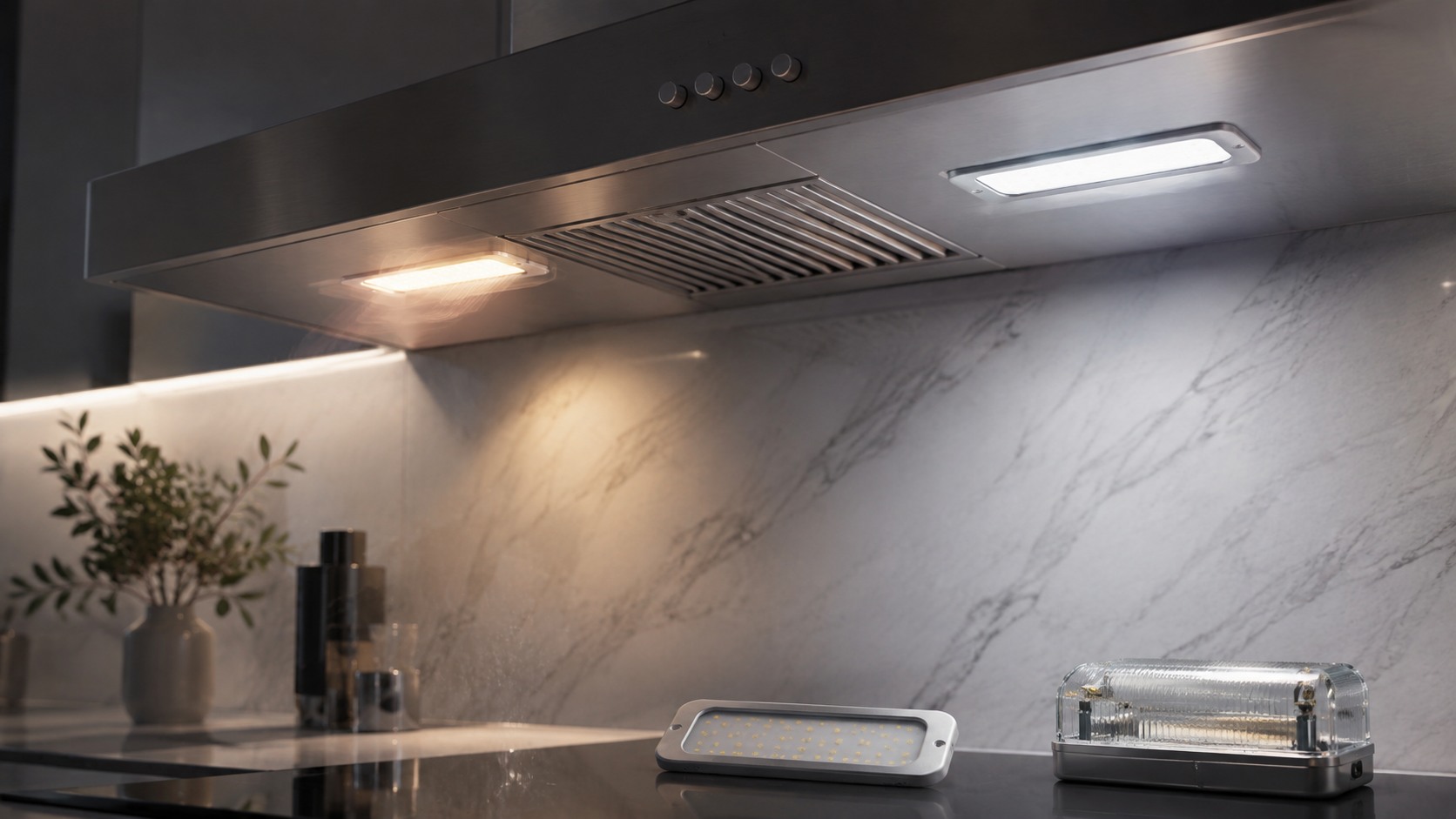
The replacement of a faulty flickering LED hood light is a sure solution to the problem. If the new light also flickers, there is a bigger issue than the lamp itself. The next step for restaurant maintenance crews, commercial hood manufacturers, kitchen contractors, and replacement-parts purchasers is to analyze compatibility, driver condition, connections, heat, and water damage before buying new LED lamps. The LED hood light replacement of parts without diagnosis leads to recurring service calls and extra expenditures on parts. One simple test can distinguish between a faulty lamp, fixture, or circuit.
What Should Buyers Check First When a New LED Hood Light Still Flickers?
The timing of the flicker usually gives the first useful clue.
If newly installed LED flickers from the get go, check the specs before concluding that the new installation is at fault. The most important specs are voltage, wattage, driver configuration, connector type, and if the original hood circuit was compatible with LEDs to begin with.
This is especially true if you had a commercial range hood which was previously using halogens and the old LED has now been replaced with a different technology.
Before ordering another unit, confirm:
-
Rated input voltage
-
AC or DC input requirement
-
Rated wattage
-
Integrated or separate LED driver
-
Connector or terminal type
-
Dimming compatibility, if applicable
-
Existing switch or control arrangement
One useful diagnostic pattern is to compare when the problem occurs.
If only one fixture is flickering, check that fixture and the connections. If multiple ones are flickering on the job site, check the shared supply circuit. If it flickers when another device is turned on, the cause might be a voltage drop or electrical interference.
This way, you can avoid changing multiple lights if the issue is in the shared supply circuit.
How Can the LED Driver and Electrical Supply Create Repeated Flickering?
Commercial LED lighting relies on electronic control components. An unstable driver or unsuitable supply can make a new LED appear faulty even when the light itself is functioning normally.
A driver has to deliver the electrical conditions required by the LED module. If the driver output is unstable, incorrectly matched, or affected by heat, the light may pulse or flicker.
For replacement projects, buyers should not compare products only by lamp diameter and wattage.
Ask the supplier:
-
What input voltage does the fixture require?
-
Is the driver integrated into the light?
-
If not, what driver specification is required?
-
Is the product intended as a direct replacement for halogen systems?
-
Does the fixture require a specific control or switching arrangement?
Voltage at the fixture should also be checked by qualified personnel when repeated failures occur.
A useful maintenance test is to compare a suspect light with a known stable circuit. If the LED operates normally elsewhere, the original hood circuit becomes the stronger suspect. If the flickering follows the light, the fixture or driver deserves closer inspection.
For commercial buyers sourcing replacement units in volume, electrical compatibility should therefore be written into the purchasing specification rather than assumed.
Why Do Heat, Steam, and Grease Cause Problems Even After the LED Is Replaced?
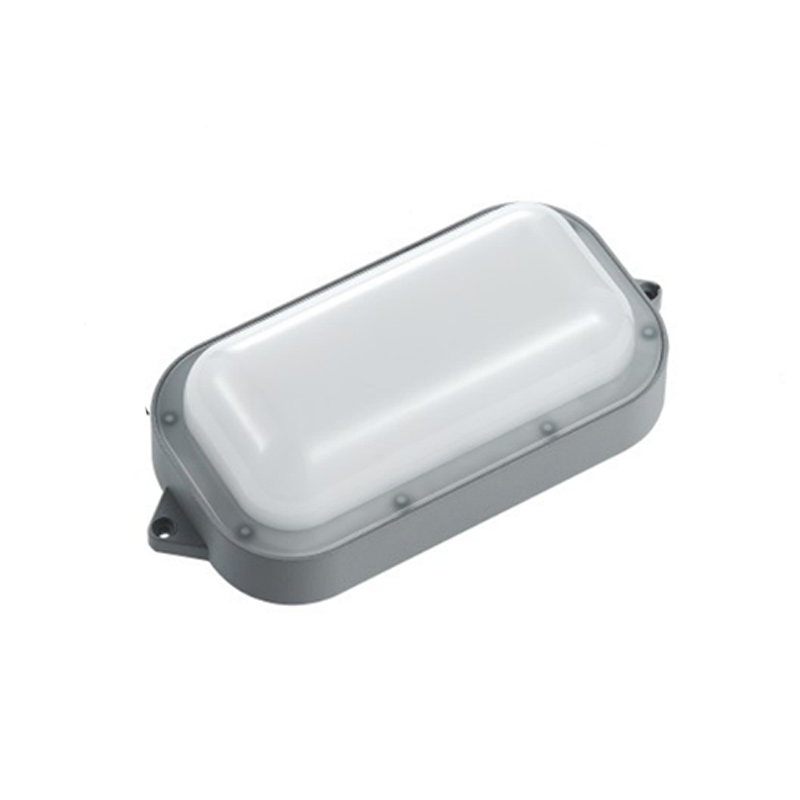
Commercial hood lights operate in an environment that ordinary indoor lighting does not experience.
Heat from cooking equipment can raise the temperature around the fixture. Steam and washdown introduce moisture. Grease can accumulate around covers, seals, and cable entry points.
If the previous light failed because the fixture environment was too severe, installing another identical light may only restart the same failure cycle.
Heat-related flickering often has a recognizable pattern: the light works normally when the kitchen is cold but becomes unstable after extended cooking.
When this happens, buyers should ask for the specified operating temperature range and check how heat is managed around the LED driver.
Moisture creates another pattern. If flickering appears after cleaning, inspect:
-
Cover condition
-
Gasket seating
-
Cable entry
-
Housing joints
-
Signs of condensation
-
Water around electrical terminals
An IP rating can be useful when specified, but buyers should not treat the number alone as proof that the installation is suitable. The complete fixture—including seals, cable entry, and mounting—has to maintain the intended protection once installed.
Grease buildup also matters because contaminated sealing surfaces may prevent covers or gaskets from seating correctly after maintenance.
What Specifications Should Commercial Hood Manufacturers and Distributors Compare Before Buying?
For OEM manufacturers and distributors, repeated LED hood light problems can become a warranty issue rather than a simple spare-parts issue.
A useful purchasing specification should include more than “commercial LED hood light.”
At minimum, compare:
| Specification | What to confirm |
|---|---|
| Input voltage | Matches hood electrical system |
| Wattage | Suitable for circuit and lighting requirement |
| Driver | Integrated or external |
| Mounting | Recessed, surface-mounted, or project-specific |
| Fixture dimensions | Matches opening and installation space |
| Cover material | Suitable for heat and cleaning conditions |
| Environmental protection | Appropriate for steam, grease, and washdown |
| Operating temperature | Suitable for hood location |
| Connector/cable | Compatible with existing assembly |
A sample should be checked on the actual hood whenever practical.
Do not stop after confirming that it turns on. Check mechanical fit, connector position, cable routing, clearance, cover seating, and whether the light remains stable after the hood reaches normal operating temperature.
For repeat orders, buyers should also ask how electrical components and drivers are controlled between production batches. A light that changes internally while keeping the same outside appearance can create replacement problems later.
What Should a Buyer Ask the Supplier Before Approving a Replacement Hood Light?
A short supplier checklist can prevent many repeat failures.
Ask:
-
Is this light a direct replacement for my existing electrical system?
-
What input voltage and driver arrangement does it use?
-
What operating temperature range is specified?
-
How is the fixture protected against steam and washdown?
-
Can you provide mounting dimensions or a drawing?
-
Is the cover replaceable?
-
Are electrical components consistent across repeat orders?
-
Can a sample be evaluated before bulk purchasing?
Buyers should also provide application information instead of sending only a photograph.
Useful information includes hood model, installation opening, existing lamp voltage, connector type, cooking environment, cleaning method, and whether the project is a new OEM installation or a retrofit.
That gives the supplier enough information to evaluate compatibility rather than simply matching appearance.
How Does Foshan Simple Technology Co., Ltd. Support Commercial Hood Light Projects?
Foshan semplice tecnologia Co., Ltd. supplies commercial kitchen components for equipment manufacturers, distributors, and replacement-parts buyers, including lighting used in commercial hood applications. For replacement and OEM projects, the company can work from practical details such as fixture dimensions, mounting method, electrical requirements, cover construction, and the environment around the cooking line. These details are particularly important when an LED light needs to replace an existing unit without changing the surrounding hood structure. Buyers evaluating commercial hood lights can use drawings, samples, and application information to confirm fit and electrical compatibility before moving to larger orders.
Conclusione
When the new LED hood light still blinks, you should not be in a hurry to buy another lamp. First of all, it is necessary to find out what exactly fails in the light: an LED, a driver, wiring, voltage, overheating, or humidity. As for the purchasing department, they need to take the existing light specifications and clarify the matching with potential suppliers. A sample test on the actual hood is far more useful than comparing appearance alone and can prevent repeat failures after bulk installation.
Domande frequenti
1. Why does a new LED hood light flicker immediately after installation?
The replacement may have an incompatible voltage, driver, connector, or control arrangement. Check the electrical specification and wiring before assuming the new LED is defective.
2. Why does my hood light flicker only when the kitchen becomes hot?
Heat may affect the LED driver, wiring, or electronic components. Check the fixture’s operating temperature range and whether the installation allows suitable heat dissipation.
3. Can cleaning cause LED hood light flickering?
Yes. Moisture entering through a damaged gasket, cover, cable entry, or housing joint can cause intermittent operation. Inspect the fixture if flickering appears after washdown or cleaning.
4. What should I send a supplier when buying replacement hood lights?
Provide voltage, wattage, mounting dimensions, fixture opening, connector type, driver arrangement, operating environment, and cleaning conditions. A sample or drawing can further reduce compatibility errors.
5. Should commercial buyers test a hood light sample before ordering in bulk?
Yes. A sample allows buyers to check fit, electrical compatibility, cable routing, sealing, and operation under actual hood conditions before committing to a larger order.
可能是 AI 生成
