


5 dagen per week van 8:30 tot 17:30 uur

How Fryer Basket Design Affects Oil Drainage and Food Texture
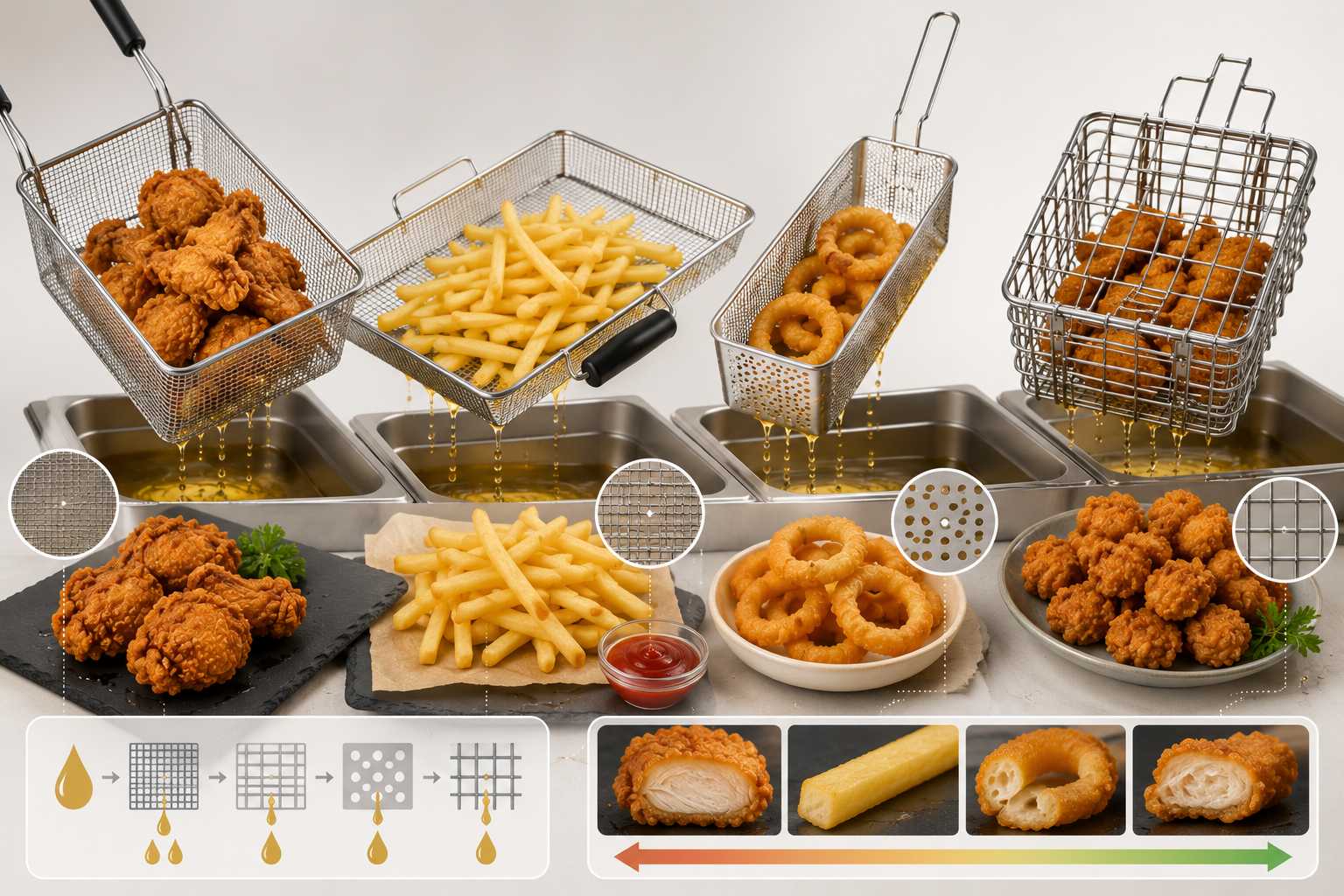
In commercial frying, texture depends on more than oil temperature and cooking time. The basket controls how oil reaches the food, how steam escapes, and how quickly surface oil drains after lifting. Wire spacing, basket depth, loading density, frame rigidity, and hook position can all change the result. For restaurant groups, equipment dealers, and kitchen project buyers, fryer basket design should be treated as part of the cooking process rather than a replaceable accessory selected by size alone.
How does fryer basket design control oil drainage?
Oil must circulate freely during cooking and leave the food promptly after the basket is raised. The basket’s open area and drain position shape both stages.
Why do wire spacing and basket depth matter?
Wider openings generally allow faster oil movement, but they must still retain the product. Small battered pieces can fall through an overly open pattern, while tight mesh can trap crumbs and slow drainage. Depth also matters because a tall, heavily loaded basket creates a thick food bed. Oil and steam then have farther to travel, increasing the chance of uneven cooking and greasy surfaces.
How does the drain hook affect the finished batch?
A stable hook should hold the basket above the vat at a practical angle so oil returns to the fryer without spilling food. If the hook is poorly positioned, the basket may tilt, sit too close to the oil, or require the operator to hold it manually. Handle balance and hook geometry therefore affect drainage time, safety, and repeatability during busy service.
Which basket features influence crispness and food texture?
Crispness develops when heat reaches the surface evenly and moisture can escape. A basket that restricts circulation or compresses the load interferes with both.
Why does overcrowding create soft or uneven food?
When food is packed too tightly, pieces touch, steam collects between them, and oil flow becomes restricted. The fryer may also recover temperature more slowly after loading. Some surfaces brown while others remain pale or soft. The useful basket capacity is therefore not the maximum volume it can hold, but the amount that can cook with adequate separation around the pieces.
How do shape and rigidity affect handling?
Straight or gently tapered walls can help with loading and discharge, while rounded corners reduce areas where crumbs accumulate. The frame should remain stable when the basket is shaken or lifted with a dense load. A warped frame may sit unevenly, change immersion depth, or push food to one side. Consistent geometry supports more predictable cooking from batch to batch.
How should buyers match a basket to the menu and fryer?
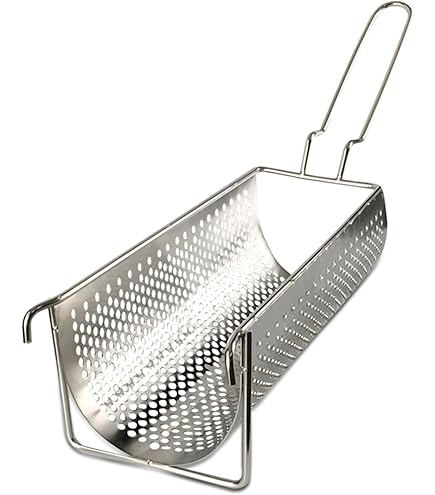
A basket can fit the fryer opening and still be unsuitable for the menu. Buyers should evaluate dimensions, food size, batch weight, and operator handling together.
Which dimensions must be confirmed?
Measure the basket body’s length, width, and depth, then confirm handle length, rim shape, hook location, and clearance around heating elements or neighboring baskets. The basket should immerse food to the intended depth without touching internal components. A handle that is too short exposes staff to heat, while an excessively long handle can obstruct the aisle or interfere with nearby equipment.
How should the menu influence wire pattern and strength?
Food items such as fries, chicken legs, battered seafood, small appetizers and noodles do not all need to be placed inside the same basket. Sensitive and smaller food products would need to be separated better, whereas bigger food items can be contained in a more loosely woven structure. Moreover, heavier food loads result in higher strain on the handles, welds and frames of the basket. Furthermore, customers should think about their employees’ frequency of shaking and tossing the food in the basket, since more movement brings more load.
What quality and maintenance issues should operators inspect?
Fryer baskets face hot oil, cleaning chemicals, repeated impacts, and constant lifting. Small defects can gradually change how the basket sits and drains.
Which defects can affect performance?
Bent frames, broken wires, cracked welds, loose handles, and distorted hooks can create uneven immersion or unstable draining. Sharp wire ends may damage food or create a handling hazard. Residue between wires also reduces open area and traps crumbs, so cleaning quality affects drainage as well as hygiene. Operators should inspect baskets after washing, when cracks and deformation are easier to see.
When should a basket be replaced?
A basket should be removed from service when structural damage cannot be corrected without leaving weak joints, rough surfaces, or unsuitable repair materials. Maintenance teams should keep approved drawings, dimensions, and part numbers on file. In multi-site operations, standardizing replacement models can prevent emergency purchases from introducing baskets that alter fryer fit, batch size, or cooking behavior.
How should procurement teams evaluate a fryer basket supplier?
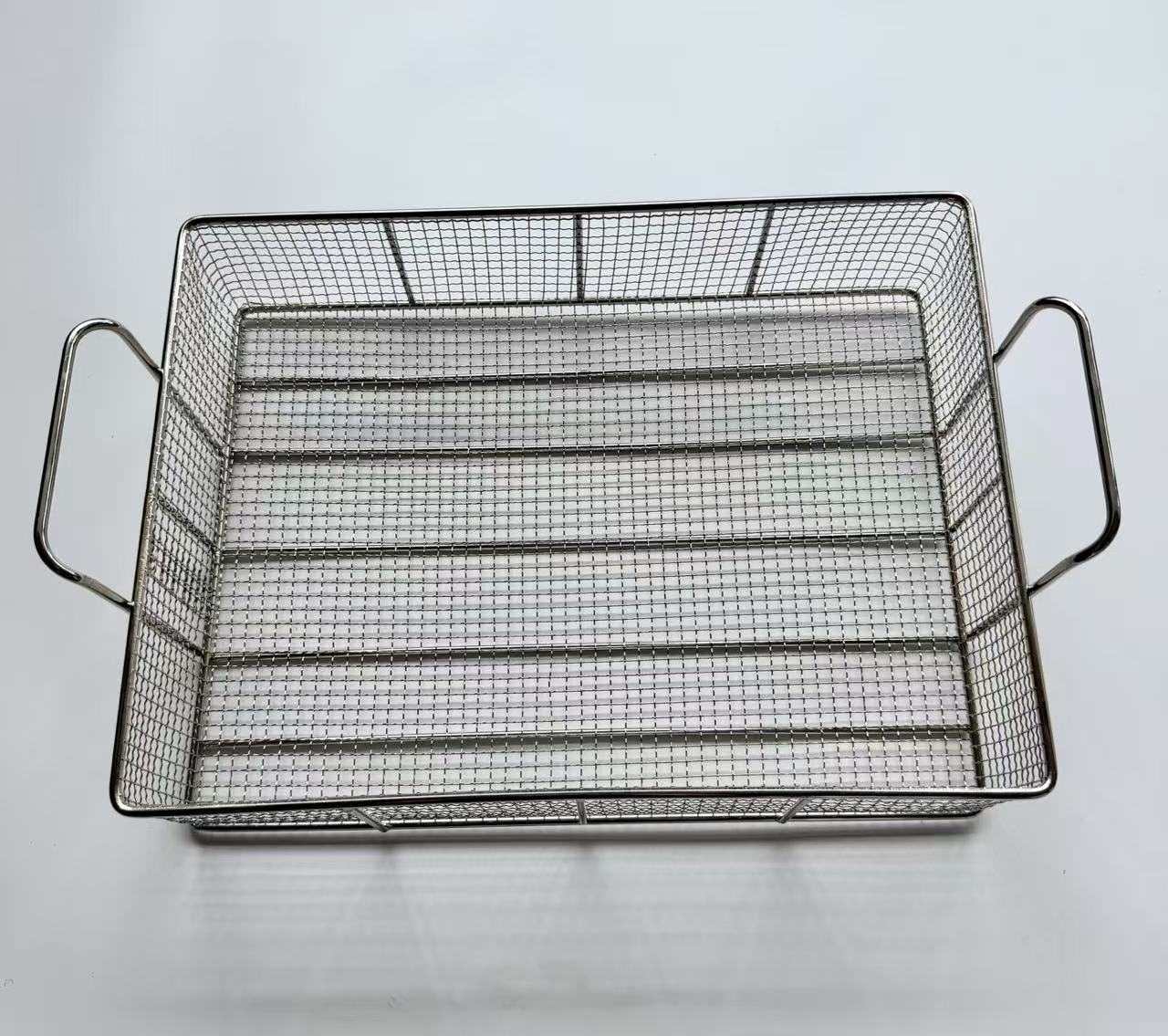
Price and external size are not enough for a reliable comparison. Material consistency, fabrication quality, sample fit, packaging, and repeat-order control all influence service life.
What should buyers check on a sample?
Test the sample in the actual fryer with a normal food load. Check immersion depth, clearance, handle balance, hook stability, drainage, and discharge. Wire spacing should be uniform, welds should be smooth, and the frame should not twist during normal handling. Material information should cover the body, handle, joints, and any grip or coating used on the product.
Which commercial controls reduce purchasing risk?
Confirm dimensional tolerances, minimum order quantity, lead time, customization options, packaging protection, and change-notification procedures. Baskets can bend during shipping, particularly when handles carry concentrated loads. Repeat orders should match the approved drawing and sample because a small change in hook position or handle angle may affect compatibility even when the main dimensions remain unchanged.
How can a commercial kitchen supplier support fryer basket projects?
Foshan Eenvoudige Technologie Co., Ltd. supplies commercial kitchen products for restaurants, distributors, and project buyers.Discussions about fryer baskets may include considerations over the fryer’s dimensions, wire spacing, frame strength, placement of handles, position of the drain hook, choice of materials, and compatibility with the appliance used. Before starting the sample process, buyers can provide a drawing of the fryer, specify food products to be fried, normal batch size, cleaning process, and packaging requirements. Sample checking would verify balance, depth of immersion, and drainage before actual production. Besides, suppliers can also assist in catering customizable requests, packing and delivery coordination, and specification checks. However, it is important for buyers to approve drawings, sample checks, requirements of inspection, and other commercial terms before repeat orders.
Conclusie
The structure of the fryer basket affects oil drainage, heat flow, food separation, and the quality of food observed upon service. The spacing of wires, depth, load distribution, and rigidity should match the frying device as well as the type of food cooked. Buyers must test the given samples under realistic cooking conditions instead of selecting them only according to their nominal size. Regular inspections for residue, deformity, damage, and instability help maintain uniformity and minimize mistakes.
Veelgestelde vragen
1. Does finer fryer basket design improve food texture?
Not always. Fine mesh retains small products but may restrict oil movement and trap crumbs. The suitable pattern depends on food size, coating, batch density, and cleaning needs.
2. Why do fries become soggy after frying?
Common causes include overloading, slow temperature recovery, insufficient draining, and food packed too tightly. Basket depth and open area can contribute to each of these conditions.
3. How should I measure a replacement fryer basket?
Measure body length, width, and depth, then confirm handle length, hook position, rim shape, and internal fryer clearance. A physical fit check is recommended before bulk ordering.
4. When should a commercial fryer basket be replaced?
Replace it when wires break, welds crack, handles loosen, or the frame becomes permanently distorted. These defects can affect safety, fit, drainage, and batch consistency.
5. Can one fryer basket handle every menu item?
Usually not. Small, delicate, heavy, or heavily battered foods may require different wire spacing, depth, or frame strength. Selection should follow the product and cooking method.
