


5 dagen per week van 8:30 tot 17:30 uur

Commercial Refrigerator Hinge Noise Testing: How to Set Acceptance Criteria Before OEM Production
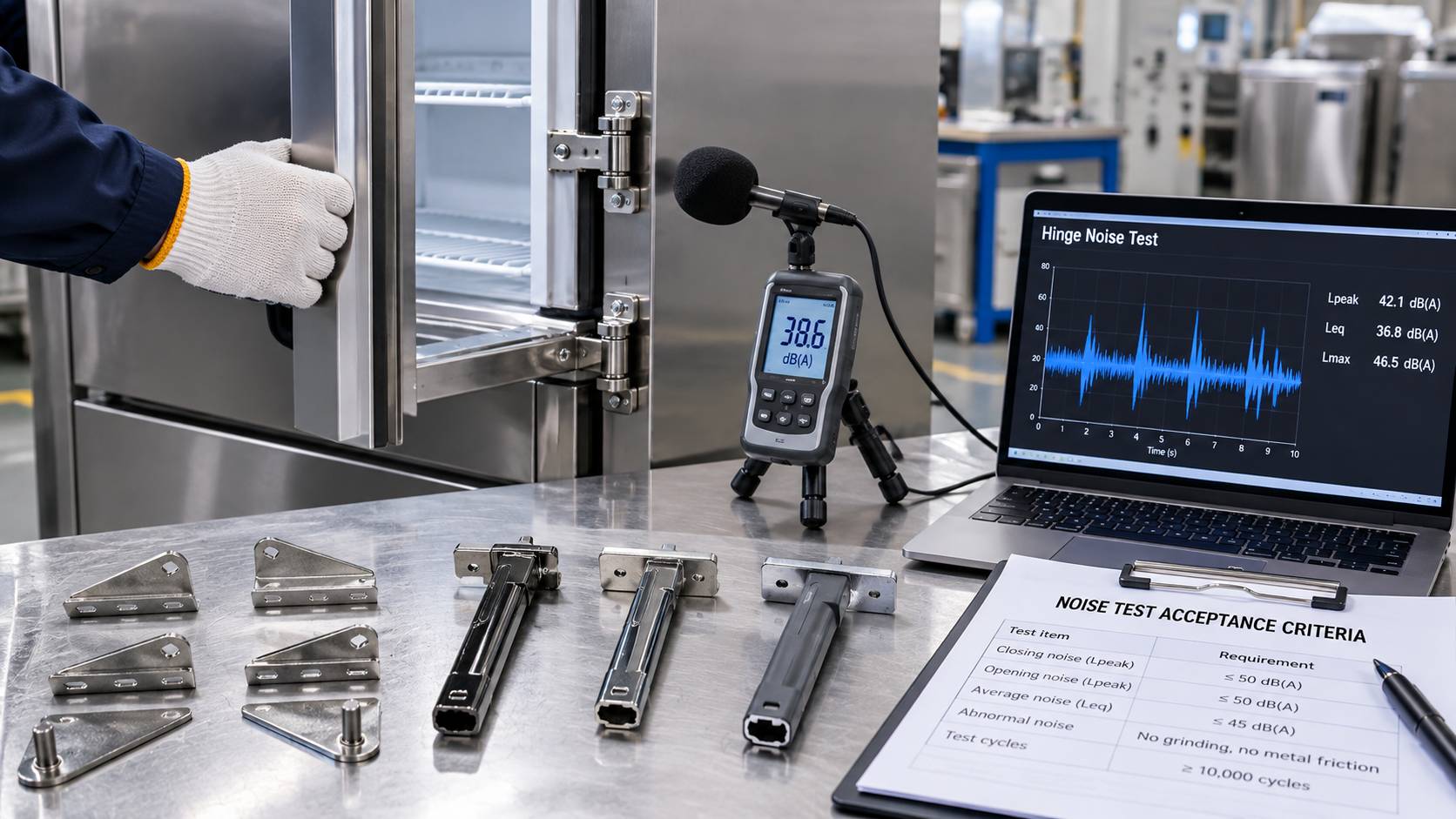
Commercial refrigerator hinge noise should be evaluated on a representative door assembly before bulk production begins. A hinge may move quietly when tested separately but produce clicking, scraping, or irregular sounds after installation under the door’s actual weight. For OEM purchasing managers and quality engineers, the challenge is distinguishing normal mechanical engagement from noise associated with unsuitable component fit or manufacturing variation. A practical inspection procedure should identify the hinge’s intended function, establish consistent operating conditions, and define what constitutes an unacceptable change in sound or movement. These requirements help buyers evaluate production samples without relying entirely on subjective judgments.
Which Refrigerator Hinge Sounds Should Be Investigated Before Production?
Not every sound produced by a commercial refrigerator hinge indicates a defect. Spring-loaded and positioning hinges contain moving components that may produce a repeatable click when the door passes through a particular angle. However, irregular scraping, grinding, or noise accompanied by restricted movement deserves closer inspection.
The buyer should first understand the intended hinge mechanism. A conventional pivot hinge and a self-closing hinge may have different operating characteristics, making a universal requirement for silent operation unsuitable.
Distinguishing Normal Engagement From Abnormal Noise
A consistent clicking sound at the same opening angle may result from the intended engagement of a positioning mechanism. By contrast, intermittent metallic noise or increasing resistance may indicate unwanted contact between moving components.
The inspection should record when the sound occurs and whether the hinge continues to perform its intended function. A general statement that a sample is noisy gives the supplier little information about the problem.
For OEM approval, sound observations should therefore be connected to the relevant hinge movement rather than assessed independently.
How Can Buyers Identify the Source of Refrigerator Hinge Noise?
A refrigerator door assembly contains several possible noise sources. Gasket movement, latch engagement, cabinet contact, and the hinge mechanism can produce sounds during opening and closing.
Before rejecting a hinge sample, the inspection team should establish whether the sound originates from the hinge itself or another part of the installed assembly.
Inspect the Hinge’s Moving Components
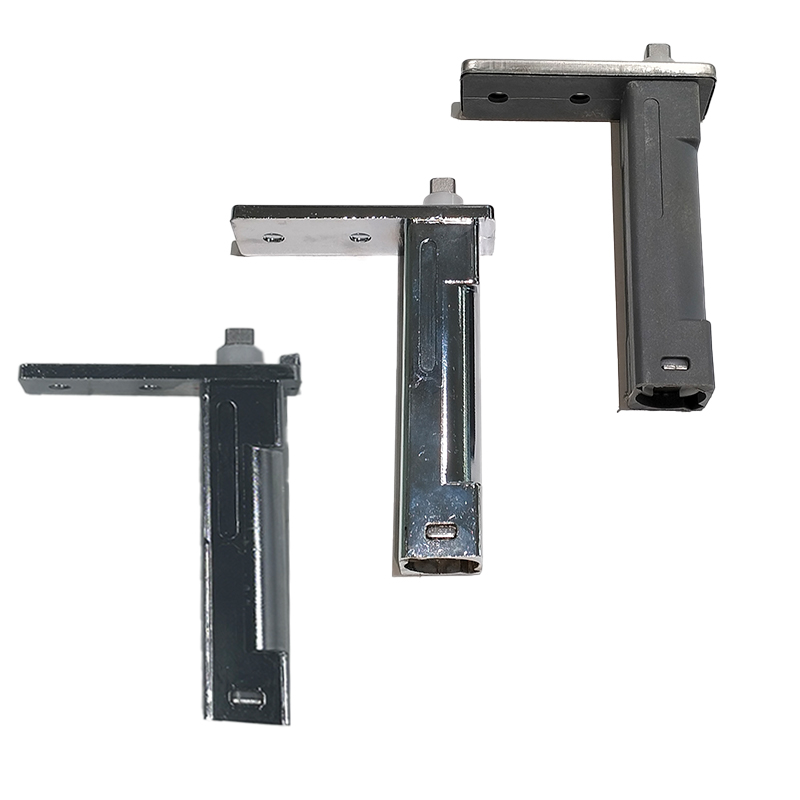
Depending on its construction, a commercial refrigerator hinge may contain a pivot pin, bushing, spring, or positioning mechanism. These components should move according to the intended design without unexpected interference.
Inspect accessible moving interfaces for unusual contact, visible damage, or movement inconsistent with the approved sample.
A sound that occurs at a particular hinge position may indicate a different issue from one that appears throughout the entire opening movement. The observation should be recorded before adjustments are made.
Where the hinge is spring-loaded, inspection and disassembly should follow the applicable equipment procedure.
Buyers comparing commercial refrigeration hardware should also distinguish component-level testing from installed performance. A hinge that operates normally on a workbench may behave differently under the intended door load.
What Test Conditions Make Refrigerator Hinge Noise Results Comparable?
Noise observations become difficult to compare when the buyer and supplier use different test arrangements. Door weight, mounting position, operating speed, and surrounding noise can all influence the result.
A repeatable OEM procedure should therefore identify the representative door assembly and establish how the hinge will be operated during testing.
Define the Installed Test Arrangement
The sample should be mounted on a representative refrigerator or freezer door using the intended hinge configuration. Where upper and lower hinges operate together, the test should reflect that arrangement.
|
Test condition |
What should be defined |
|
Door assembly |
Approved door and hinge configuration |
|
Door load |
Specified loading condition |
|
Opening range |
Agreed opening and closing positions |
|
Operating method |
Consistent movement procedure |
|
Test environment |
Relevant background-noise conditions |
|
Acceptance reference |
Approved sample and inspection criteria |
The table establishes a common reference for testing rather than universal noise limits for every hinge.
Control Door Movement During Testing
A door opened abruptly may produce different sounds from one moved at a controlled speed. The operating procedure should therefore describe how the door is opened and closed.
Inspectors should observe the complete movement, including any position where the spring or positioning mechanism engages.
Where numerical noise measurements are required, the project should specify the measurement equipment, position, conditions, and acceptance criteria. Results obtained under different arrangements should not be treated as directly comparable.
What Should Buyers Check During Repeated Hinge Operation?
A hinge that operates normally during its first few cycles may behave differently after repeated opening and closing. Sample approval should therefore consider whether the mechanism maintains its intended movement characteristics throughout the agreed evaluation.
The purpose is not simply to identify the loudest sound. Changes in mechanical movement can provide useful evidence about the condition of the hinge.
Compare Initial and Post-Test Conditions
Before testing, record the hinge’s visible condition, opening movement, and normal engagement sounds. After the agreed operating sequence, repeat the same inspection.
Check whether new scraping, grinding, resistance, or irregular movement has developed. Any change should be evaluated alongside the hinge’s intended function rather than treated as an automatic failure.
A practical inspection includes:
-
Pivot movement remains consistent with the approved sample.
-
Spring or positioning functions operate as specified.
-
No unexpected scraping or grinding develops.
-
The hinge does not bind during the agreed movement.
-
No visible damage appears at accessible moving interfaces.
-
Mounting components remain correctly positioned.
The inspection results should identify the sample and test conditions so the supplier can reproduce any reported problem.
How Should Hinge Noise Acceptance Criteria Be Written Into an OEM Specification?
Descriptions such as “quiet operation” or “no abnormal noise” are difficult to apply consistently when purchasing and quality teams inspect different production batches.
A useful specification connects the noise requirement with the approved hinge construction, representative door assembly, and defined operating procedure.
Use the Approved Sample as a Reference
The purchasing record should identify the hinge drawing, intended mechanism, approved sample, and relevant test conditions.
Where the hinge contains a spring or positioning feature, the acceptance criteria should distinguish its normal engagement sound from unintended contact or irregular operation.
Changes to a pivot, bushing, spring, or positioning component may affect both movement and noise. These changes should be reviewed before a revised component is accepted as equivalent to the original sample.
For customized configurations, the OEM customization process can support communication around drawings, samples, and project-specific requirements.
Incoming inspection should use the same reference conditions established during approval. If an unexpected sound occurs, the inspector should record its timing, associated movement, and any visible mechanical changes.
This provides purchasing and engineering teams with a practical basis for resolving quality disputes without treating every audible engagement as a defective hinge.
Professional Technical Support from Foshan Simple Technology Co., Ltd.
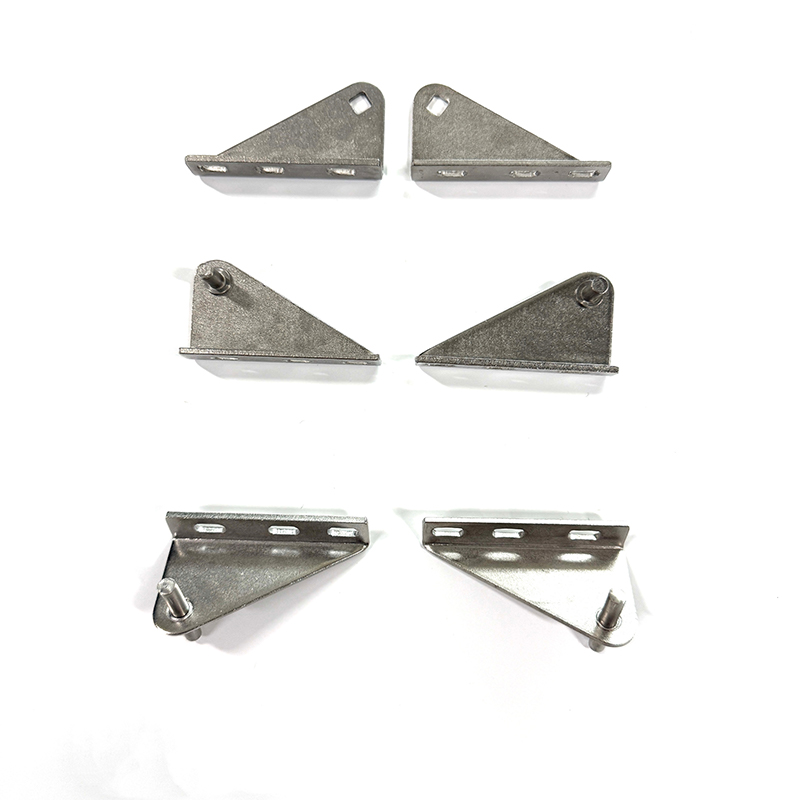
Foshan Simple Technology Co., Ltd. supplies commercial kitchen components for OEM manufacturers, distributors, and replacement-parts buyers, including refrigerator and freezer hinges with different mounting arrangements and door-control functions. Its SP-SH219P Refrigerator Spring Hinge with Positioner provides a product reference for commercial refrigeration applications involving a positioning mechanism. The company also offers the SP-SFH85 Triangular Self-Closing Freezer Hinge for a different door-control arrangement. For OEM purchasing, the intended door assembly, mounting details, required hinge function, and sample acceptance conditions should be confirmed before production. Published product specifications alone do not establish a numerical noise rating for either model.
Conclusie
Commercial refrigerator hinge noise testing should focus on the mechanical behavior of the approved component under representative operating conditions. Buyers need to distinguish normal engagement sounds from irregular noise, identify the source of unexpected sounds, and evaluate changes after repeated operation. A controlled test procedure and physical reference sample provide a more consistent basis for acceptance than subjective descriptions of quietness. Before bulk production, the hinge configuration, operating conditions, inspection requirements, and criteria for investigating abnormal movement should be documented in the OEM purchasing specification.
Veelgestelde vragen
1. Does a clicking sound always indicate a defective refrigerator hinge?
No. Spring-loaded and positioning hinges may produce a repeatable engagement sound during normal operation. Buyers should compare the sound and associated movement with the approved design before determining whether the hinge requires further inspection.
2. Can refrigerator hinge noise be evaluated without installing the hinge on a door?
A separate inspection can reveal obvious irregular movement, but it does not reproduce the intended door load. OEM approval should include a representative installed assembly where the project requires verification of operating noise under actual application conditions.
3. Should every commercial refrigerator hinge meet the same noise limit?
Not necessarily. Different hinge mechanisms and door applications can produce different operating sounds. Any numerical acceptance limit should come from the project’s requirements and a defined measurement procedure rather than an unsupported universal value.
4. What should buyers investigate when hinge noise increases during repeated testing?
Inspect the moving interfaces, spring or positioning mechanism, mounting arrangement, and associated door movement. Record when the sound changes and whether new resistance or visible damage appears before deciding whether the sample meets the agreed acceptance criteria.
5. What should an OEM hinge noise-testing specification include?
The specification should identify the approved hinge configuration, representative door assembly, loading condition, operating procedure, inspection points, and acceptance reference. Where numerical measurements are required, the measurement conditions and evaluation method should also be defined.
