


5 dias por semana das 8:30 às 17:30

Why Do Bullet Foot Inserts Pull Out of Kitchen Equipment Tubes?
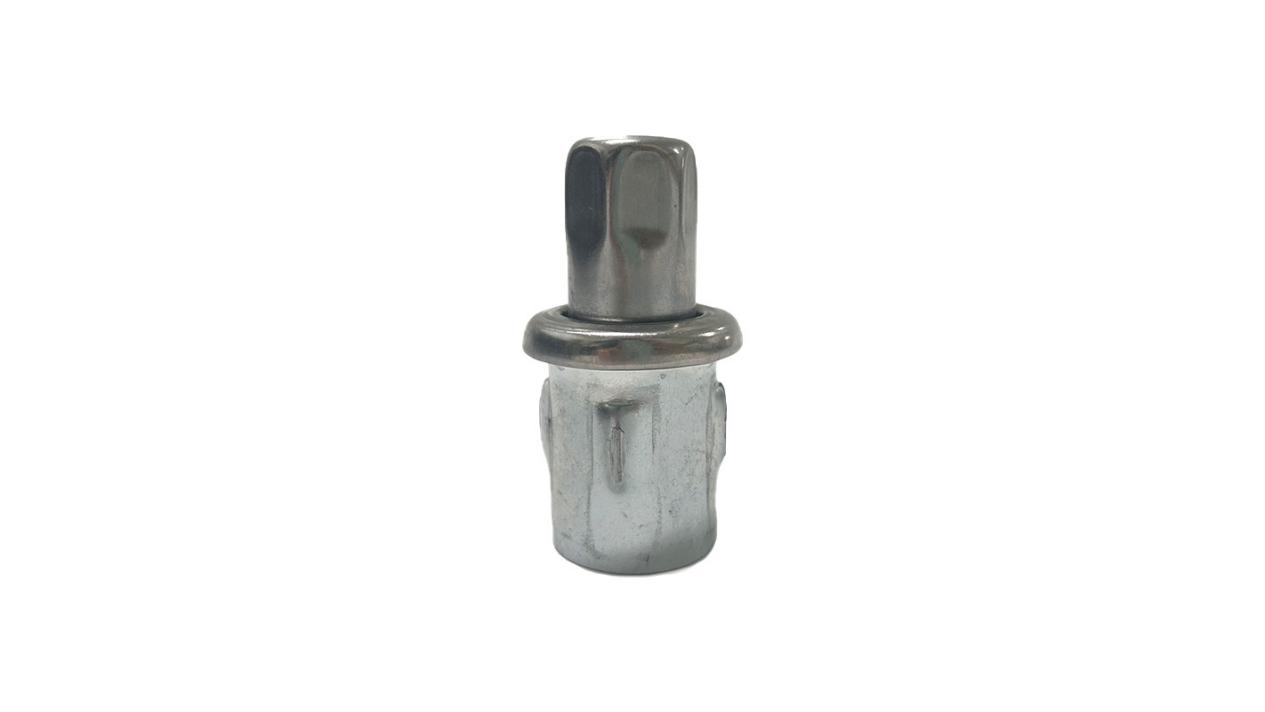
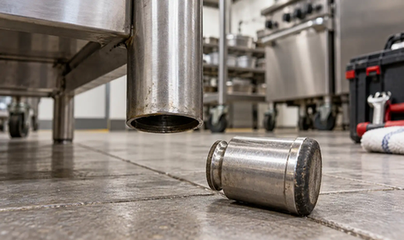
A bullet foot left on the floor after equipment is lifted is a different failure from a foot that cannot support the equipment standing on it. Downward load may have kept a weak fit seated for months. Lifting removes the compression that kept the shoulder seated, exposing how little may actually resist a snag or the foot’s own weight. Find the released connection before selecting a replacement. More vertical capacity will not correct a loose insert in the tube, nor will tightening a separate height-adjusting thread.
What Is Still Inside the Tube?
Leave the withdrawn parts as found long enough to document the separation. The exposed surfaces show which connection was holding and which one released.
Distinguish the insert from the adjusting member
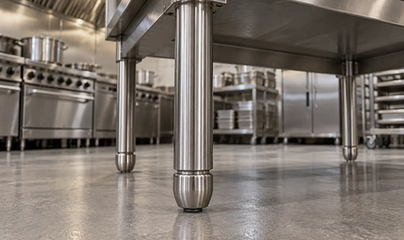
An adjustable foot may have two distinct connections: an adjusting thread inside the insert and the insert inside the leg tube. A thread that has wound out while its insert stays in the leg calls for an engagement check. An insert withdrawn with the foot still attached calls for a tube-fit check instead. Check the drawing of the chosen construction in the intervalo de metros de bala, because the family description does not identify its retaining method.
Before refitting or cleaning, take clear views into the tube and along the removed insert. Check especially for longitudinal scoring, a turned-over mouth and evidence that only one face was touching. A short polished patch suggests a different seating condition from contact extending over the intended insertion length. A replacement pressed into a damaged opening may appear satisfactory briefly without recreating the original fit.
Why Can the Nominal Tube Size Be Misleading?
An insert meets the inside of the tube. An outside size on an order cannot, by itself, specify that internal fit.
Check the bore below the mouth
The insert fits the bore, so an unchanged outside size does not compensate for a change in wall thickness. Measure down to the retaining section, not just across the mouth, and include readings in different directions. An acceptable mouth measurement may conceal ovality farther inside; in a square section, the internal corners may interfere before the flat faces locate the insert.
Check whether cutting or handling has spread the opening. A burr may leave the retaining section short of its working depth even when the shoulder appears almost home. Contact concentrated beside an internal seam is another reason to examine the bore rather than only its opening. A calliper measurement at the lip cannot resolve a mismatch deeper in the tube. For a reproducible order, put the working bore, insertion reference and prepared-end condition on the mating drawing.
What Happens When the Compressive Load Is Removed?
Compression and withdrawal load the assembly differently. The equipment’s weight can close a shoulder against the tube even if little prevents movement in the opposite direction.
Follow the retaining feature, without assuming its design
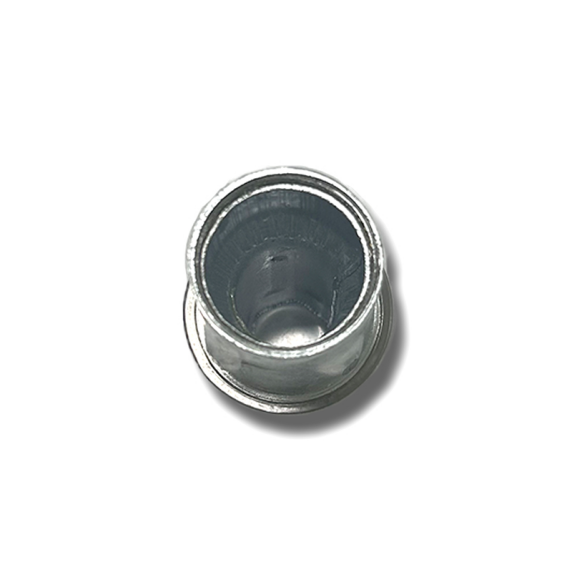
Identify whether the purchased insert grips by interference, has a resilient retaining feature, or requires a mechanical lock. The sample and its drawing must establish which applies. In an interference fit, clearance where grip was intended leaves less resistance to withdrawal; damaged gripping surfaces merit the same attention. If the design has resilient retaining features, check whether assembly has flattened them. If it uses a lock, inspect the lock itself for engagement at the drawing position.
Compare the installed depth with the shoulder or other datum specified on that drawing. Further hammering would alter the surfaces being investigated and could damage the tube or retention feature. Treat a proposed screw or adhesive as a construction change requiring review, including its effects on cleaning and disassembly. Have any proposed construction change reviewed before use, and never improvise it under unsupported equipment.
How Should Buyers Compare Retention Samples?
A sample inserted into a convenient workshop tube may perform differently from one assembled into the production tube. The tube is part of the test specimen.
Reproduce the tube end and the direction of withdrawal
Take the test tubes from the intended production condition so their thickness and prepared ends are representative. Keep an installation record for each specimen, including how it was inserted and where it finally seated. Align the pull fixture with the tube; contact from a lever at the lip would introduce bending into the test. Otherwise the test may deform the opening through bending rather than measure the intended axial retention.
The relevant outcome includes displacement, how the part releases, and what changes on the tube and insert after release. An acceptance force, loading rate, and any repeated assembly requirement should come from the equipment application and agreed test method. A published vertical capacity is not a withdrawal rating. Tests on removed sections belong in a controlled fixture; equipment must be safely unloaded and supported before its feet are examined or removed.
What Must Be Confirmed Before Approving Bullet Foot Retention?
O BH84 all-steel bullet feet listing from Foshan Simple Technology Co., Ltd. provides a starting point for a sample discussion. Approval still needs a drawing of the purchased retention feature and its mating tube, with bore limits, end preparation and seating position agreed. A sample inquiry accompanied by the production tube and an extracted failed pair lets those interfaces be reviewed together. The product’s support-load information does not establish pull-out performance; any retention requirement needs its own agreed evaluation on the specified tube.
Conclusão
A foot can support compression and still leave the tube when that compression is removed. Identify the separating interface, then inspect the bore and retaining contact at their actual working depth. A representative tube-and-insert trial can distinguish incomplete seating, mismatch, and damaged retention without confusing them with height adjustment or vertical load capacity.
FAQ
1. Will greater vertical capacity hold the insert during lifting?
That cannot be assumed. The load path during withdrawal need not be the one carrying the standing equipment. The required retention must be evaluated separately.
2. Can the outside tube diameter identify a replacement insert?
It helps identify the family, but bore size, wall thickness, shape, seam, and seating depth determine the mating condition. Confirm those against the drawing.
3. Should a loose insert be pressed back into the same tube?
Examine the removed pair before attempting refitting. A part that pushes back into a damaged opening has not thereby recovered its original retention.
