


5 дней в неделю с 8:30 до 17:30

Why Baffle Filters Retain Water After Cleaning and How to Check Drainage
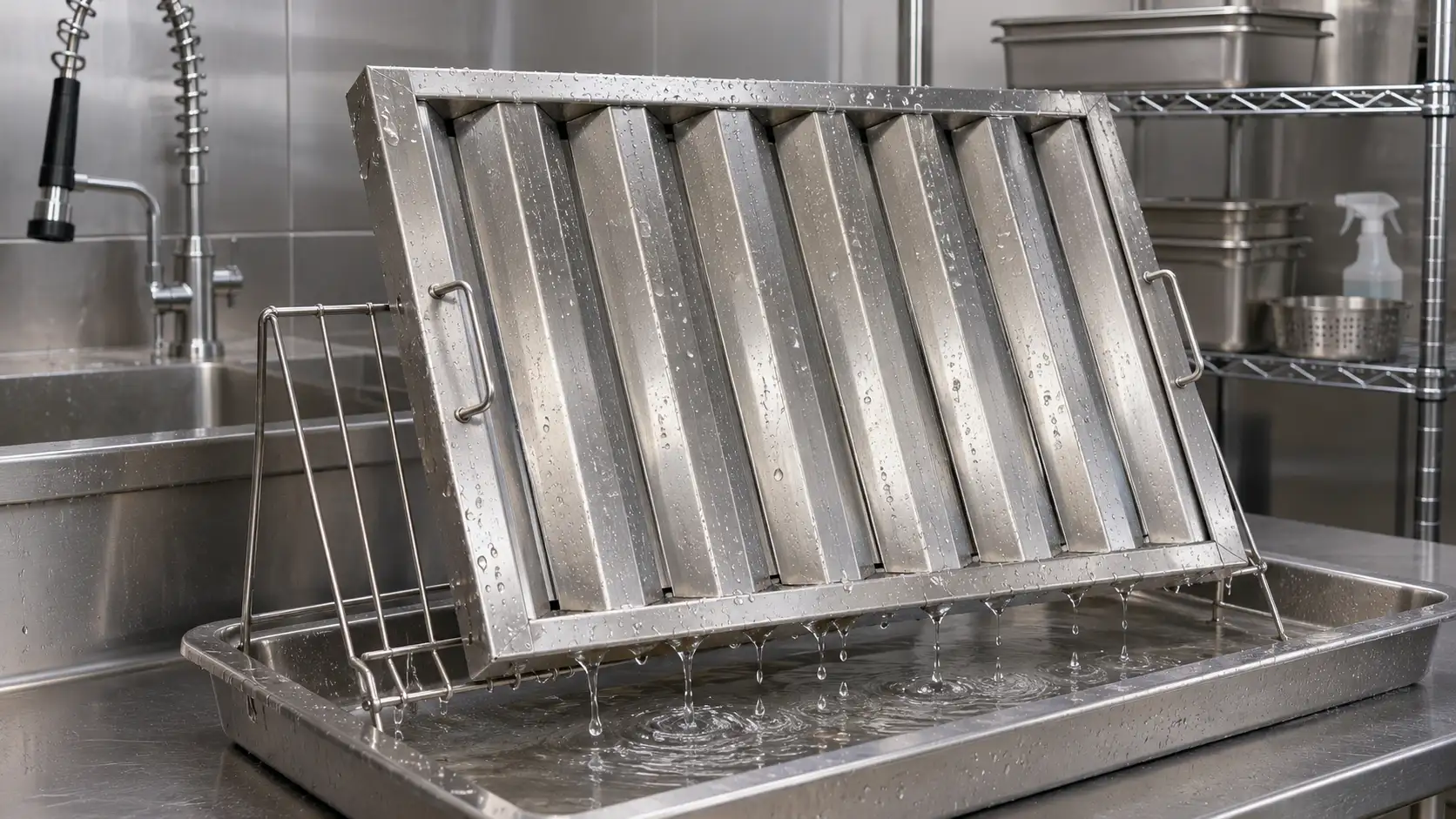
Baffle filters can retain rinse water when their channels or frame details hold liquid, the drying rack obstructs an exit, or the washing and drainage sequence leaves water inside the assembly. Diagnose the removed, cleaned filter under controlled conditions before returning it to the hood. Repeated water release from one location deserves a closer comparison with the approved construction.
This investigation concerns filters waiting for reinstallation. Record where the water appears and what handling releases it. A reproducible observation helps maintenance teams and bulk buyers distinguish a drying-process issue from a component that needs supplier review.
Identify the assembly and its intended orientation
Start with the model, dimensions and drawing revision. Mark the filter’s normal installed top, bottom and airflow direction using removable identification outside the working passages. Confirm the manufacturer’s permitted washing method and handling instructions before running a comparison.
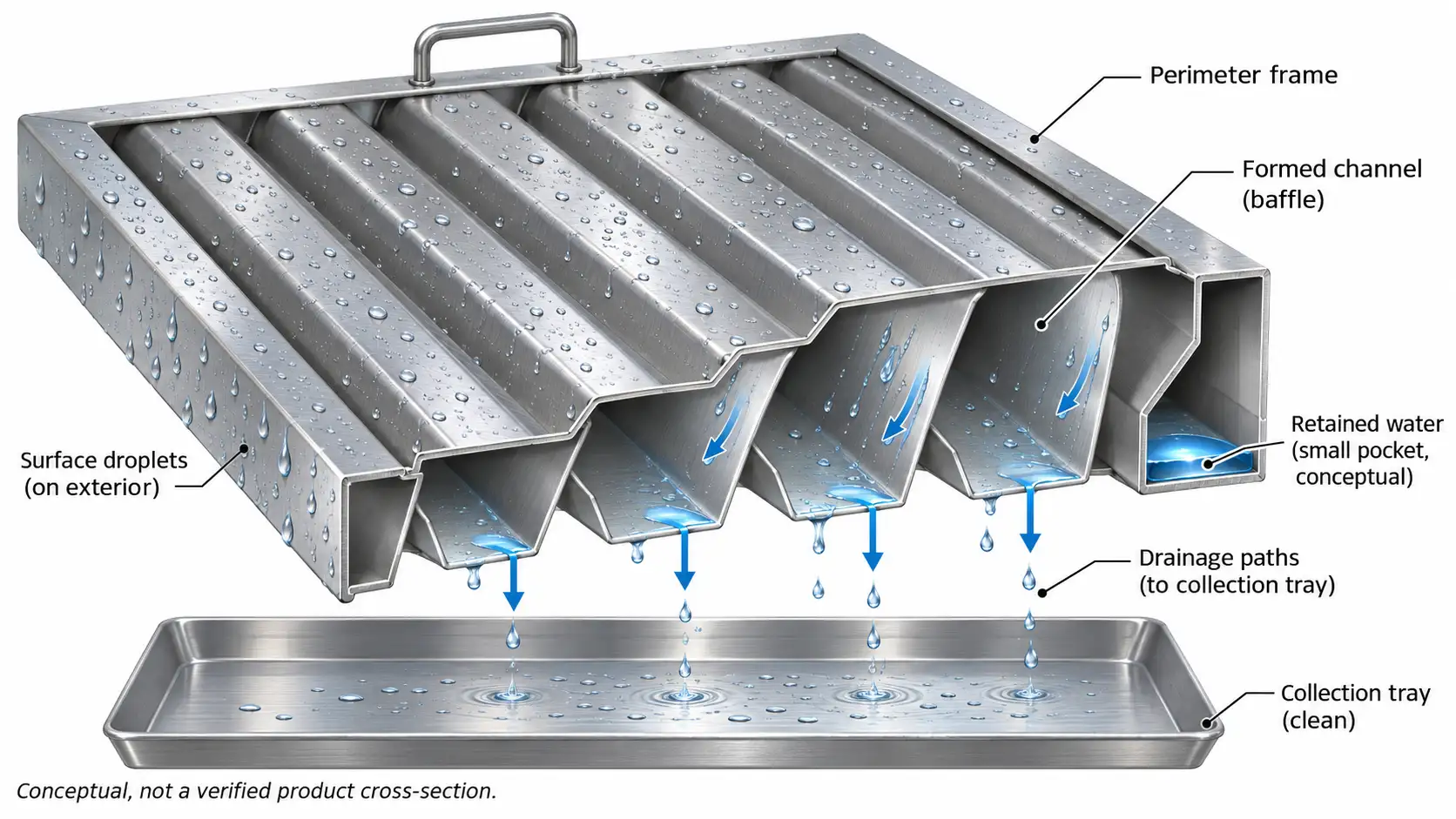
А BH223 Z-shaped baffle filter has multiple formed passages within its frame. Water emerging from the outside surface may have travelled from another part of that assembly. Photograph both faces and the frame edges so the review can follow the actual construction.
Look for any drainage detail identified on the approved drawing. Some designs provide defined openings or paths. Establish their intended function with the supplier before treating a visible gap as a drain. Keep the normal installed orientation and the approved drying orientation recorded separately.
Use an undamaged, correctly identified filter as the comparison sample when one is available. Mixing dimensions or frame styles in the same investigation makes it harder to determine which change affected the result.
Separate surface droplets from recurring internal release
Observe the filter immediately after rinsing, after its usual drainage period and after the handling movement used for reinstallation. Place it over a clean collection tray. Keep the movement gentle and repeatable, with a safe grip and suitable handling protection.
Small droplets spread across exposed metal suggest a surface-drying issue to investigate. A stream appearing repeatedly at one seam after the exterior looks dry suggests that liquid remained elsewhere in the assembly. Either observation needs confirmation through the same rinse and handling sequence.
Record the liquid’s visible appearance. Cloudiness, foam or an oily film can help identify the next cleaning check, although appearance alone cannot establish its composition. If residual cleaner is suspected, follow the cleaner supplier’s rinse instructions and the filter manufacturer’s material restrictions.
Avoid assigning the cause from one drip. A wet rack, a nearby rinse splash or a damp glove can put water back onto an otherwise drained panel. Observe the collection tray and contact surfaces as part of the same investigation.
If the liquid appears only after the panel returns to an operating hood, start a separate installed-system investigation. Record cooking activity, steam exposure and the time of release there. Keeping that sequence distinct preserves the evidence from the off-hood cleaning observation and helps the maintenance owner select the appropriate follow-up.
Check what the drying rack changes
Inspect the support points before extending drying time. A rail may contact the same lower edge from which the panel normally drains. Closely stacked filters can also touch each other and conceal where water is collecting. Photograph the loaded rack from the side and below where practical.
Keep spacing sufficient for inspection and the approved drying process. Follow the manufacturer’s supported position and avoid loading the filter on vulnerable channels or projecting handles. Compare the normal rack setup with an approved alternative that changes one relevant condition.
For example, retain the same wash cycle and sample while moving a support away from a documented drainage path. Observe whether the pattern of water release changes. Record an inconclusive result as inconclusive, especially when temperature, airflow or elapsed time differed between observations.
The cleaning area also needs a defined destination for drained water. A rack above clean filters can rewet the lower stock. Separate incoming wet panels from panels awaiting release, and keep identification attached through the transfer.
Use a repeatable rinse and observation record
Agree a practical observation method with the maintenance owner or supplier. This is a proposed diagnostic record, with site-specific conditions and acceptance criteria to be approved before use. It supplies no universal drying time or standard laboratory test.
Use the same cleaning method, rinse sequence, rack position and observation intervals for the samples being compared. Choose intervals that fit the actual turnaround. Record room conditions when they differ enough to affect drying, and note whether panels were still warm at the start.
|
Observation |
Record for each filter |
Comparison value |
|
Sample identity |
Model, revision and service history |
Keeps construction and age traceable |
|
Wash and rinse |
Method, cleaner and completed rinse steps |
Reveals process differences |
|
Rack position |
Orientation, spacing and contact points |
Connects support geometry to release |
|
Liquid release |
Location, timing and handling movement |
Shows whether the symptom repeats |
|
Final inspection |
Remaining moisture and release decision |
Separates drying from approved stock |
A scale can add information when the supplier agrees a suitable procedure. Establish a verified dry reference for the same specimen and document scale resolution and repeatability. The difference between a wet and dry reading has meaning only within that method. It cannot identify the liquid’s location or prove that an assembly meets an unspecified moisture limit.

Investigate a persistent pocket without altering the filter
If one location repeatedly releases water, inspect accessible channels, frame corners and documented exits for visible residue or damage. Compare photographs with the approved sample. Record whether the symptom affects one panel, one production lot or every panel exposed to the same process.
Construction changes deserve particular attention when replacement stock behaves differently. A square grease filter with a different frame depth should receive its own drainage observation. Matching face dimensions alone leaves the internal configuration unresolved.
An accessible deposit may call for repeating the approved cleaning and rinse procedure. A recurring enclosed pocket, obstructed documented exit or unexplained frame difference needs supplier review. Send photographs showing the exact point of release, the sample identity and the full sequence that produced it.
Compare the affected lot with earlier stock under the same conditions. If every specimen changes behaviour when the rack position changes, investigate that shared process condition first. If one identified panel continues releasing liquid while the others have drained, preserve it for examination. These observations narrow the investigation without assigning an unverified manufacturing cause.
Any proposed drain opening, frame alteration or channel change needs written approval for the specific construction and its applicable equipment requirements. Keep the affected sample available for examination. Return the approved correction through the same controlled observation before closing the issue.
Define release into ready stock
Set a clear handoff between cleaning and storage. Dry the baffle filters completely before reinstallation. Establish a site procedure that identifies who inspects the panel, how inaccessible moisture concerns are escalated and where released filters are stored.
A dry-looking front face provides incomplete information when previous handling has released water from inside. Include the supplier-approved observation or handling step that detected the recurring symptom. The responsible owner should define the acceptance condition for that design and cleaning process.
Record the actual turnaround before adding more rack capacity or changing the exchange schedule. A process correction may resolve the delay. Where the required drying period exceeds available turnaround, discuss the operational arrangement with the kitchen owner and retain enough approved clean stock for the planned exchange.
For new bulk orders, add a representative wash-and-dry sample review before confirming the production construction. Send Simple your filter drawing, approved cleaning method, rack photographs and observations. Discuss a baffle filter sample review and agree the documentation needed to evaluate the proposed supply.
Часто задаваемые вопросы
Does retained water prove that a filter is defective
The observation calls for investigation. Rack contact, rinse conditions and construction can each affect the result. A repeated comparison with an approved sample helps assign the follow-up to the right owner.
How long should a baffle filter take to dry
Use the manufacturer’s guidance and a validated site procedure. Construction, wash conditions, orientation and drying environment affect the time. Record the conditions behind any claimed turnaround.
Can filters be stacked while they dry
Use a storage and support arrangement approved for the filter and cleaning process. Ensure the arrangement permits drainage, inspection and handling without rewetting released stock or damaging the assembly.
Should a filter be shaken to remove water
Follow its handling instructions. Any observation movement should be gentle, repeatable and approved for the assembly. Forceful shaking can introduce another variable and damage the panel or handle.
Which details should accompany a supplier complaint
Include the model and lot, drawing revision, cleaning and rinse sequence, rack orientation, time of water release and photographs of the location. Preserve a representative affected sample and identify any comparison sample used.
