


5 дней в неделю с 8:30 до 17:30

Can Grease Filters Really Reduce Fire Risk in Commercial Kitchens?
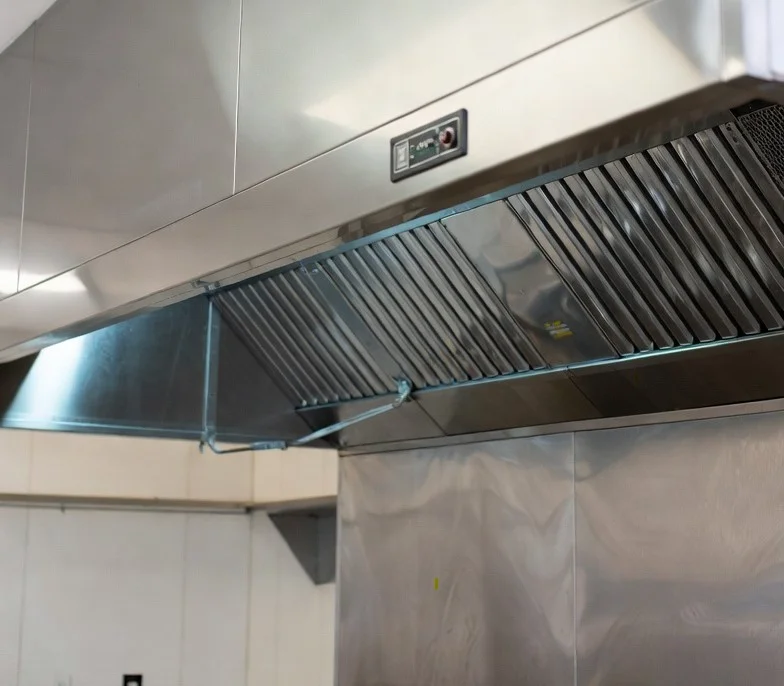
Grease fires in commercial kitchens rarely start with a dramatic flash. Most begin with a predictable chain: high-heat cooking produces grease-laden vapor, that vapor cools and sticks to metal, and the buildup becomes fuel. When a flare-up happens at the cookline, the real danger is not the pan. It is the path the flame can take into the hood and duct.
A commercial kitchen grease filter is one of the few components designed to interrupt that chain early. It captures a large share of grease before it reaches ducts and fans, and the right filter style also blocks flame travel. That is why grease filters can significantly reduce the risk of fire, but only when the filter type, installation, and cleaning routine match commercial duty.
This article focuses on commercial kitchens only, using practical scenarios from restaurant operations, institutional cooking, and high-volume production lines.
Why grease buildup becomes a fire problem
A fire inspector does not need to see open flames to call out risk. Grease residue is a combustible load sitting above the hottest equipment in the building.
Before getting into filter selection, it helps to understand how grease ends up where it should not be. In most commercial kitchens, the “grease path” is consistent: cooking plume to hood capture area, through the grease removal device, into the exhaust duct, past the fan, and out at the discharge point. If grease removal is weak or maintenance slips, deposits form along that entire route. NFPA 96 treats this as a system issue, not a single-part issue.
A common operational trigger is a short burst of high heat. Charbroilers, woks, and heavy sauté lines produce a sharp spike in vaporized grease. If filters are overloaded, airflow drops, capture gets worse, and the plume carries more grease into the duct. That combination raises both day-to-day risk and the severity of any incident.
Where fires spread when filters are neglected
When a flare-up reaches the hood, the next question is whether it can pass the grease removal device. If flames can reach grease deposits beyond the hood, the event can escalate quickly. Several fire-safety guides stress that the most dangerous scenario is flame contacting deposits inside ducts.
In practical terms, that is why filter performance is not just about odor or smoke control. It is about stopping fuel accumulation in places that are difficult and expensive to clean.
How a commercial kitchen grease filter reduces fire risk
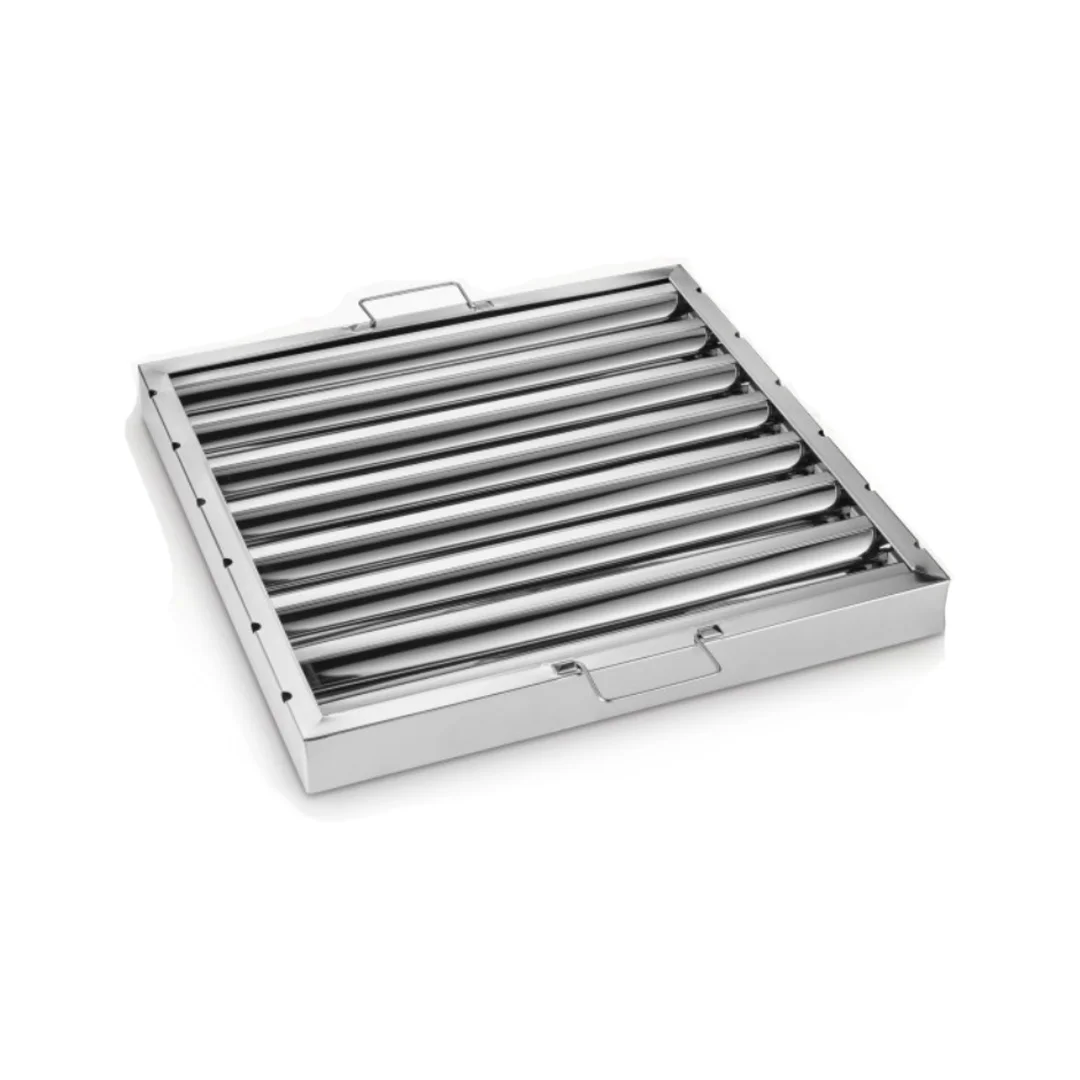
Мазные фильтры reduce fire risk in two main ways: they lower the amount of fuel entering the exhaust system, and they act as a barrier between cooking flames and the duct interior. No filter catches 100% of grease, especially when grease stays in a vapor phase and later condenses downstream, but better capture buys time and reduces the thickness and spread of deposits.
The highest-performing approach is to treat filters as a controllable “first line” that protects everything after them: ducts, fan blades, roof curb areas, and discharge points. That downstream protection matters because system-wide cleaning requirements and downtime are expensive, and neglected systems create code and insurance issues.
Why baffle-style designs are favored in commercial settings
Between common designs, baffle grease filters are widely discussed as better suited to commercial duty because their metal channels force air to change direction, letting grease separate and drain, while also making it harder for flames to pass straight through.
There is also an important compliance angle. NFPA 96 requires listed grease filters (tested in accordance with UL 1046) and indicates that mesh filters are not permitted for commercial cooking operations under that standard.
That single point changes the buying decision for many operators, because “cheaper upfront” can become “noncompliant” very quickly.
What “fire-safe” means for grease filters
A filter can look solid and still be the wrong choice for a commercial hood. Fire safety comes from a combination of listing, material, geometry, and fit.
The strongest baseline is using listed grease filters, commonly discussed in relation to UL 1046 testing, and then installing them as the hood listing and manufacturer instructions require.
From an operations standpoint, stainless steel hood filters are often preferred because they tolerate frequent wash cycles, hold shape, and resist corrosion in harsh cleaning chemistry. If a filter warps, gaps form. Gaps are where flames and grease-laden air bypass the intended path.
Fit and drainage are not small details
In real kitchens, many “mystery problems” trace back to simple fit issues: filters seated backwards, missing retaining hardware, bent frames, or grease troughs that are not being emptied. When grease cannot drain, it pools. Pooled grease is fuel sitting at the inlet of the exhaust system.
A useful way to evaluate a filter setup is to check it at close: look for wet, shiny residue on the downstream side of the filter bank, dripping at corners, or dark streaking near seams. Those are signs the grease is not being captured and drained the way it should.
Cleaning routines that actually lower risk
The best filter in the world does not help if it is clogged. Cleaning is where most kitchens win or lose fire risk control, because filter loading rises with menu mix and cooking intensity.
Industry guidance commonly ties cleaning frequency to operations. Solid-fuel cooking commonly requires at least monthly attention, and high-volume cooking often pushes the broader system toward quarterly professional cleaning intervals.
In day-to-day practice, many high-grease concepts end up washing filters weekly, while lighter operations can stretch longer, as long as airflow and residue levels remain stable.
A realistic restaurant example
Consider a fast-casual chicken concept with two fryers, a flat top, and a char unit. Friday and Saturday volume is double midweek. If filters are washed on a fixed monthly schedule, the “worst week” buildup can arrive long before the calendar says it is time. Kitchens that adjust cleaning to production cycles usually see fewer odor complaints, steadier airflow, and less grease migrating into ducts.
What cleaning should accomplish
Cleaning should restore open airflow and remove the sticky layer that traps more grease. Many NFPA 96 discussions emphasize that the exhaust system must be cleanable and maintained, not just “wiped down.”
For filters, the practical standard is simple: the filter should not feel tacky, and light should pass through the baffle channels without obstruction.
How to choose filters for heavy-duty commercial cooking
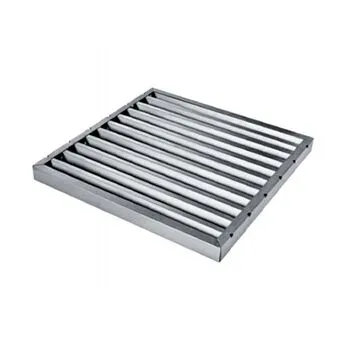
Buying decisions in commercial kitchens are rarely about one feature. They are about the total operating cost and the risk profile.
In the field, the most defensible selection criteria usually come down to three points: a listed design suitable for commercial cooking, durable construction that stays square after repeated washing, and a configuration that is easy for staff to remove and reinstall correctly. If staff avoids removal because it is awkward, filters do not get cleaned on time.
The operational payoff most owners care about
Owners and facility managers tend to care about three outcomes: fewer shutdowns, fewer failed inspections, and fewer expensive duct cleanings. A stronger filter and consistent cleaning routine help on all three. They reduce grease migration, support airflow, and make the system easier to keep within standard.
О Foshan Simple Technology Co., Ltd.
For buyers comparing grease filter suppliers, that combination typically matters in day-to-day execution: stable specifications, consistent production, and the ability to match hood dimensions and operational requirements across projects.
Foshan Simple Technology Co., Ltd. is positioned as a long-term supplier focused on commercial kitchen components, with more than 15 years of manufacturing history across grease filters and related kitchen hardware, and support for OEM and ODM cooperation. The company highlights a structured approach to quality control and customer service, along with export experience across Europe, the Middle East, the Americas, and Southeast Asia. The company also notes recognition as a technology-based SME in late 2024, which signals ongoing investment in product development and manufacturing capability.
Вывод
Grease filters reduce fire risk in commercial kitchens because they take fuel out of the exhaust stream and help block flame travel toward ducts. The result is not theoretical. When filters are listed for commercial use, installed correctly, and cleaned on a schedule that matches real cooking volume, grease deposits in hard-to-reach areas drop, airflow stays steadier, and the chance of a small flare-up becoming a major incident goes down.
Часто задаваемые вопросы
How does a commercial kitchen grease filter prevent fires?
A commercial kitchen grease filter reduces the amount of grease entering ducts and fans, cutting the fuel that can ignite later. Baffle-style designs also make it harder for flames to pass directly into the duct line.
Are mesh filters allowed under NFPA 96 grease filter requirements?
NFPA 96 guidance indicates that listed grease filters tested to UL 1046 must be used and states that mesh filters are not permitted for commercial cooking operations under that standard.
How often should commercial hood filter cleaning be done?
Frequency depends on cooking volume and style. Many high-grease operations wash filters weekly, while lighter kitchens may manage longer intervals. Separate from daily washing, NFPA 96 guidance commonly references monthly attention for solid-fuel cooking and more frequent professional cleaning for high-volume operations.
What are the signs that stainless steel hood filters need cleaning?
Common signs include visible greasy film, tacky residue, reduced exhaust pull, smoke lingering at the cookline, or grease dripping at filter corners. These indicators usually show the filter is overloaded and grease is starting to bypass into the exhaust path.
