


5 Days a week from 8:30 am to 5:30 pm

How Grease Filter Efficiency Affects Kitchen Exhaust Performance
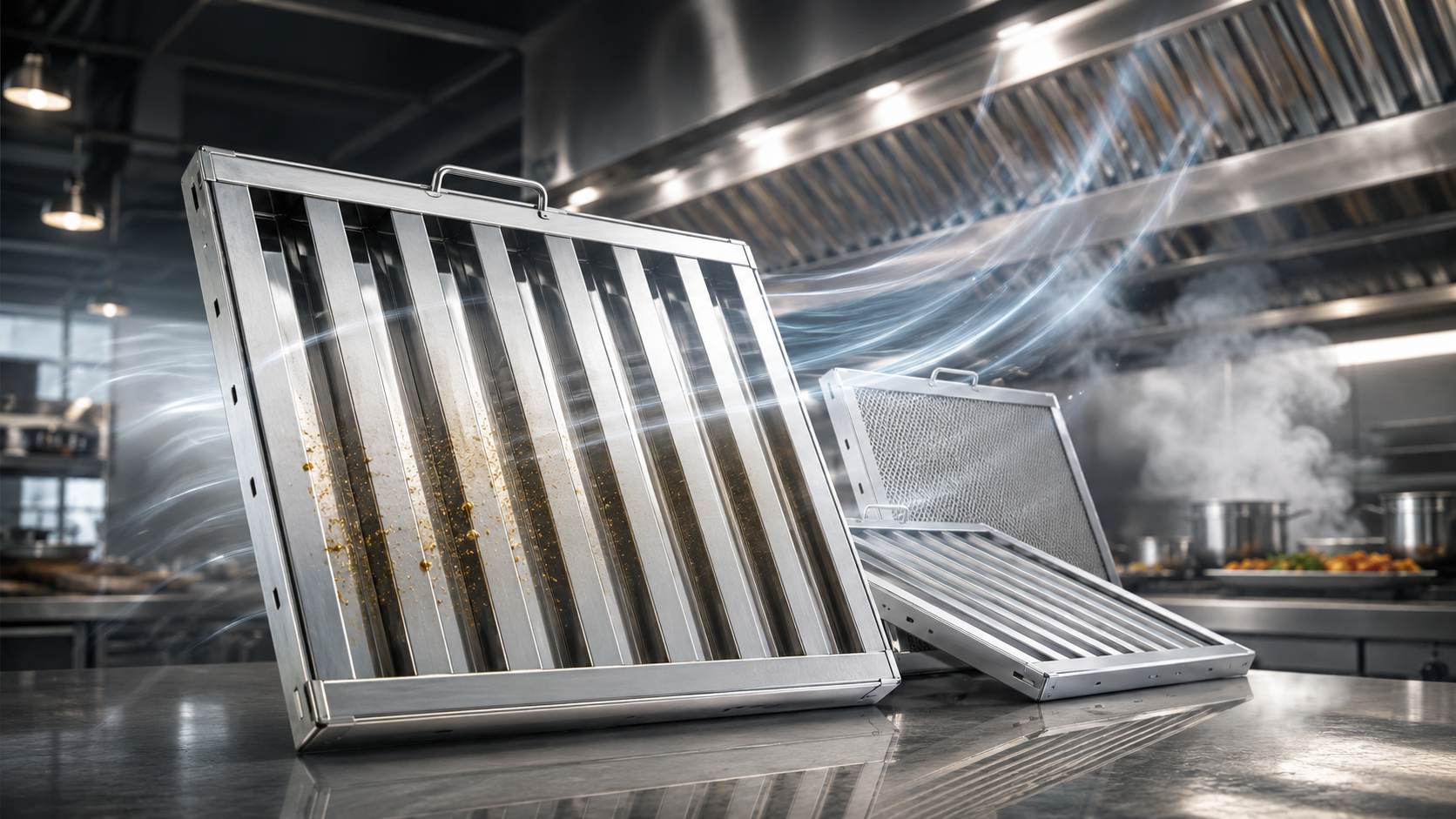
The performance of exhaust equipment in commercial kitchens has to be consistent in order to remove heat, smoke, grease-laden air, odors and risk of fire. For people buying, designing, building and running exhaust equipment – such as grease filters – the key performance is efficiency at removing grease from the air. But the way a filter removes grease has to be balanced against the resistance it creates. A filter that is very efficient at removing grease but too resistant can actually reduce the amount that the hood can capture. On the other hand, a very low resistance filter that does not remove enough grease can transfer that grease to the ductwork and fans, potentially causing serious problems. Therefore, when selecting a grease filter, it is necessary to check the cooking to be done, the required airflow, the pressure drop, access for cleaning, whether it is safe to use and the supplier’s documentation.
How Does Grease Filter Efficiency Influence Hood Airflow?
When evaluating grease removal and resistance, consider that each filter is part of the exhaust pressure path.
What Happens When Pressure Drop Is Too High?
The air passing through your filters must also pass through the filter passages prior to entering the plenum and then the ductwork. As these passages can be very narrow, and can be loaded with grease, it is not uncommon for resistance to be created within these areas. Also, as with the rest of your HVAC system, incorrect installation, as well as filters and/or filter banks that are too small, can cause problems. Should the fan be unable to move the air through these increased static pressures, then hood airflow will be compromised. This may result in smoke escaping from the hood edge, heat spreading throughout the kitchen, and strong odors migrating to service areas. Increasing the fan speed may remedy the low airflow, but will cause increased noise, energy consumption, and potential for premature motor failure. Look for pressure-drop data for the proposed product at relevant face velocities rather than simply relying on appearance.
Why Can Low Capture Efficiency Create Downstream Problems?
A filter that does not capture a lot of grease may allow airflow at first, but then send more and more of the aerosolized grease into the plenum, ductwork and fan. The grease can then deposit onto surfaces, narrowing air passages, throwing fan balance out of whack, making cleaning very difficult and increasing combustible mass. ASHRAE notes that cooking emissions can reduce the efficiency of the ventilation system and pose a fire hazard. The purpose of the filter is to capture particles before they get downstream, and that can never be 100%, but a filter near the hood can help keep downstream components clean. The performance of a filter can be affected by the size of the particles it is filtering, the type of cooking being done, the condition of the filter, and the amount of airflow through it.
Which Filter Design Best Matches the Cooking Process?
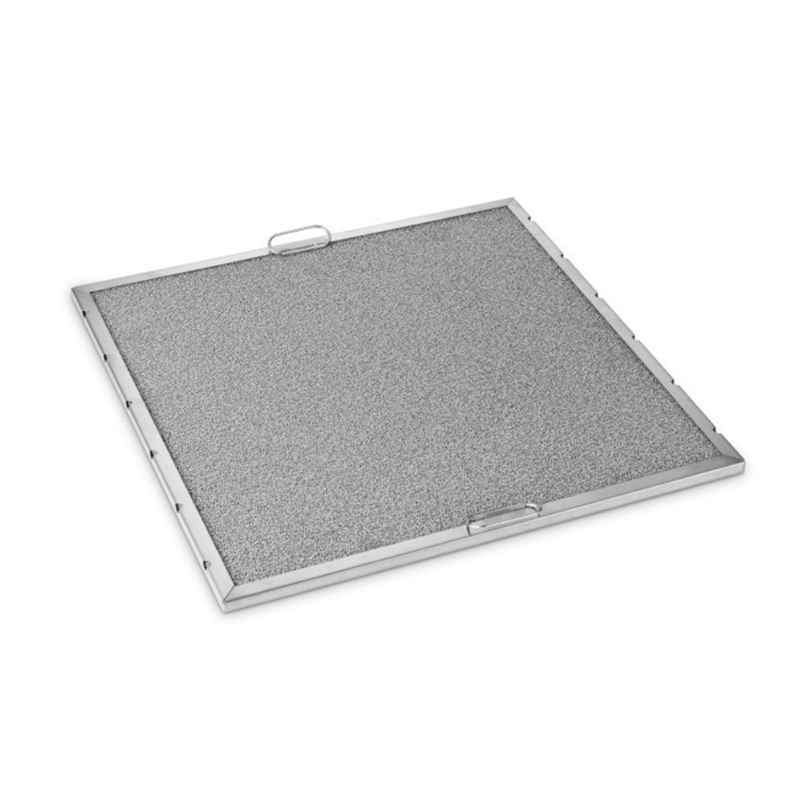
This suitable design will depend on the amount of grease produced, amount of equipment, number of hours of operation, amount of cleaning done, and hood configuration.
When Are Baffle Filters a Practical Choice?
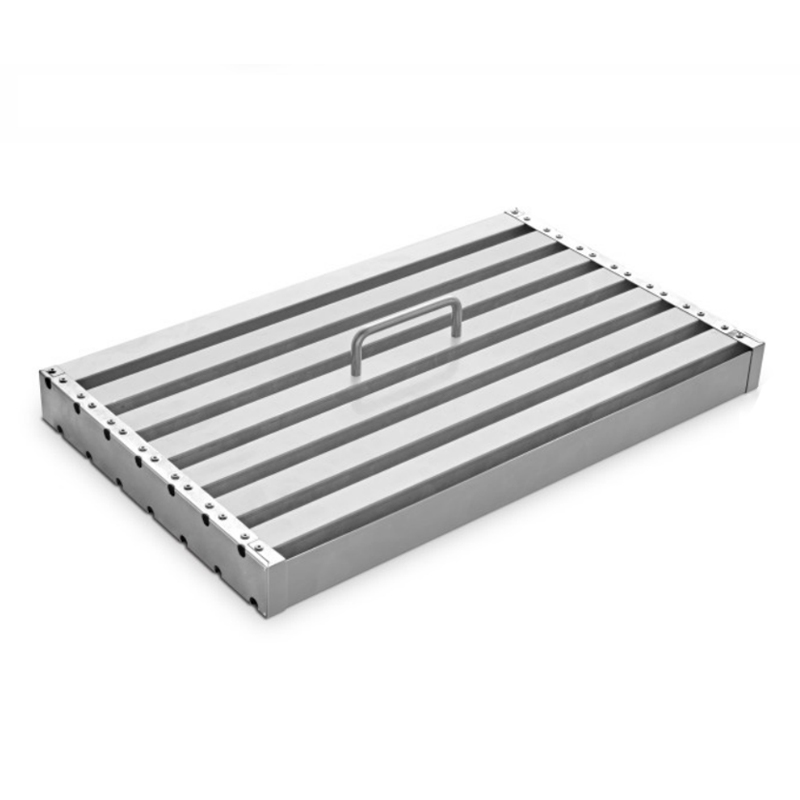
Baffle filters are arranged in such a manner as to cause the greasy air to zigzag around until the larger droplets of grease hit the surface of the metal baffle and flow off to a collection channel. Stainless steel is a recommended baffle material for areas of high grease release due to its durability, ease of cleaning and fire resistance. As clean baffles impose resistance to air flow, the specific design of the passages will dictate how much resistance will be imposed when dirty. It is crucial that the stainless steel baffle filters are ordered with the correct orientation and that the filters open up fully to the hood to which they are attached. If the wrong size filter are ordered, are delivered in the wrong orientation, are reversed, are damaged or become loose then they can create bypasses. Operators must check all of the above prior to ordering replacement stainless steel baffle filters.
When Should Buyers Consider Multi-Stage or High-Efficiency Devices?
Multi-stage filters or extractors are generally recommended for heavily greasy kitchens, for solid-fuel cooking or for projects where the least amount of matter is wanted to be deposited downstream. Additional stages of separation will allow for the capture of a wider range of droplet sizes, but these systems are generally more expensive, require more cleaning, create greater pressure loss, etc. A comparison of the performance curves, of the cleaning procedures, of the replacement parts needed as well as of the fan capacity is recommended. An efficiency claim has very little value if the test method, the airflow, the particle size to be separated as well as the pressure drop are not published.
How Should Buyers Compare Grease Filter Specifications?
Laboratory data can be usefully compared with information on the hood, fan, appliances and maintenance program.
Which Data Should Appear on a Technical Submittal?
Questions to ask when procuring grease filters are: Dimensions, material grade, construction type, face velocity, pressure drop at design, grease removal, grease discharge, drain, and installation direction. Is the grease filter listed for use in commercial cooking exhausts? Get a copy of the certification record and follow up to verify that the listing is traceable. UL 1046 covers single stage grease filters as well as multi-stage models designed to meet requirements of NFPA 96 and the International Mechanical Code. Listings and certifications are more than just a fire-safety endorsement. A safety listing does not necessarily mean a listing is also a measure of efficiency. The procurement team must distinguish between fire-safety compliance, air-moving performance, listed material, and declared compliance by the supplier.
What Comparison Questions Reduce Purchase Risk?
Use a checklist: Does the filter fit the listed hood without gaps? Is pressure drop compatible with the fan? Are efficiency claims tied to a named test method? Can staff remove, wash, inspect, and reinstall it safely? Are replacement units interchangeable? Is the metal suitable for repeated handling? Are edges, welds, handles, and drains finished consistently? Can the supplier provide samples, drawings, packing details, lead time, MOQ, and support? These questions reveal more than a headline efficiency figure.
How Do Cleaning and Maintenance Change Exhaust Performance?
Even a good filter can degrade in performance as grease builds up or cleaning of the filter assembly is damaged.
What Signs Indicate Restricted Hood Airflow?
These warning signs for exhaust system problems are for smoke rollout, hot kitchen, unusual fan operation, unusual smells, grease on floor, and blockages in ducts. Also inspect belts, motor, makeup air, duct restrictions, and hood balance as filters are just one of the many items that can cause problems with exhaust system. Measuring exhaust airflow or static pressure and comparing it to values found in commissioning record for the hood is more valuable than visual inspection. The frequency of cleaning of filters should be related to volume of cooking and type of fuel being used and not to an arbitrary frequency.
How Can Operators Protect Filter Service Life?
Follow the manufacturer’s guidelines for cleaning frequency, detergent, water temperature, etc. Certain cleaning agents can damage aluminum. In addition, if you happen to hit the hood or baffles they can bend or even open up the joints. Also, make sure that all filters are completely dry before reinstalling them. They must be put in the hood facing the correct direction and that the filter bank is covered. A rotation set of filters is great because you can clean the filters without having to operate the hood with no filters in place. Also, make sure to document when things were last cleaned, any damage, when things were replaced, when you received an airflow complaint, and any findings from your inspections.
How Can Foshan Simple Technology Support Kitchen Ventilation Projects?
Foshan Simple Technology Co., Ltd. is a China commercial kitchen equipment supplier that can assist the buyer sourcing coordinated kitchen equipment and procuring them in a cost effective manner. For grease-filter and hood related projects the supplier can review and assist with product size, material, installation, packaging, quantity, delivery terms etc. with the buyer in advance of placing the order to check drawings, view samples, review customization, replacement parts, operating manuals, installation requirements, spare parts and quality control etc. before placing the order. By reviewing all these details with the supplier before ordering, the buyer can check for any specification discrepancies between grease filters and hoods and other commercial kitchen equipment items and suppliers recommend, against the supplier’s technical specifications, product compliance certificates, prices, delivery terms and after sales service etc.
Conclusion
The efficiency of grease filters has to be judged in conjunction with hood airflow and pressure drop. The correct type of filter will trap the grease, but allow the fan and hood to contain it. When selecting grease filters, the buyer should match the design to the cooking duty in the kitchen. They should also verify that the supplier can provide traceable safety and performance information, and check the requirements for cleaning before making a purchase. Regular checking and maintenance will ensure that airflow is not restricted and prevent unsightly deposits from forming elsewhere in the kitchen. A balanced specification will also help to minimize disruption, cleaning difficulties and avoidable ventilation problems.
FAQs
1. Does a higher grease filter efficiency always improve hood performance?
No. Higher capture can be better, but then you increase pressure drop and potentially decrease airflow if your fan is not able to provide the necessary airflow. Compare efficiency vs. resistance under appropriate operating conditions.
2. How often should commercial grease filters be cleaned?
The frequency of inspections will depend on the volume of cooking, type of appliance, hours of operation, and amount of grease produced. You should check your grease handling system frequently and establish a schedule of inspections based on the actual operation and the local requirements. This schedule should be documented.
3. Can a grease filter reduce exhaust fan energy use?
A clean filter of the correct size will allow the system to operate near its intended point. However, energy used by the system is also affected by fan selection, controls, duct resistance, makeup air, etc.
4. What compliance documents should buyers request?
Request for following traceable listing information and documents: Technical drawings, Material information, Installation instructions and Test records for each product. Clarify what is product certification as opposed to factory certification or supplier self-declaration.
5. What causes grease filters to reduce hood airflow?
The following can cause a dirty filter: Grease buildup, excessive face velocity, undersized filter area, dirty or damaged passages, improper installation, and a poor filter design where the pressure loss exceeds the fan’s available static pressure.
