


5 أيام في الأسبوع من الساعة 8:30 صباحاً إلى الساعة 5:30 مساءً

IP65, IP67, or IP69K for Commercial Range Hood Lights?
In a busy commercial kitchen, a range hood light faces tough conditions. It stays near heat, grease vapors, steam, cleaning agents, and frequent wipes. This is why the IP rating counts so much. Shoppers often look at IP65, IP67, and IP69K. But the best pick depends on cleaning style, water levels, and daily tasks near the hood. It is not about picking the top number every time. The IP system comes from IEC 60529. This standard rates how well an enclosure blocks dust and water entry.
For projects in commercial kitchens, the key question is straightforward. Which protection level offers good sealing for the hood spot without extra cost? A solid answer must consider water contact, grease buildup, hot conditions, and how often it needs care.
Why IP ratings matter in commercial kitchen hood lighting
A hood light in a commercial kitchen differs from a regular indoor light. It hangs over cooking areas, below vents, and close to hot steam. In many places, workers wipe it a few times each day. Busier spots might see direct spray during cleanups. The first number in an IP code covers defense against solids such as dust. The second number covers defense against water. For hood lights, the solid part is key because grease and particles in the air collect over time. The water part is key too, due to steam, splashes, and daily cleaning. IEC notes that IP ratings replace fuzzy terms like “waterproof” with clear codes for enclosure safety.
What IP65 means
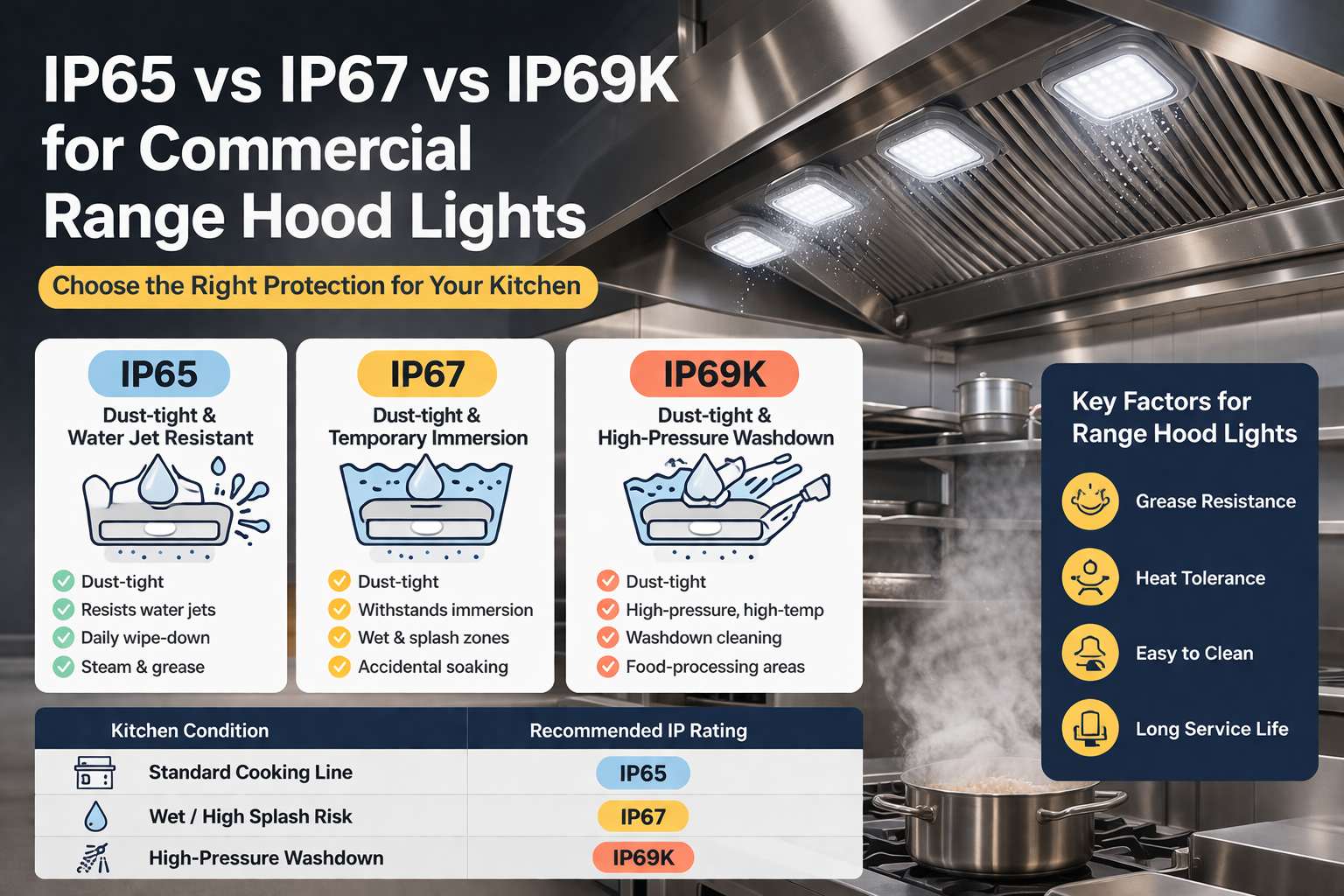
IP65 indicates the enclosure blocks dust completely. It also handles water jets. For lots of commercial kitchen hood light uses, this serves as a solid base. It deals with common exposures in cooking lines. These include steam, floating grease, and regular cleaning with cloths or light sprays. It does not cover full soaking or strong high-pressure washes.
What IP67 means
IP67 provides dust-tight sealing. It also protects against short dips in water. Tests show this as up to 1 meter for 30 minutes. In real life, IP67 helps when the light sees more water than usual. This fits spots with heavy water risks or where cleaning leads to pooled water or surprise soaking.
What IP69K means
IP69K links to safety from strong, hot water washes. It suits fields with tough cleaning needs. Equipment there must endure powerful jets. This includes food processing areas. Thus, it applies only to specific commercial kitchen tasks. These often involve very strict cleaning steps.
IP65 vs IP67 vs IP69K: the real difference for hood lights
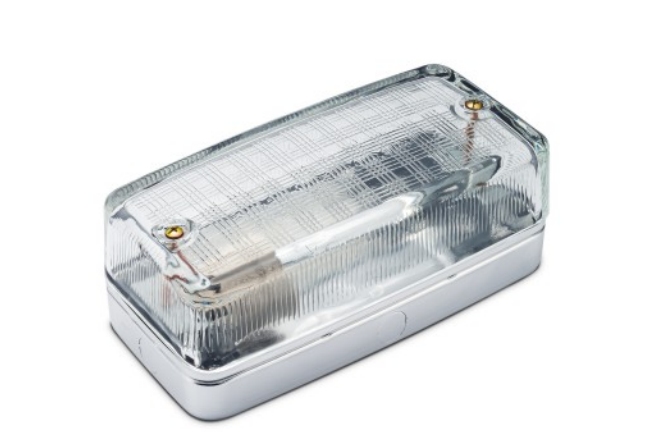
Before looking at the levels, it pays to split hype from everyday needs. A higher rating does not always fit every hood light spot better. IP67 beats IP65 for dipping in water. However, dipping differs from repeated strong hot-water washes. IP69K handles that wash type. Yet many eateries never clean hood lights that way. A frequent error here is confusing spray defense, dip defense, and wash defense. They are distinct.
|
IP Rating |
Dust Protection |
Water Protection |
Typical Fit for Commercial Kitchen Hood Light |
|
IP65 |
Dust-tight |
Water jets |
Standard cooking lines, routine wipe-downs, normal splash and steam |
|
IP67 |
Dust-tight |
Temporary immersion |
Wet zones with higher water exposure or accidental soaking risk |
|
IP69K |
Dust-tight |
High-pressure, high-temperature washdown |
Heavy sanitation areas with aggressive hose-down cleaning |
These differences count because choosing a hood light should match the cleaning routine. If the light sits above a line where staff use mostly cloths and soft sprays, IP65 works fine. When the hood zone gets wetter and direct water hits more often, IP67 adds helpful extra safety. If the place relies on strong hot-water cleaning as usual, that is when IP69K fits best.
Why commercial kitchens need more than “waterproof”
An IP rating is just one piece of the puzzle. In commercial kitchen hood lighting, handling heat, fighting grease, housing build, and ease of cleaning matter equally. A light might have fine sealing but still fail if the lens catches grease, the body is tough to wipe, or it breaks down in hot use.
Key buying points beyond the IP code
When picking a commercial range hood light, these factors often tell good specs from poor ones.
- resistance to grease vapor and oil build-up
- stable operation in long high-temperature shifts
- sealed housing that is easy to wipe clean
- durable lens and cover materials
- low replacement frequency in long-hour kitchens
A reliable commercial kitchen hood light holds steady brightness. It cleans fast. It cuts down on extra fixes. Operators care more about that than a big rating that does not fit the site’s cleaning ways.
Which IP rating should most commercial kitchens choose?
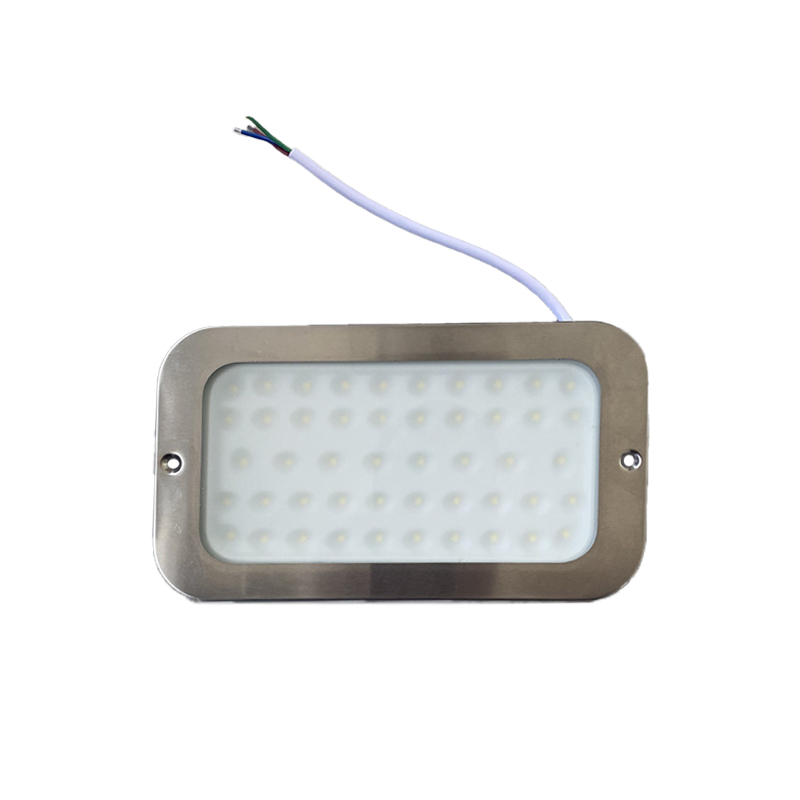
The answer tends to be easier than it seems.
IP65 is often the right starting point
For typical commercial kitchens, IP65 usually offers the best mix. It blocks dust fully and resists water jets. This handles much of the exposure in restaurants, cafeterias, hotel kitchens, and like spots. If the hood light mainly meets grease mist, steam, and regular wipes instead of direct strong hose use, IP65 suits the task well.
IP67 is useful when water exposure is heavier
IP67 works better when the hood area stays damper or risks more direct water in upkeep. It is not needed for every hood light. But it makes sense as an upgrade in kitchens with more splashes, drips, or surprise water than normal.
IP69K is for washdown-heavy operations
IP69K suits places with strict cleaning. In food handling or other strong wash areas, basic splash safety falls short. The light might face powerful, hot water sprays and must hold its seal. This is why IP69K shows up often in pieces on wash lighting and clean-focused buildings. For most regular restaurant hoods, though, it provides more guard than needed.
A simple selection guide for procurement teams
A basic buying tip can speed up sourcing.
|
Kitchen Condition |
Recommended Range Hood Light IP Rating |
|
Standard line cooking, daily wipe-downs, steam and grease exposure |
IP65 |
|
Wet environment, stronger splash risk, more direct water contact |
IP67 |
|
High-pressure hot-water cleaning, strict sanitation routine |
IP69K |
This method ties the choice to how the kitchen runs. It also helps manage costs. Picking IP69K for all lights might hike prices without real gains in spots that skip wash cleaning. Picking too low can mean shorter life, fading light, or quick swaps. The top commercial range hood light is not the one with the biggest code. It is the one that fits the cleaning style, daily load, and exposure in the hood area.
Foshan Simple Technology Co., Ltd as a range hood light supplier
For those buying range hood lights for commercial kitchens, فوشان بسيطة التكنولوجيا المحدودة stands out as a focused maker. It has over 15 years in commercial kitchen items like range hood lights, grease filters, adjustable feet, and fryer baskets. The firm offers OEM and ODM services. It has a steady supply chain and aids for delivery and cost management. Its site features range hood lights with waterproof, anti-oil-fume, and oil-resistant builds. The contact section gives direct ways to ask about projects and sourcing.
استنتاج
For hood lighting in commercial kitchens, the IP65 vs IP67 vs IP69K choice should follow site needs, not the top rating out there. IP65 often works for most commercial range hood light jobs. IP67 fits better where water hits harder. IP69K suits wash-heavy zones with strong, hot cleaning. A smart buy also looks at grease handling, heat strength, material build, and clean ease. This mix brings longer life, even light, and fewer fixes.
الأسئلة الشائعة
Is IP65 enough for a commercial range hood light?
In many commercial kitchens, yes. IP65 usually suffices for a waterproof range hood light facing steam, grease mist, and regular cleaning. It often strikes the right balance between safety and price for standard setups.
What is the difference between IP67 and IP69K for a hood light?
IP67 focuses on short dip safety. IP69K targets strong, hot water washes. For a commercial kitchen hood light, IP69K handles far tougher cleaning than IP67.
Do restaurant kitchens really need IP69K range hood lights?
Only certain ones do. If the kitchen does strong wash cleaning, IP69K may fit. For many restaurant kitchens with usual wipes and light sprays, IP65 or IP67 works better.
What else matters besides the range hood light IP rating?
Heat handling, grease fight, sealed build, clean ease, and run life all count. This is because hood lights face hot, greasy, busy settings.
How can buyers choose a commercial range hood light supplier?
A good supplier should prove skill in commercial kitchen goods, fitting waterproof and oil-proof hood light choices, firm making aid, and clear inquiry paths. Foshan Simple Technology Co., Ltd shows OEM and ODM options, and contact ways.
