


5 أيام في الأسبوع من الساعة 8:30 صباحاً إلى الساعة 5:30 مساءً

Which Adjustable Legs Are Best for Refrigeration Equipment?
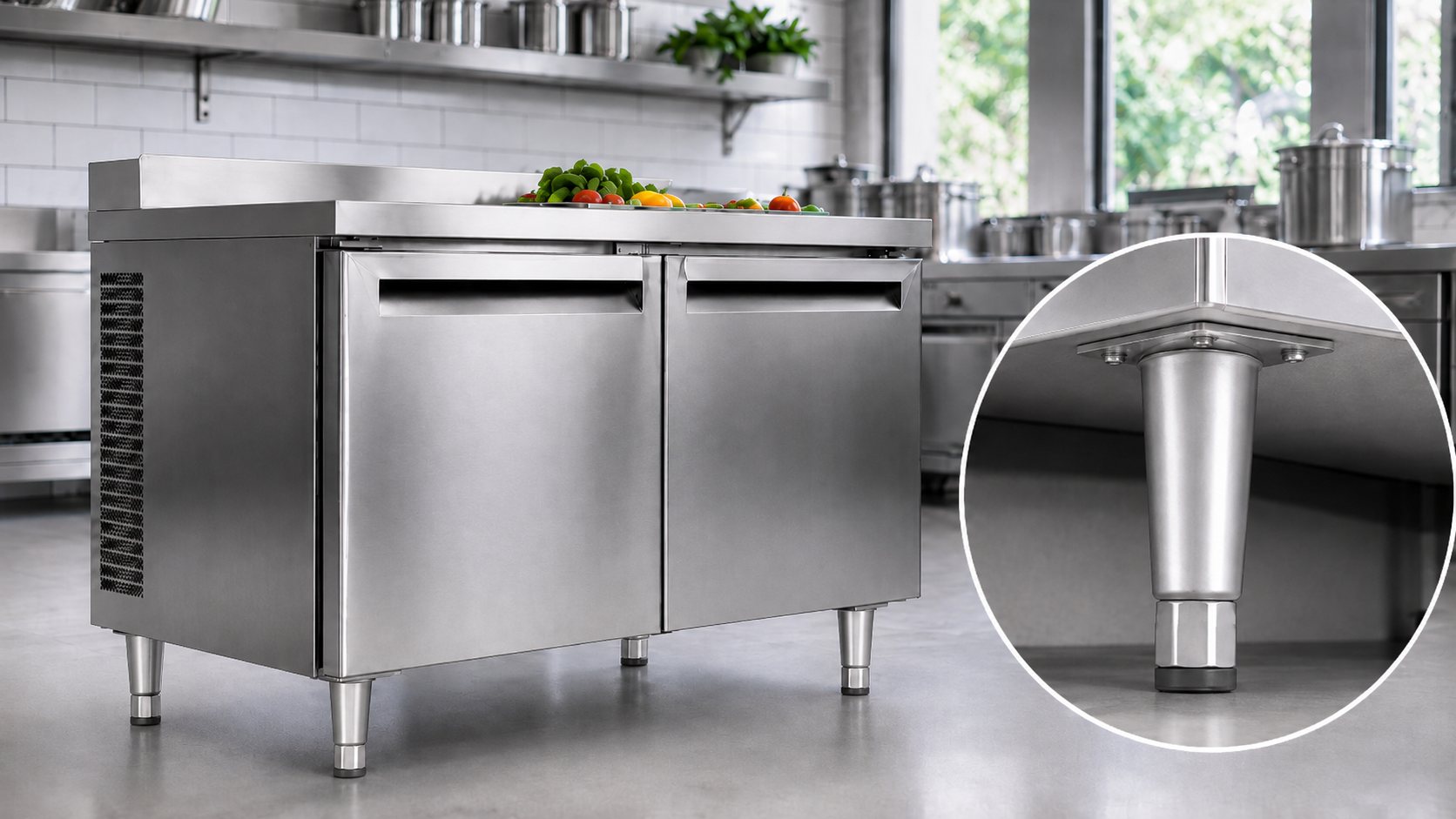
Commercial refrigerators are rarely on a perfectly level floor. Tiles in the kitchen are uneven, floors slope towards drains, and a fully loaded unit may lean forward slightly after installation. The best legs for commercial refrigeration equipment make it possible to ensure the appliance is level, the doors are aligned, and water is draining correctly. They also keep the base of the cabinet free from standing water and dirt. Nevertheless, when choosing the right model, it is essential to focus not only on its appearance and declared height but also on its load-bearing, thread size, range, material, diameter, mounting structure, sanitize rating, and floor type.
How do adjustable legs affect refrigeration equipment performance?
A refrigeration cabinet depends on stable support. When one corner sits low, the frame can twist slightly, causing doors, drawers, shelving, or condensate systems to operate differently from their intended positions.
How does leveling affect doors and drainage?
The alignment of a refrigerator door is directly connected to cabinet geometry. The bending of a refrigerator might make it malfunction and either fail to shut correctly or close unevenly, which would require putting extra pressure on one side when closing the appliance and could damage the sealing strip or create uneven compression resulting in air leakage.
Furthermore, the leveling process is also important for the condensate pan and drain line systems, which need to be slightly inclined in order to drain the water away from the refrigerator. The legs on many refrigerators are adjustable so that the set installer may adjust the unit to a level position despite unevenness in the floor, rather than using spacers that may come loose during cleaning or service.
Why does floor clearance matter?
The clearance under the cabinet provides space for cleaning under the equipment and prevents the base from getting wet, greasy, or contaminated with food particles. It may be required for the proper air circulation or service access.
It is not true that the higher the legs are, the better because it may lead to higher work surfaces, extra pressure on the fittings, and decreased stability. The height should be related to the design of the cabinet, operator working conditions, and relevant installation standards.
Which materials are suitable for commercial refrigerator legs?
Material selection should reflect the working environment rather than appearance alone. Commercial kitchens expose equipment legs to moisture, cleaning chemicals, impacts, grease, temperature changes, and repeated floor washing.
When is stainless steel suitable?
Stainless steel is frequently advised as a good choice for exposed commercial kitchen utensils due to the material’s strong surface and its ability to resist frequent cleaning when the right grade and finish are chosen. It can be a good option in the context of refrigeration equipment next to sinks, worktables, and other wet areas.
It is important to check every part of the structure, including threads, welds, connections, and enclosed spaces, ensuring that they are free from moisture and foreign deposits. It is also important to clarify which material the stem, foot, mounting plate, and other parts are made of and what metal was used for mechanical parts since they are sometimes made from steel rather than stainless steel.
When can polymer or plated steel legs work?
Engineering polymers may reduce weight, protect finished flooring, and resist selected cleaning conditions. Plated steel can provide economical strength in areas with lower exposure to moisture or corrosive substances.
Their suitability depends on load, impact, temperature, and chemical contact. A polymer foot can crack after repeated impact, while damaged plating may expose the base metal to corrosion. Product samples should be checked under realistic equipment weight and cleaning conditions before bulk purchasing.
Which specifications should buyers confirm before ordering?
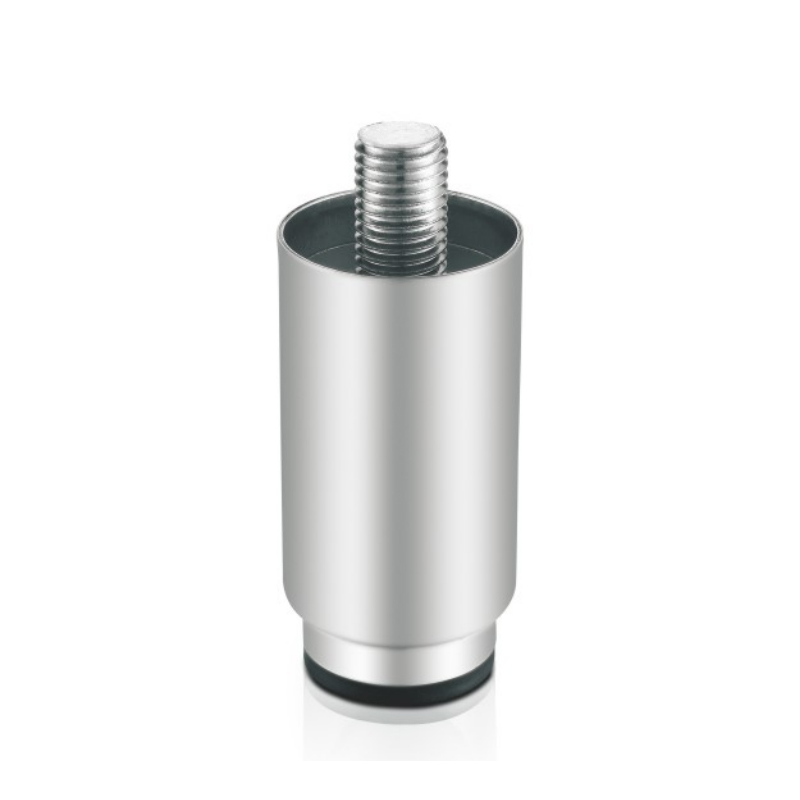
A replacement leg must fit the cabinet interface and support its share of the total operating load. Nominal height alone is not enough to confirm compatibility.
How should load capacity and adjustment range be selected?
The required load capacity should account for the empty cabinet, stored food, shelves, accessories, and uneven weight distribution. During leveling, one leg may temporarily carry more weight than the others, especially when the floor has a pronounced slope.
Adjustment range should cover expected floor variation while leaving adequate thread engagement inside the mounting point. Extending the threaded stem close to its limit may increase movement and bending stress. Buyers should confirm both the total adjustment range and the minimum safe engagement.
Why are thread and foot dimensions important?
Thread diameter, pitch, and length must match the cabinet socket, mounting nut, or plate. A similar-looking thread may begin to engage but damage the mounting point once the unit is loaded.
The foot diameter should spread the load without interfering with nearby panels, drains, or service openings. On soft flooring, a wider foot or load-spreading pad may reduce indentation. Buyers should also confirm whether the base is fixed, swiveling, or fitted with a non-slip surface.
How should adjustable refrigeration legs be installed and maintained?
Correct installation affects both cabinet stability and leg service life. Legs should be fitted before the unit is fully loaded whenever practical, and final leveling should take place at the actual operating location.
What should installers check during setup?
Mounting points should be inspected for damaged threads, distortion, residue, or incomplete welds. Each leg should enter squarely and engage to the required depth. Forcing a misaligned stem can damage both the leg and the cabinet connection.
Technicians should adjust the corners gradually rather than raising one side excessively in a single step. This reduces the risk of twisting the cabinet frame. After leveling, locking nuts or retention features should be secured according to the equipment instructions.
Which maintenance signs require attention?
Routine checks should look for loose stems, bent threads, cracked feet, corrosion, damaged mounting points, and movement when doors are opened. Residue around the base should be removed so defects remain visible.
If a leg repeatedly loosens, simply tightening it may not solve the problem. Vibration, a damaged thread, frame distortion, or inadequate locking may be responsible. A defective part should be replaced with a verified model rather than repaired in a way that introduces rough surfaces or weak joints.
How should procurement teams evaluate an adjustable leg supplier?
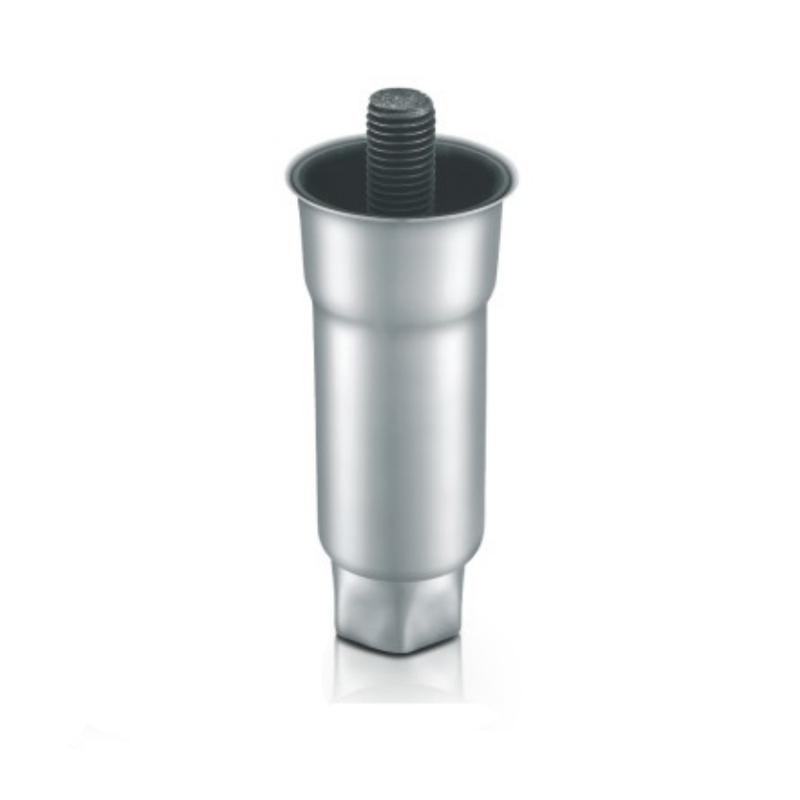
A suitable supplier should provide enough dimensional and material information to match the leg with the refrigeration cabinet before production. Descriptions such as “universal refrigerator leg” are too broad for professional purchasing.
What should buyers review on drawings and samples?
Useful documentation includes overall dimensions, thread details, adjustment range, mounting method, material description, finish, base diameter, and stated load conditions. The drawing should correspond to the sample and quotation.
A physical sample should be installed on the actual cabinet or a representative fixture. Buyers should check thread engagement, adjustment smoothness, foot stability, available clearance, and resistance to movement under load. Packaging should also protect protruding stems and finished surfaces during shipping.
Which purchasing controls reduce repeat-order risk?
Procurement teams should ensure that minimum order quantity, lead time, customization terms, part-number control, inspection requirements, and notification procedures for design, or material changes are established. The issue of their replacement availability is significant because air conditioning units often operate for many years.
Approved drawings and retained samples provide a reference for future deliveries. They help prevent later batches from arriving with a different thread pitch, base profile, finish, or adjustment range that is not immediately visible during receiving inspection.
How can a commercial kitchen supplier support adjustable leg projects?
شركة فوشان للتكنولوجيا البسيطة المحدودة supplies commercial kitchen products for equipment manufacturers, distributors, and project buyers. For adjustable leg projects, buyers can submit cabinet drawings, equipment weight, thread specifications, required height range, floor conditions, material preferences, and packaging requirements. The supplier can then coordinate sample development and specification confirmation. A physical fit check should verify thread engagement, leveling travel, base stability, and cabinet clearance before production. Quotations should identify the thread, material, finish, mounting structure, packaging method, lead time, and inspection criteria. Final drawings and approved samples should remain controlled for repeat orders.
استنتاج
The most appropriate adjustable legs for the refrigerator are determined by the cabinet’s load, the mount interface, the floor conditions, the cleaning requirements, and the working height. The material is not as important as the accuracy of thread engagement, the range of adjustment, the stability of the base, and proper installation. It is necessary to check samples on the equipment before buying and have drawings approved for subsequent orders. It is vital to ensure that the legs are not loose, bent, cracked, or corroded since these factors affect the drainage, door alignment, sanitation, and overall cabinet stability.
الأسئلة الشائعة
1. What material is suitable for commercial refrigerator legs?
Stainless steel suits many wet or frequently cleaned kitchens, while polymer or plated steel may work in less demanding areas. The complete assembly should be evaluated for load, moisture, chemicals, and corrosion exposure.
2. How do I measure a replacement refrigerator leg?
Record the overall height, adjustment range, thread diameter, thread pitch, thread length, foot diameter, and mounting method. Compare those measurements with the cabinet drawing or an approved original sample.
3. How much adjustment range does a refrigeration leg need?
The required range depends on floor variation and cabinet design. Select enough travel for leveling while maintaining secure thread engagement and avoiding excessive stem extension that could reduce stability.
4. Why does a refrigerator remain unstable after leveling?
Possible causes include loose locking nuts, damaged threads, a narrow foot, uneven loading, frame distortion, or flooring that compresses under weight. The complete support system should be inspected.
5. Can adjustable legs be customized for refrigeration equipment?
Yes, depending on supplier capability and order requirements. Common variables include thread size, height, adjustment range, foot shape, material, finish, mounting structure, and packaging.
