


5 Tage in der Woche von 8:30 bis 17:30 Uhr

Are Nano Grease Filters Worth It for Commercial Kitchens?

Commercial kitchens that handle frying, wok cooking, grilling, roasting, and heavy batch cooking deal with one constant problem: grease-loaded air. A standard commercial kitchen grease filter can capture part of that oil mist, but in high-grease kitchens, the filter often becomes dirty fast, airflow drops, and the exhaust system needs more frequent cleaning.
A nano grease filter is built for kitchens where oil fume separation matters every day. It is not only a removable hood accessory. It affects smoke removal, duct cleanliness, exhaust fan pressure, staff cleaning time, and long-term kitchen safety. For hotels, canteens, restaurants, central kitchens, and food service facilities with long operating hours, the real question is not whether a nano grease filter costs more than a basic filter. The better question is whether it can reduce hidden maintenance pressure across the whole kitchen exhaust system.
What Makes High-Grease Commercial Kitchens Hard on Filters?
High-grease kitchens produce more than visible smoke. During frying, stir-frying, and grilling, hot oil breaks into fine grease particles and oil mist. These particles rise with heat and cooking fumes before entering the smoke exhaust hood. The grease filter is the first barrier before the air moves into ductwork and the exhaust fan.
In a light-duty kitchen, a standard stainless steel grease filter may work well for a longer period. In a busy commercial kitchen, the load is different. Filters may collect sticky oil within days, especially near fryer lines, wok stations, and grill sections. Once grease blocks the filter surface, airflow becomes weaker. Smoke may stay near the cooking line, heat can build up under the hood, and staff may notice stronger odors during peak hours.
Fryer Lines Create Heavy Oil Mist
Fried chicken kitchens, fast food kitchens, and canteen fryer areas release a steady stream of fine oil particles. A fryer may run for several hours without a long break, so the filter keeps collecting warm grease. If the filter design is too simple or hard to clean, the kitchen team may remove thick grease every few days.
Wok Stations Need Fast Smoke Capture
Wok cooking produces short bursts of high heat and dense cooking fumes. The smoke rises quickly and carries oil with it. In these kitchens, a grease filter for commercial kitchen use must handle both heat and sudden airflow pressure. Weak filtration can allow more grease to move deeper into the kitchen exhaust system.
Grill Areas Add Smoke, Odor, and Grease
Grill kitchens need stable smoke removal. Charred food residue, grease vapor, and heat all pass toward the hood. If the commercial hood filter is dirty or bent, smoke capture becomes uneven. This can affect working comfort and increase the cleaning load on the hood canopy.
What Is a Nano Grease Filter?
A nano grease filter is a high efficiency grease filter designed to separate oil and oil smoke in a commercial kitchen exhaust hood. Compared with a basic metal filter, its value comes from a more refined filtration surface, stainless steel structure, and easier cleaning performance.
It still needs regular cleaning. It is not a replacement for hood maintenance. Its role is to improve the first-stage grease capture before oil travels into ductwork, fan parts, and other exhaust components.
How Nano Filtration Helps Oil Fume Separation
Nano filtration focuses on capturing fine oil particles and reducing the amount of grease that passes through the filter. In daily use, this can help keep the kitchen range hood filter cleaner for longer between washing cycles, depending on cooking volume.
In high-grease commercial kitchens, better oil fume separation can bring several practical benefits:
- Less sticky grease reaching ductwork
- More stable airflow under the hood
- Lower pressure on exhaust fan cleaning
- Easier daily filter removal and washing
- Better protection for the exhaust system
The benefit is most visible in kitchens where filters become oily quickly, even with regular cleaning.
How It Differs from a Standard Grease Filter
A standard stainless steel grease filter may be enough for moderate oil loads. A nano grease filter is more suitable when the kitchen has long cooking hours, frequent frying, or dense smoke. The difference is not only in filtration. It also includes daily handling, cleaning speed, corrosion resistance, and how well the filter keeps its shape after repeated washing.
Are Nano Grease Filters Worth the Higher Cost?
For high-grease commercial kitchens, nano grease filters are often worth considering because the purchase price is only one part of the cost. A cheap filter that clogs quickly, bends during washing, or allows too much oil into the exhaust system can create extra labor and maintenance expense later.
The stronger value appears when the kitchen runs many hours per day and cannot afford weak smoke removal during lunch or dinner service.
The Real Cost Is Not Only the Filter Price
A commercial kitchen grease filter affects several cost areas. When the filter works poorly, oil can collect faster in the hood, ductwork, and exhaust fan. This may lead to more cleaning work and more downtime.
|
Cost Area |
Standard Filter Risk in Heavy Grease Use |
Nano Grease Filter Value |
|
Cleaning labor |
Grease builds up fast and takes longer to wash |
Easier surface cleaning can save staff time |
|
Airflow |
Clogged filters reduce smoke capture |
More stable airflow when cleaned on schedule |
|
Ductwork |
More oil may reach deeper parts |
Better oil separation helps reduce grease buildup |
|
Fan maintenance |
Grease can collect on fan components |
Less oil load may reduce maintenance pressure |
|
Replacement |
Thin or weak filters may warp |
Durable stainless steel improves service life |
The return depends on the kitchen’s cooking type. A hotel kitchen with several cooking stations or a staff canteen serving hundreds of meals may gain more value than a small low-grease kitchen.
Better Grease Capture Can Protect the Exhaust System
The exhaust system is more expensive than the filter. Duct cleaning, fan cleaning, access panel work, and repair visits all cost time. A high efficiency grease filter helps reduce grease movement beyond the hood. This does not remove the need for full system cleaning, but it can slow heavy buildup when paired with a proper cleaning schedule.
In busy kitchens, this matters because grease does not stay in one place. Once it passes the filter, it can stick to duct walls, fan blades, corners, and hidden surfaces. Over time, those areas become harder to clean.
Where Do Nano Grease Filters Work Best?
Nano grease filters are not needed in every commercial kitchen. They are most useful where oil smoke is heavy, service hours are long, and filter cleaning is frequent. The stronger the grease load, the easier it is to justify the upgrade.
Best-Fit Commercial Kitchen Applications
|
Küchentyp |
Grease Load |
Why Nano Grease Filter Fits |
|
Hotel kitchen |
Medium to high |
Many cooking stations and long service hours |
|
Staff canteen |
Medium to high |
Large meal batches and frequent cooking cycles |
|
School canteen |
Mittel |
Stable daily cooking with strict cleaning needs |
|
Fried food restaurant |
Hoch |
Fryers produce dense oil mist |
|
Wok kitchen |
Hoch |
Fast heat and thick cooking fumes |
|
Central kitchen |
Hoch |
Long operating hours and batch cooking |
|
Grill kitchen |
Medium to high |
Smoke, oil vapor, and odor control matter |
The filter choice should match the cooking line, not only the hood size. A fryer zone and a light boiling zone should not always use the same filter type.
When a Standard Filter May Be Enough
A nano grease filter may not be necessary for kitchens with very low oil output or short operating hours. If the cooking line rarely uses fryers, grills, or wok stations, a regular stainless steel range hood filter may be enough. In these cases, the buyer may focus more on size accuracy, material thickness, and easy cleaning.
What Should Buyers Check Before Ordering Nano Grease Filters?
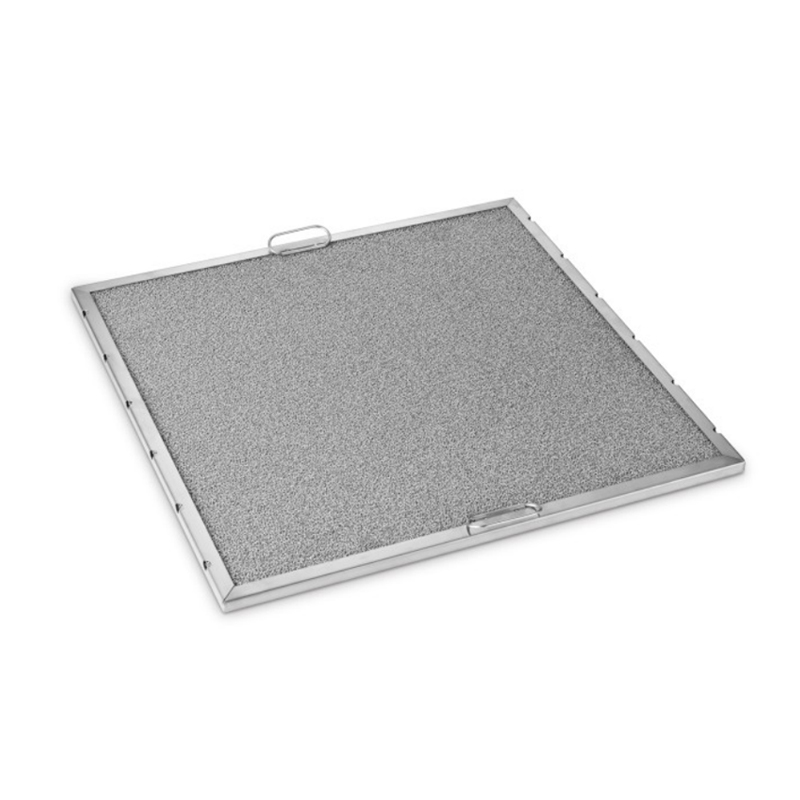
A nano grease filter must fit the hood system correctly. Good filtration performance can be wasted if the size is wrong, the frame leaves gaps, or the handle position makes removal difficult.
Commercial buyers should treat grease filters as technical parts rather than simple accessories. Before bulk orders, several details need to be confirmed.
Size, Thickness, and Hood Compatibility
Grease filters are commonly ordered by height, width, and thickness. A small measuring error can cause loose installation or difficult removal. Buyers should check the existing filter size, hood slot depth, airflow direction, and whether the filter needs a vertical or horizontal baffle layout.
For large orders, sample confirmation is practical. A sample helps check fit, handle position, surface finish, and packaging before mass production.
Stainless Steel Material
Stainless steel grease filter material affects corrosion resistance, heat resistance, and cleaning life. In wet, oily, and high-temperature kitchens, stainless steel is widely used because it handles repeated washing better than weaker metal options.
For buyers, material choice often depends on budget, kitchen humidity, cleaning chemical strength, and expected service life. High-volume kitchens usually benefit from stronger material stability.
Handle Design
A double handle grease filter is useful when staff need to remove filters often. Handles reduce slipping during removal and help during cleaning. In commercial kitchens, oily gloves, hot surfaces, and tight hood spaces can make filter handling difficult. A filter with better grip and balanced structure can reduce daily hassle.
Packaging and Bulk Order Details
For importers, contractors, and kitchen equipment distributors, packaging quality is also important. Grease filters can be scratched, bent, or damaged during shipping if they are packed poorly. Bulk buyers should confirm carton quantity, surface protection, edge protection, and mixed container options before placing repeat orders.
How Does a Nano Grease Filter Compare with Baffle and Mesh Filters?
Baffle filters are common in many commercial kitchens because they are durable and washable. Mesh filters can capture grease but may clog faster in heavy oil environments and may be less suitable for demanding commercial use depending on local rules and hood system design.
Nano grease filters sit closer to the high-efficiency side of the selection. They are especially useful where oil fume separation, easy cleaning, and exhaust protection carry more value than the lowest initial price.
Nano Filter vs Baffle Filter
A baffle grease filter is a solid choice for many kitchens. It works by forcing grease-laden air to change direction, allowing oil to collect on metal surfaces. A nano grease filter adds stronger oil separation ability for kitchens with heavier fumes.
The better option depends on kitchen load. A standard baffle filter may fit moderate cooking. A nano grease filter is stronger for fryer lines, wok stations, and long-hour hotel or canteen kitchens.
Nano Filter vs Mesh Filter
Mesh filters can become packed with grease in heavy commercial use. Once clogged, airflow drops quickly. Cleaning may also take more effort. In high-grease commercial kitchens, buyers often prefer filters that are easier to wash and more stable under repeated use.
How Can Buyers Judge If the Upgrade Is Worth It?
The best way to judge value is to review the kitchen’s real operating pressure. If filters stay fairly clean, smoke removal is stable, and duct cleaning is manageable, a standard stainless steel grease filter may be enough. If filters become sticky after short use and smoke often escapes from the hood area, a high efficiency grease filter deserves attention.
Practical Signs That Nano Grease Filters May Be Worth It
A nano grease filter is a strong candidate when a commercial kitchen has these conditions:
- Fryers, wok ranges, grills, or roasting lines run daily
- Filters need cleaning very often
- Smoke removal drops during peak service
- Grease collects quickly inside the hood
- Exhaust fan maintenance is becoming more frequent
- Staff spend too much time washing filters
- Current filters warp, rust, or fit poorly
- Buyers need a more durable filter for repeat projects
When several of these issues appear together, the filter is no longer a small purchase item. It becomes part of the kitchen’s daily operating cost.
Why Work with Foshan Simple Technology Co.Ltd?
Foshan Einfache Technologie Co.Ltd supplies commercial kitchen parts for buyers who need stable product quality, practical structure, and OEM/ODM order support. Its product range covers grease filters, adjustable legs, bullet feet, frying baskets, range hood lights, and other commercial kitchen accessories. This product mix fits equipment manufacturers, kitchen contractors, distributors, and importers who prefer to source related parts from one supplier.
For grease filter buyers, the company offers stainless steel filter options with features such as double handle design, efficient oil separation, easy cleaning, and commercial kitchen hood compatibility. Its factory capacity, export team, production line, and experience with overseas markets support sample checks, mixed orders, and bulk purchasing. For buyers working on hotel kitchens, canteens, restaurant chains, or commercial kitchen equipment projects, this helps shorten communication and reduce sourcing risk.
Schlussfolgerung
Nano grease filters are worth it for many high-grease commercial kitchens, especially where frying, wok cooking, grilling, and long service hours create heavy oil mist. Their value comes from better oil fume separation, easier cleaning, more stable airflow, and stronger protection for the kitchen exhaust system.
They are not required for every kitchen. Low-grease commercial kitchens may still work well with standard stainless steel or baffle filters. But for busy hotels, canteens, central kitchens, fried food restaurants, and wok kitchens, a nano grease filter can reduce daily cleaning pressure and support a cleaner, safer, more stable exhaust setup.
The best buying decision should compare filter size, stainless steel material, handle design, cleaning schedule, and supplier support. A well-selected commercial kitchen grease filter can do more than catch oil. It can protect the whole exhaust system behind the hood.
Häufig gestellte Fragen
Are nano grease filters better for high-grease commercial kitchens?
Yes, nano grease filters are better suited for high-grease commercial kitchens where fryers, wok ranges, grills, or long cooking hours create dense oil mist. They help improve oil fume separation and reduce the grease load entering the kitchen exhaust system.
Can a nano grease filter reduce ductwork grease buildup?
A nano grease filter can help reduce grease entering ductwork by capturing more oil particles at the hood stage. It does not replace full hood and duct cleaning, but it can lower the grease load when cleaned on schedule.
What should buyers check before ordering commercial kitchen grease filters?
Buyers should check size, thickness, stainless steel material, handle design, hood compatibility, cleaning method, packaging, and bulk order support. For importers and contractors, sample confirmation before mass production is helpful.
Is a double handle grease filter easier to maintain?
Yes, a double handle grease filter is easier to remove, clean, and reinstall during daily kitchen maintenance. This is useful in commercial kitchens where staff clean several hood filters at the same time.
