


5 Tage in der Woche von 8:30 bis 17:30 Uhr

Bulk Adjustable Legs Buying Guide for Commercial Kitchens
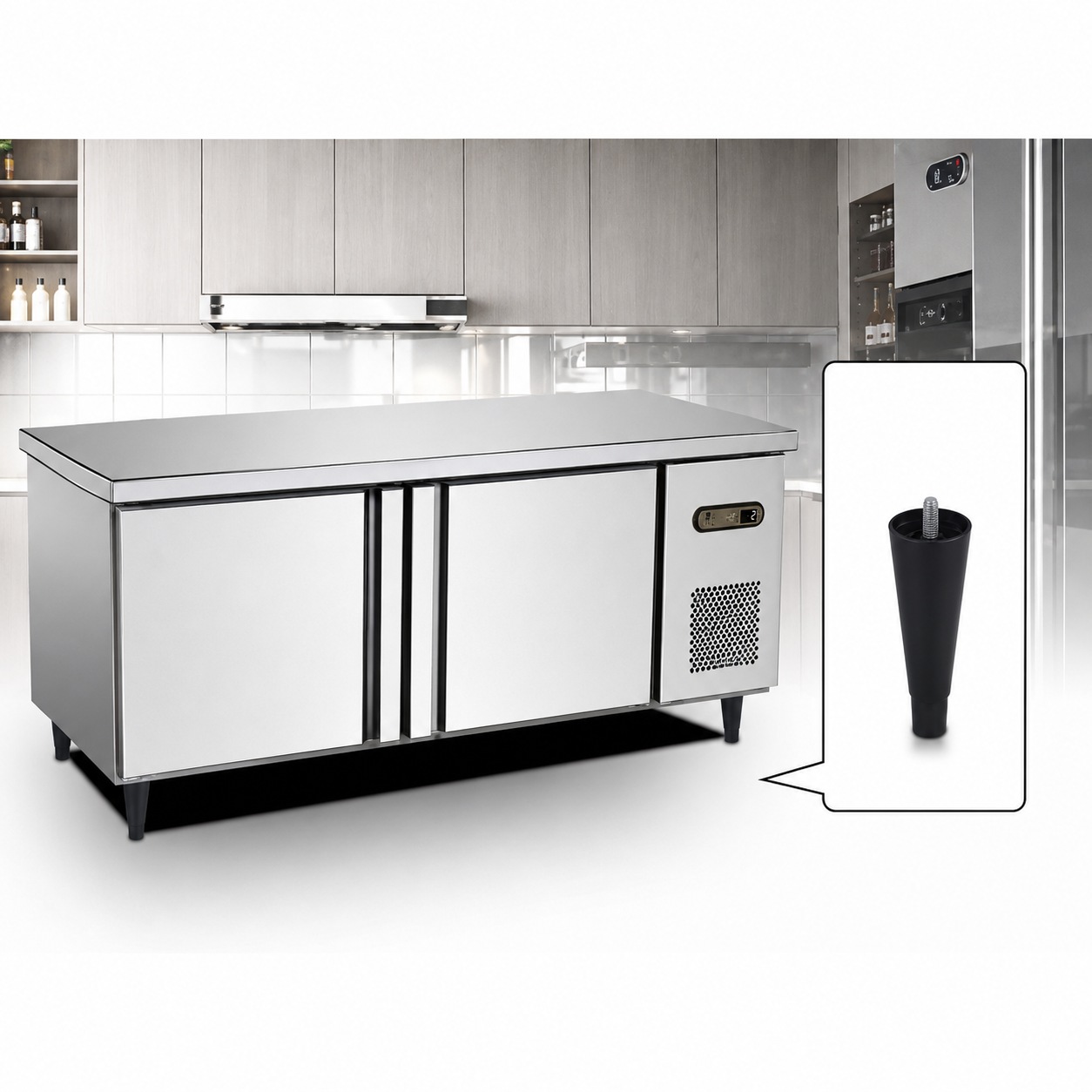
Ordering adjustable legs in bulk looks simple at first. The part is small, the unit price is usually low, and most suppliers can offer several shapes and materials. In commercial kitchen projects, however, this small component carries real pressure. It supports ovens, freezers, dishwashers, prep tables, refrigeration bases, storage units, and movable kitchen stations. A wrong size, weak thread, poor base design, or unsuitable material can lead to unstable equipment, hard cleaning, floor damage, and repeat complaints from end users.
For overseas buyers, the safest purchasing decision starts before the purchase order. Commercial kitchen adjustable legs should be checked by size, load capacity, height range, material, installation method, packaging, and supplier capability. A clear checklist helps importers, distributors, and equipment manufacturers reduce risk when sourcing adjustable legs in bulk.
What Specifications Should Be Confirmed Before Bulk Orders?
Adjustable legs are not one-size-fits-all parts. Commercial kitchen equipment has different frame structures, working heights, load levels, and floor conditions. Before ordering adjustable legs in bulk, buyers should prepare a basic technical sheet.
Size, height range, thread, and base shape matter
The first checkpoint is physical fit. Buyers should confirm total height, adjustable height range, thread diameter, thread length, base diameter, base shape, and mounting style. A 4-inch adjustable foot may suit compact commercial kitchen equipment, while taller height adjustable legs may be needed for freezers, worktables, or equipment that needs more cleaning clearance underneath.
Key specification items include:
|
Item to Check |
Why It Matters in Commercial Kitchens |
|
Height range |
Affects equipment leveling, cleaning gap, and working height |
|
Thread size |
Must match the frame, nut, or mounting insert |
|
Base diameter |
Impacts floor contact, stability, and point load |
|
Material |
Affects rust resistance, strength, and cleaning performance |
|
Load capacity |
Must fit real equipment weight, not only empty weight |
|
Mounting method |
Decides whether the leg can be installed quickly and firmly |
For overseas buyers, drawings or samples are better than text descriptions alone. A small difference in thread or base size can cause large installation delays when the order reaches a commercial kitchen equipment factory or project site.
How Much Load Capacity Is Needed?
Load capacity is one of the most important checks for commercial kitchen adjustable legs. Buyers should not only ask how much weight one leg can carry. The better question is whether the full set can support the equipment during daily use.
Match load rating with real kitchen equipment weight
A prep table may carry cutting boards, food containers, pots, and appliances. A freezer base may carry stored ingredients. A commercial oven may face vibration, heat, and repeated door opening. These working conditions add more stress than the equipment’s empty weight.
A practical method is to calculate the load per leg first, then add a safety margin. For example, if a piece of equipment weighs 240 kg when loaded and uses four adjustable leveling feet, each leg carries about 60 kg under balanced conditions. In real kitchens, weight may shift during use, so choosing a leg close to the exact load is risky. A higher safety margin gives better stability.
Heavy duty adjustable feet are better for ovens, freezer bases, commercial dishwashers, and large worktables. Light or medium-duty adjustable legs may be enough for compact stainless steel cabinets or small prep equipment. Overseas buyers should always match load capacity with application, not only price.
Which Material Works Better in Commercial Kitchens?
Material selection affects service life, cleaning, and user satisfaction. Commercial kitchens use hot water, detergents, oil, steam, and floor cleaning tools. A poor material choice can shorten the life of the part.
Stainless steel, nylon, plastic, and rubber base options
Stainless steel adjustable feet are often used where water, grease, and frequent cleaning are common. They are suitable for freezer bases, ice machine bases, ovens, dishwashers, and heavy kitchen equipment. Stainless steel gives better corrosion resistance and a cleaner appearance in visible areas.
Nylon adjustable feet and engineering plastic adjustable legs can be useful for certain commercial kitchen equipment where cost control, lighter weight, and easy installation matter. They are often selected for medium-load units, cabinets, warmers, and some appliance bases.
Rubber base adjustable legs have a different role. The rubber pad helps reduce slipping and vibration. This is useful for equipment placed on tile floors or areas where small movement may cause noise, floor marks, or safety concerns.
Material selection table
|
Materialtyp |
Suitable Commercial Kitchen Use |
|
Edelstahl |
Freezers, ovens, ice machines, dishwashers, wet areas |
|
Nylon or engineering plastic |
Cabinets, medium-load equipment, cost-sensitive projects |
|
Rubber base |
Anti-slip support, vibration reduction, tiled floors |
|
Adjustable foot with caster |
Movable workstations, service-access equipment, catering trolleys |
The best choice is often not the cheapest one. It is the material that fits the kitchen condition and reduces later replacement cost.
What Applications Should Buyers Match First?
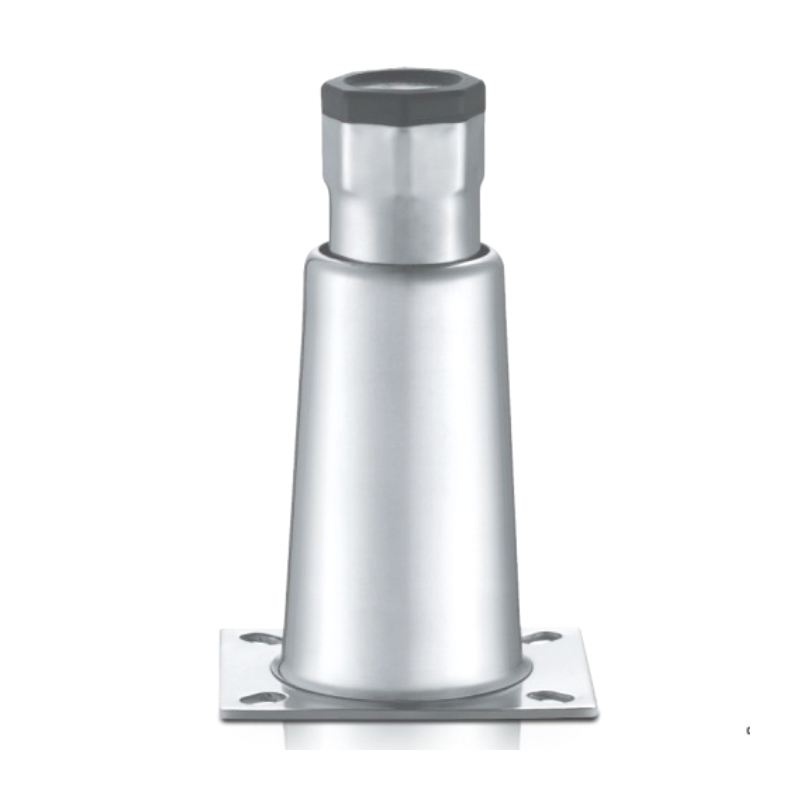
The same adjustable leg may not suit every type of commercial kitchen equipment. Buyers should group products by use before confirming a bulk order.
Ovens, freezers, worktables, dishwashers, and trolleys
Commercial ovens need stable support and heat-resistant nearby structures. Adjustable legs for ovens should focus on high load, strong threads, firm base contact, and smooth height adjustment.
Freezers and refrigeration bases need rust resistance and enough clearance for floor cleaning. In wet areas, stainless steel adjustable feet or corrosion-resistant structures are usually safer choices.
Worktables and prep counters need good leveling. A slightly tilted prep table can affect cutting, food handling, and liquid drainage. Adjustable feet for worktables should be easy to fine-tune after installation.
Dishwashers sit near water supply and drainage. Their adjustable legs should handle wet flooring and allow technicians to adjust the unit after service.
Catering trolleys and movable kitchen stations may need adjustable legs with caster wheels. These parts support occasional movement while still allowing equipment to return to a level position during work.
Should Samples Be Tested Before Mass Production?
Samples reduce risk. This is especially true when the order involves a new commercial kitchen equipment line, private label packaging, or a buyer’s own frame design.
Sample checks should go beyond appearance
A sample should be installed on the actual equipment if possible. Visual inspection alone is not enough. Buyers should check whether the thread fits smoothly, whether the leg adjusts without sticking, whether the base sits flat on the floor, and whether the material matches the agreed standard.
A useful sample test includes:
- Measuring height range with a caliper
- Checking thread diameter and thread length
- Testing adjustment by hand
- Installing the leg on the equipment frame
- Placing weight on the equipment
- Cleaning the surface with normal kitchen cleaning methods
- Checking whether the bottom pad marks the floor
- Comparing sample packaging with export packing needs
After sample approval, the approved sample should be kept as the production reference. This helps both buyer and supplier compare mass production goods with a fixed standard.
What OEM and ODM Details Should Be Confirmed?
Many overseas buyers source adjustable legs as part of a larger commercial kitchen equipment project. In this case, product function is only one part of the order. Branding, packaging, labeling, and repeat supply also matter.
Custom size, logo, packaging, and mixed orders
OEM adjustable legs may require a specific height, base color, threaded stem, rubber pad, or carton label. ODM support may be needed when buyers want to develop a suitable adjustable foot for a new oven, freezer, dishwasher, or prep table series.
Important OEM details include:
- Custom carton label
- Private label or brand sticker
- Mixed sizes in one shipment
- Neutral packaging
- Barcode or item code
- Installation instruction sheet
- Material change request
- Sample approval before production
- Spare parts ratio for after-sales service
For importers and distributors, packaging should be clear enough for warehouse staff to separate different sizes quickly. For equipment manufacturers, part consistency is more important because adjustable legs may go directly into assembly lines.
What MOQ, Payment, and Delivery Terms Matter?
Bulk orders need commercial clarity. A low quotation with unclear MOQ, weak packaging, or long lead time may cause hidden cost.
Clear terms reduce order disputes
Before placing an order, buyers should confirm minimum order quantity, unit price by quantity level, sample cost, production time, payment method, carton quantity, gross weight, and mixed order rules.
A buyer ordering wholesale adjustable legs for several kitchen equipment categories may need different sizes in one shipment. This should be agreed before production. If the supplier allows mixed commercial kitchen parts, the buyer can combine adjustable legs, bullet feet, grease filters, frying baskets, or range hood lights in one purchasing plan, depending on project needs.
Delivery time should also match the buyer’s sales season or equipment assembly schedule. Adjustable legs are small, but late arrival can stop a whole equipment batch from being completed.
How Should Adjustable Legs Be Packed for Export?
Export packaging is often ignored because adjustable legs are not fragile like glass or electronics. This is a mistake. Long-distance shipping, container stacking, humidity, and warehouse handling can still damage the parts.
Carton strength, labels, and quantity control matter
Threaded stems can scratch each other when packed loosely. Rubber bases may deform if cartons are overloaded. Stainless surfaces may show marks when metal parts rub during shipping. Poor labels can cause warehouse errors when several sizes look similar.
Good export packing should include inner bags or separators when needed, strong cartons, clear item labels, quantity marks, and shipping marks. For large orders, pallet packing can reduce carton damage. Buyers should ask for packing photos before shipment, especially for first orders.
A simple packing rule works well: each carton should be easy to count, easy to identify, and strong enough for the full shipping route.
What Quality Checks Should Be Done Before Shipment?
Img.Plastic adjusting feet.webp
Inspection should be practical. It does not need to be complicated, but it must cover the parts that cause real complaints in commercial kitchens.
A buyer-friendly inspection checklist
Before shipment, buyers or third-party inspectors can check:
- Product size against approved sample
- Thread condition and smooth adjustment
- Base shape and bottom contact
- Material and surface finish
- Height adjustment range
- Load-bearing structure
- Rubber pad firmness if included
- Quantity per carton
- Carton label and shipping mark
- Mixed model separation
- Packaging strength
- Random installation test
For repeat orders, inspection data should be compared with previous shipments. Stable quality over time is more valuable than one good first order.
How to Choose a Reliable Adjustable Feet Supplier?
A reliable adjustable feet supplier should offer more than a product list. Overseas buyers need stable communication, manufacturing experience, quality control, packaging support, and practical advice for commercial kitchen applications.
Product range and supply control are key signs
A strong supplier can provide several types of commercial kitchen adjustable legs, including stainless steel adjustable feet, nylon adjustable feet, rubber base adjustable legs, cabinet legs, heavy duty adjustable feet, and adjustable feet with caster wheels. A wide range helps buyers match different equipment without searching for a new supplier each time.
Supplier evaluation should include:
- Experience with commercial kitchen parts
- Ability to support OEM adjustable legs
- Clear product specifications
- Sample support before bulk production
- Stable production and delivery schedule
- Export packaging experience
- Quick response to technical questions
- Ability to support repeat orders
For overseas buyers, communication quality is part of product quality. When a supplier asks about equipment weight, floor condition, mounting method, and packing needs, the order usually becomes safer.
Foshan Simple Technology Co.Ltd as a Commercial Kitchen Parts Supplier
Foshan Einfache Technologie Co.Ltd supplies commercial kitchen parts such as Grease Filter, Adjustable Legs, Bullet Feet, Frying Basket, and Range Hood Light. Its adjustable legs range covers several commercial kitchen needs, including equipment leveling, freezer base support, oven support, cabinet support, anti-slip use, and movable kitchen equipment.
The company serves overseas buyers who need commercial kitchen parts with OEM and ODM support. Its product system is suitable for importers, distributors, kitchen equipment manufacturers, and project buyers that need steady supply across multiple product categories. With factory production, export service experience, and a product line focused on commercial kitchen use, Foshan Simple Technology Co.Ltd can support buyers who need bulk adjustable legs together with related kitchen hardware parts.
Schlussfolgerung
Ordering adjustable legs in bulk for commercial kitchens requires more than comparing unit prices. Buyers should check size, thread, height range, load capacity, material, application, sample testing, OEM details, packing, delivery terms, and supplier reliability. These details help reduce installation problems, unstable equipment, corrosion complaints, carton damage, and repeat after-sales costs.
For overseas buyers, the best result comes from matching adjustable legs to real commercial kitchen equipment. Ovens, freezers, dishwashers, worktables, cabinets, and movable stations all need different support features. A supplier with commercial kitchen experience, broad product options, and OEM support can make bulk purchasing more controlled from sample to shipment.
Häufig gestellte Fragen
What should overseas buyers check before ordering adjustable legs in bulk?
Buyers should check size, thread, height range, load capacity, material, base type, application, sample quality, MOQ, packaging, and delivery terms. For commercial kitchen adjustable legs, the equipment weight and floor condition should be checked before the order is confirmed.
Which material is best for commercial kitchen adjustable legs?
Stainless steel adjustable feet are suitable for wet, greasy, and heavy-duty commercial kitchen areas. Nylon or engineering plastic adjustable feet can fit some medium-load kitchen equipment. Rubber base adjustable legs are useful where anti-slip support and vibration reduction are needed.
Are heavy duty adjustable feet necessary for all commercial kitchen equipment?
No. Heavy duty adjustable feet are mainly needed for ovens, freezer bases, dishwashers, large worktables, and high-load equipment. Smaller commercial kitchen cabinets or light equipment may use medium-duty adjustable legs if the load and mounting structure are suitable.
Can OEM adjustable legs be customized for kitchen equipment manufacturers?
Yes. OEM adjustable legs can be customized by height, thread size, base shape, material, color, logo, carton label, and packaging. For kitchen equipment manufacturers, a sample should be tested on the actual equipment frame before mass production.
