


5 Tage in der Woche von 8:30 bis 17:30 Uhr

Adjustable Legs vs Fixed Legs: Which Is Better for Heavy Kitchen Equipment?
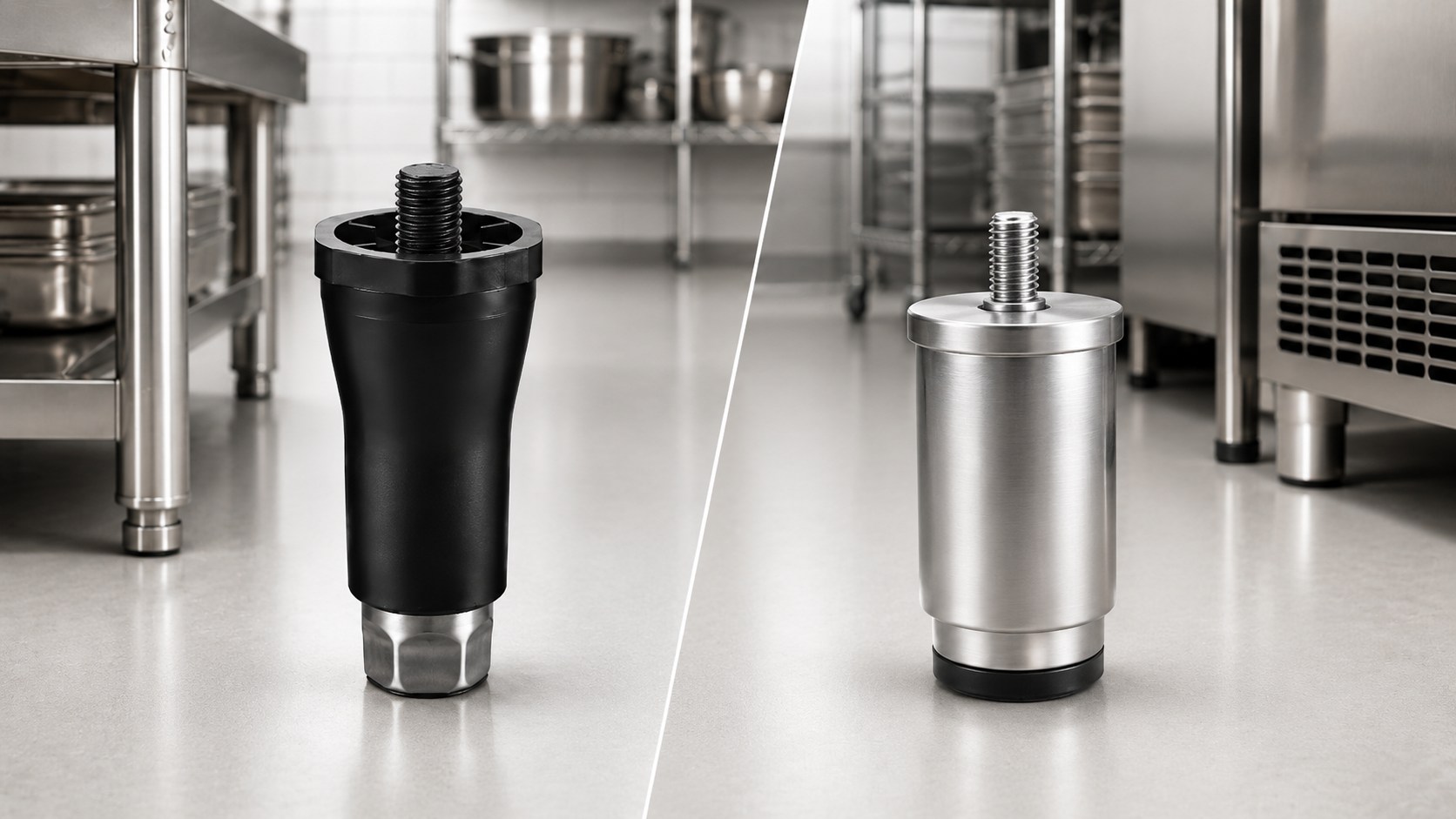
In comparing verstellbare Beine to fixed legs for your kitchen equipment, what seems to be a small decision can have significant consequences. Uneven surfaces for your fryers, prep tables, sinks, cabinets, refrigerators or cooking lines can cause problems such as: unstable equipment, poor drainage, cracked welds, unsanitary cleaning areas, increased inspection problems and repair calls. The type of feet that your equipment needs to run properly must consider several factors: the amount of weight that the piece of equipment places on the floor, the type of floor that it will be placed on, the need for good cleaning access, installation time, availability of spare parts and future maintenance requirements.
When does leg design become a real procurement risk?
At first glance legs look simple enough to detail. But they support static loads of weight as well as daily, sudden impact, vibration, and, worst of all, exposure to cleaning chemicals. The risk to the owner is that he views the legs as easily replaceable accessories.
Why does heavy equipment change the decision?
Most heavy kitchen equipment does not distribute weight evenly across all four corners. A griddle, sink bowl, compressor or large fryer tank for example can be quite wide in one direction which may cause weak floor sections to bend, shift or even be scratched by the weight of the equipment. Legs on such equipment can be fitted with adjustable feet which allow for uneven floor levels. However, care must be taken to ensure that the stem, foot and locknut are all suitable for the weight that they are to be supporting. If legs are fixed then the equipment will have a stiffer feel as the floor is level and the frame is square.
What should buyers inspect before approving drawings?
Potential buyers check the diameter of the tube, the wall thickness, the size of the foot plate, the length of the thread, the weld area, the material grade, the pad material, and the range of adjustment. They ask if the feet are shipped assembled, if spare pads are available, and if the cartons are large enough to protect the threads. For OEM orders, drawings of the mounting method, not just the visible leg height, are reviewed.
Which option performs better in adjustable legs vs fixed legs?
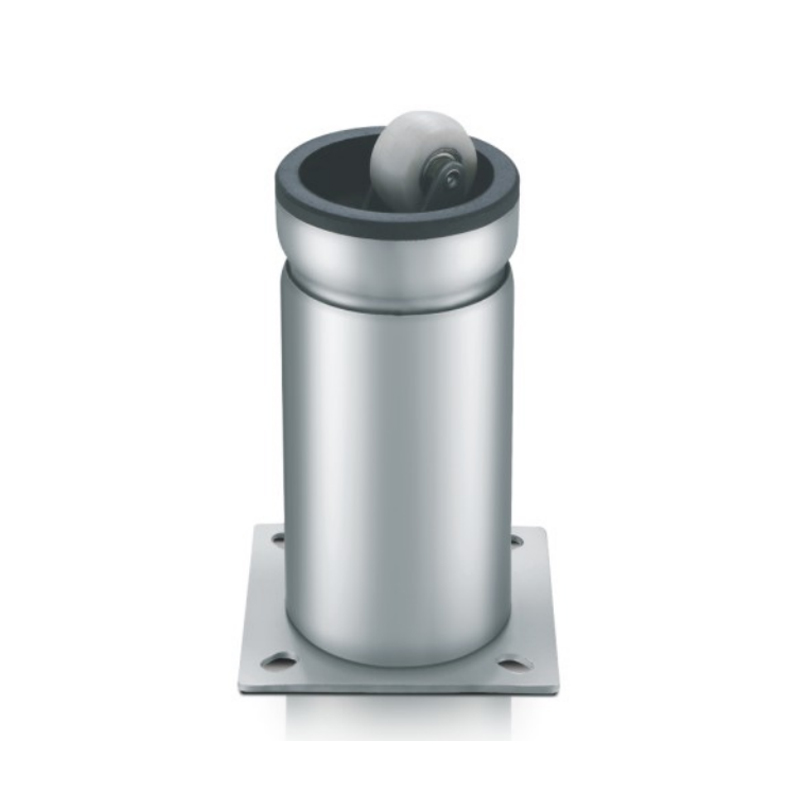
The answer is somewhat practical. First one has to know the kind of floor and the kind of equipment one has in the kitchen. Adjustable legs are best for leveling. But fixed legs are better when the floor and the frame already are under one’s control.
Where do adjustable legs work better?
These types of legs perform very well for prep tables, sinks, wall shelving, a refrigerated base or a modular cooking line which will be installed on a floor that is slightly uneven. These legs will allow an installer to ‘trim’ a number of products to precisely achieve the correct & even height; thus enable them to create & align a number of related items to perfectly correspond to other related items & also to create the exact & critical slope for effective drainage. Lastly, such legs can be a major benefit as products travel to & are sold in a number of markets because the product does not have to be re-engineered for altered ceiling height requirements. Rather, merely ‘snipped’ to achieve required height in each respective market!
Where do fixed legs work better?
In equipment that is intended to stay in one place and does not travel, using fixed legs can reduce the number of parts on the legs and can be easily visually inspected. However, fixed legs have lower flooring tolerance than adjustable legs. Sloped, patched, or unevenly tiled floors can make using fixed legs a problem and could require using shims, rework, or even correcting the floor.
How should buyers compare equipment feet in a quote?
|
Artikel |
Verstellbare Beine |
Fixed legs |
|
Leveling |
Good for uneven floors |
Needs floor accuracy |
|
Cleaning |
Threads need inspection |
Fewer crevices |
|
Installation |
Easier final leveling |
Faster if floor is ready |
|
Fit |
Modular products |
Permanent installations |
What compliance and cleaning issues affect leg selection?
Equipment are rated on strength and cleanability. Whether the equipment has adequate load rating is not as important as how the legs of the piece will trap grease, water or food.
How do clearance rules affect installation?
The FDA Food Code 2022, a model code, describes floor equipment not intended to be moved which should be either sealed to the floor or designed to stand on legs. Equipment with legs must have at least 6 inches of floor space cleared. There are special 4 inch clearances allowed when floor space is adjacent and can be adequately cleaned. NSF/ANSI 2 covers sanitation requirements for tables, counter tops, cooking hood, shelving, sinks, and related items and appurtenances. (U.S. Food and Drug Administration)
Which materials and finishes should buyers request?
For heavy duty legs stainless steel is preferred to be used near water, salt, detergent, steam and food residue. In this case nylon or rubber caps can prevent scratching of floors. It is to be clarified if stainless steel parts are only decorative as covers or if they are to be loaded. Special attention must be paid to open tube ends, sharp edges, rough welds, loose caps and deep gaps around threaded parts. For the use in kitchens where food is prepared NSF/ANSI 51 is to be checked as this standard deals with materials and surface finishes of food equipment. This standard also can be used to prove that appropriate materials have been used and are documented.
How should buyers evaluate cost, maintenance, and supplier support?
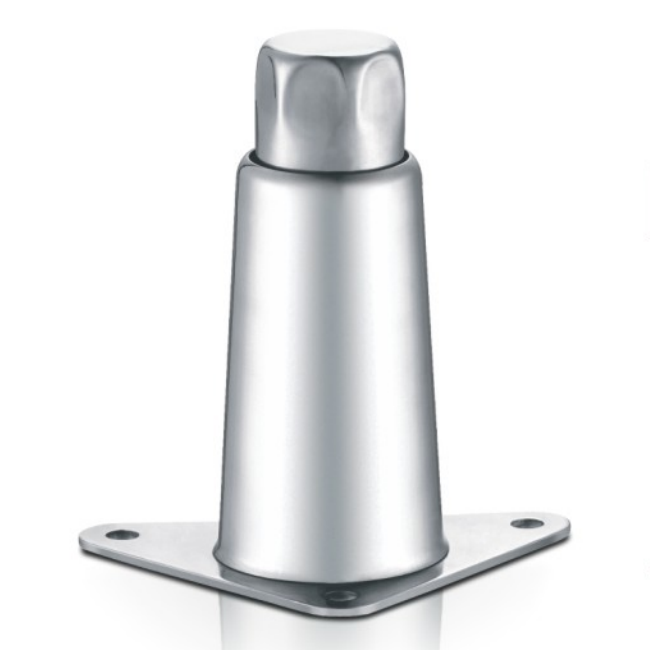
An inexpensive leg can become cost ineffective if it delays construction, fails in warranty, or is difficult to clean. Compare cost as installed cost, not just cost.
What hidden costs appear after installation?
Some of the common ‘hidden costs’ of furniture for cleaning and maintenance are: leveling of labor; shims, etc. to level tables; replacement of foot pads, etc.; damage to floors; corrosion near mop zones; lack of spare parts for items that have been damaged; and complaints that tables rock. Adjustables: tighten locknuts after leveling to ensure that legs stay in position. Fixeds: more control on frame squareness and floor tolerance. In both cases: check for looseness during normal cleaning, as furniture will vibrate and move which can change the point of contact.
What should be included in the RFQ?
When requesting quotes for equipment, it is helpful to list the following criteria: weight, number of legs, dynamic load, floor type, desired height, height adjustment, tube diameter, material, finish, pad material, packaging, labeling, sample quantity, minimum order quantity, lead time and spare parts policy. It is also helpful to ask for drawings, material declarations, information regarding corrosion and photos of welds and the equipment’s feet when applicable. If a company is operating a private-label program, they must agree to the logo marking and carton requirements prior to the item going into production.
Which supplier support matters when sourcing commercial kitchen products?
Foshan Einfache Technologie Co., Ltd. is presented on its website as a professional kitchen equipment OEM and ODM manufacturer offering commercial kitchen products such as adjustable legs, bullet feet, fryer baskets, grease filters, and range hood lights. For buyers comparing equipment feet, such a supplier may help with product matching, customization requests, sample review, packaging details, and communication across small accessories used in larger kitchen equipment assemblies. The company website also lists adjustable legs and related hot-sale items, which makes it a relevant reference for buyers sourcing replacement parts or OEM components. Buyers should still compare specifications, documents, pricing, delivery terms, and service before ordering.
Schlussfolgerung
Should you opt for a piece of commercial kitchen equipment with adjustable legs or with fixed legs? The answer to this is not as simple as one-size-fits-all. Firstly, if the floors in your premises vary then it will be better to opt for equipment with adjustable legs as this will allow you to ensure that all of your equipment are properly leveled – especially important when working with delicate ingredients in a busy environment. Also, items with adjustable legs are typically far better for the modern kitchen that requires modular commercial kitchen products that can be used to best effect across different areas of the kitchen, or indeed taken from room to room as required. If, on the other hand, you know that the equipment base will be placed on a floor that you control, then you will find that there are far fewer crevices and parts to clean should you opt for a piece of commercial kitchen equipment with fixed legs. This makes such items ideal when you require a basic piece of equipment for long-term use in a single location and are less concerned with load bearing, cleanability, corrosion resistance and installation labor etc. against the possible disadvantage of having fewer spare parts available for your item should they be required. Your main consideration should therefore be to select a piece of commercial kitchen equipment that is most compliant for your specific circumstances and not purely on the basis of lowest price for the number of feet of equipment that you require.
Häufig gestellte Fragen
1. Are adjustable legs safe for heavy kitchen equipment?
Yes, when the rated load, thread size, tube strength, foot pad, and locknut match the equipment weight and use conditions. Avoid unknown load claims without drawings or material details.
2. When should fixed legs be selected instead?
Use of fixed legs are best suited for installations with level floors, stationary equipment and dimensionally stable welded frames. Less suited for installations where on site the installer must correct for slope.
3. What material is better for equipment feet?
Stainless steel is often preferred in wet or greasy kitchens, while rubber or nylon pads may protect the floor. Material choice depends on load, chemicals, temperature, and cleaning routine.
4. How much clearance should heavy kitchen equipment have?
For floor-mounted units that cannot be moved, references are often made to the FDA Food Code model requirements for 6 inches of clearance to the floor or sealing to the floor, and whether these requirements are adopted by local jurisdictions and include any exceptions.
5. What should buyers ask before ordering heavy duty legs?
Ask for the technical drawings, material composition, the load assumptions, the possible adjustment range, the type of foot pads used, weld photos, packaging details, MOQ, lead time, spare parts information, and OEM or ODM support.
