


5 Tage in der Woche von 8:30 bis 17:30 Uhr

Commercial Hood Dripping Grease? Causes and Fixes
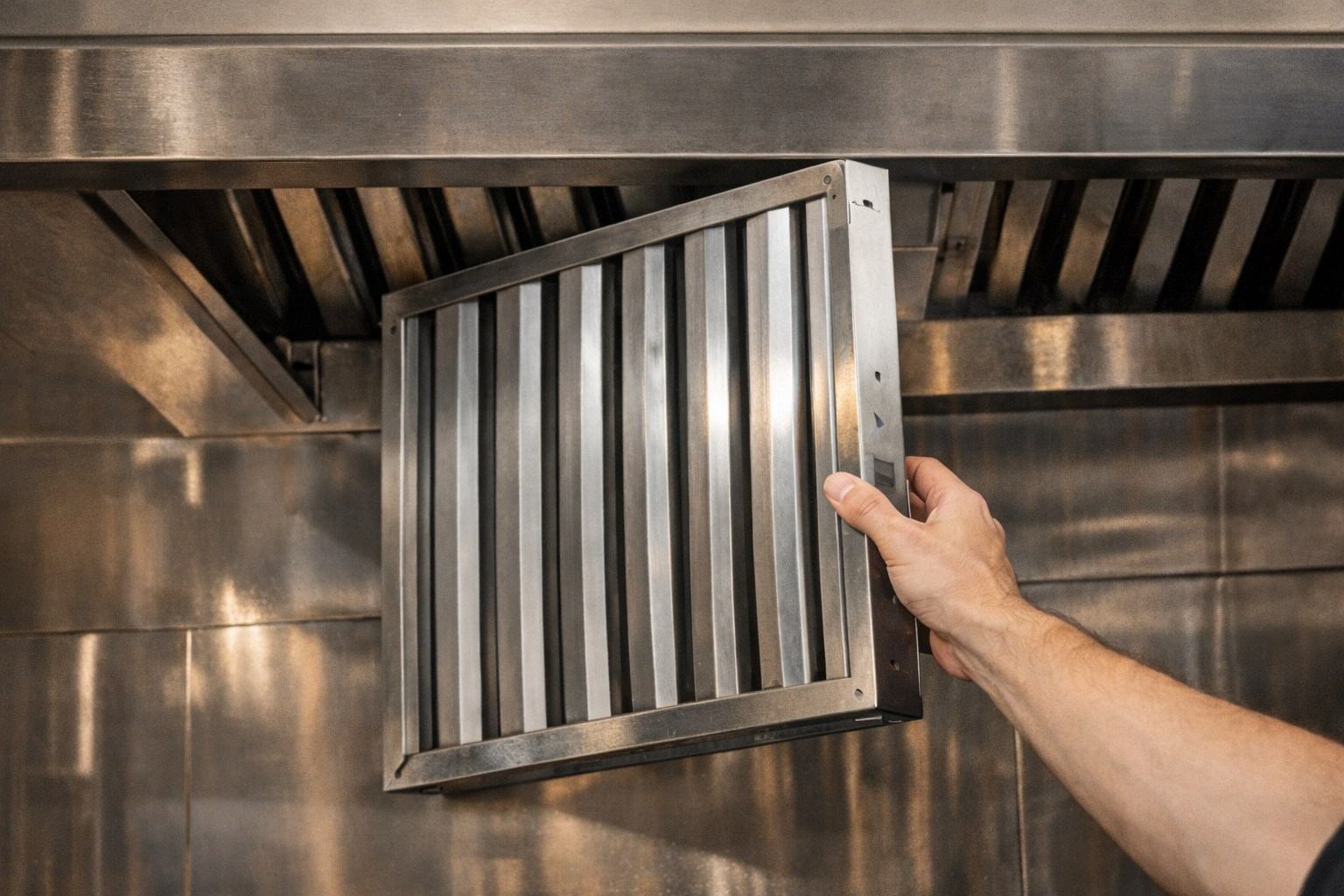
A commercial hood that drips grease often shows a basic system fault. It is not just about basic cleaning. In busy kitchens, grease drops usually come from four key reasons. These include a full grease filter. They also involve a filter put in the wrong way. Another is a bad filter match. Plus, there is weak air flow through the hood, fan, or duct. In places with heavy cooking, more than one of these problems might happen at the same time.
When grease starts to drip from the bottom edge of the hood, the issue often grows past looks. Metal surfaces get sticky. Cleaning takes more time. Smells last longer. Grease can build up and spread into the exhaust path. That is why the first action is not a fast wash. Instead, the first step is to find where the grease escapes. You also need to see why the hood no longer handles it well.
The first question is whether it is pure grease or grease mixed with water
Before you take the hood apart, the liquid gives good hints. Not every drop from a commercial kitchen hood is thick grease only. In many spots, steam cools on metal parts. Then it mixes with old oil inside the canopy or duct. The mix looks thinner. It runs quicker. It spreads more than grease from a full filter.
This difference counts a lot. Pure grease and grease with water do not always lead to the same check steps.
What the drip can reveal
A thick, sticky brown drop often means a full grease filter. It could point to an overfull grease tray. Or buildup inside the hood body. A thinner oily fluid might mean water with grease. This happens a lot over fry areas, hot prep spots, and lines with long cooking times.
|
What is observed |
Most likely cause |
First area to inspect |
|
Thick brown grease drip |
Saturated grease filter |
Filter face and lower hood edge |
|
Thin oily liquid |
Condensation mixed with grease |
Hood interior and duct section |
|
Drips during peak service |
Filter overloaded by grease |
Cleaning cycle and filter condition |
|
Drips near hood edges |
Wrong size hood filter or poor seating |
Filter frame and side gaps |
Why the distinction matters in commercial kitchens
A kitchen exhaust hood that drips grease from condensation still needs checks on the filter and air flow. However, the look at it should cover temperature changes too. You must check duct state and inner parts where steam might cool fast. In short, the drop is just the start sign. It does not tell the whole story.
The grease filter is usually the first component to inspect
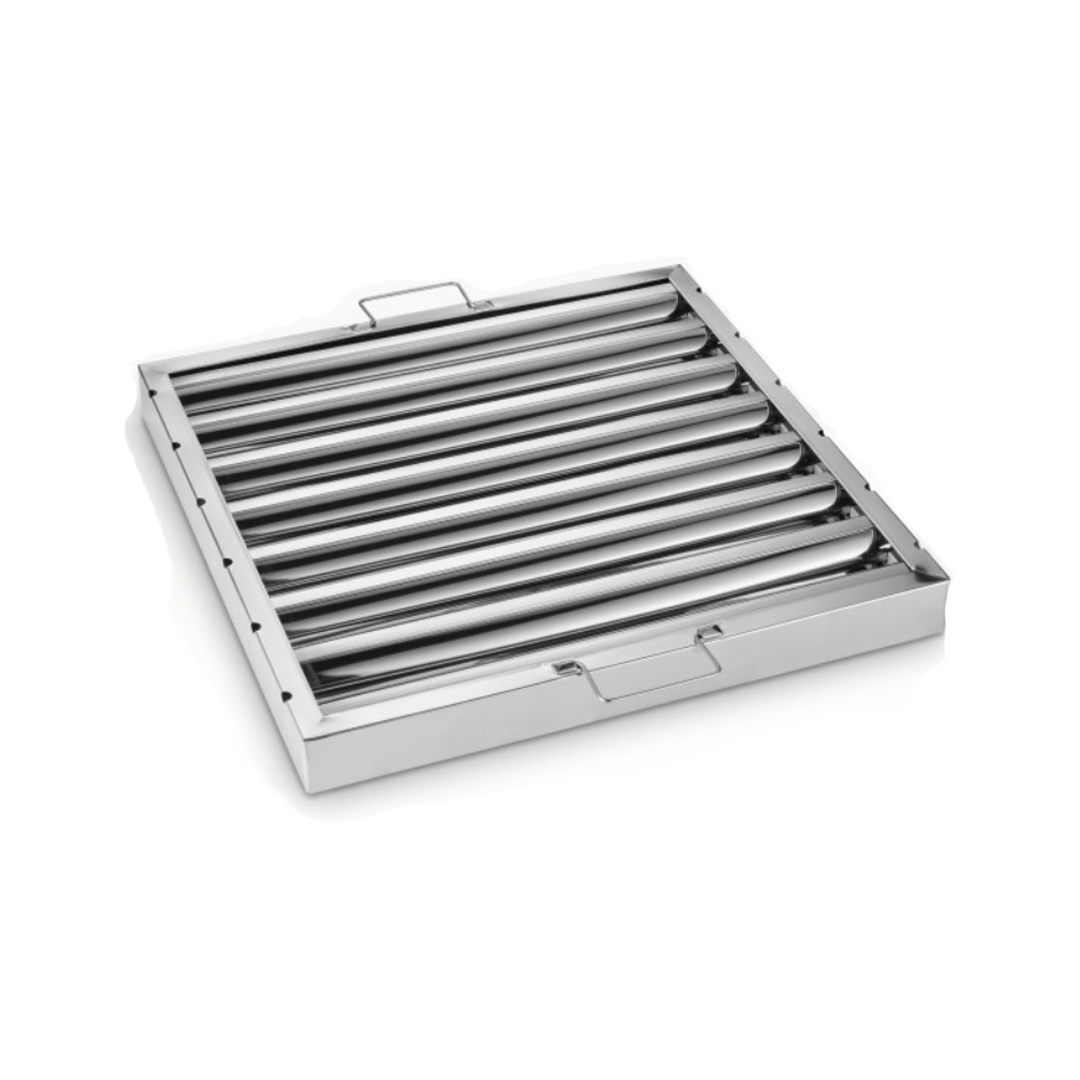
In most commercial kitchens, the grease filter acts as the main block between air grease and the rest of the exhaust setup. When it stays clean, fits right, and has the correct size, it pulls grease from the air. Then it sends it down. But when it gets clogged, grease gathers on top and in the paths. Soon it falls back out.
That is why a blocked grease filter is the top reason for grease drops from a range hood filter.
How a saturated grease filter starts failing
A full grease filter often gets that way bit by bit. It does not fail all at once. Grease builds in the baffles or inner routes. Over time, it gets thicker. As those paths fill up, fresh grease cannot drain like it should. The filter quits as a block. It turns into a spot to hold grease.
At that point, many signs show up together.
- grease dripping from the range hood filter
- smoke hanging lower beneath the canopy
- stronger cooked-oil odor after service
- sticky residue on nearby stainless panels
- weaker capture even though the hood is still running
Why cleaning intervals matter
In easy work settings, a filter might go longer without a wash. But in commercial kitchens with fryers, grills, or long hours, grease piles up fast. A set clean plan is not always right. The filter state must fit the real cooking amount.
For this reason, stainless steel grease filters work well in commercial kitchens. They take many cleanings. They stand up to daily use. Plus, they come out and wash easily on a normal upkeep plan.
A clean filter can still fail if it is installed incorrectly
After a wash, many kitchens think the drop issue will stop right away. But when it keeps going, the way it is put back in is the next big suspect. A filter set backward, at a bad angle, or not fully in the track messes up the drain. It also makes air flow uneven over the space.
This is a usual reason a hood keeps dripping grease even after a fresh clean.
What usually goes wrong during reinstallation
In most spots, the problem is small. The filter looks in place. But one corner sticks up. Or the bottom edge does not lock tight. The inside way of the filter might be flipped. A grease tray could be full too. Or the tray might have old bits blocking it.
These are tiny mistakes. Yet in a commercial hood, they lead to fast repeat buildup.
Why installation direction matters
For a baffle filter, the setup counts on inner paths doing their job. Those paths split grease from moving air. They guide it down. If the filter sits wrong, grease does not drain well. Also, a bad fit lets air go around the filter. That means air with grease skips the filter. It moves past instead of through.
Filter size and fit often decide whether the hood stays clean
A wrong size hood filter is one of the most missed reasons for ongoing grease troubles. New filters get picked by looks alone sometimes. This happens in old commercial kitchens. It leads to a loose match, small spaces, and bad seal on the frame.
Once that starts, cleaning will not fix it for much time.
What happens when the fit is off
If the filter is too small, a bit short, or not right for the spot, some air skips the filter path. Grease then goes around it instead of through. The hood seems to work. But grease starts to gather behind the filter. It builds on the inner canopy or deeper in the exhaust.
|
Fit issue |
What happens inside the hood |
Likely result |
|
Filter too small |
Air bypass around the filter |
Grease buildup behind the filter |
|
Loose seating |
Uneven airflow across the opening |
Drips return soon after cleaning |
|
Frame not flush |
Poor drainage and poor capture |
Grease marks near hood edges |
|
Non-standard opening |
Standard filter does not seal well |
Ongoing maintenance problems |
Why custom filter sizing matters in commercial kitchens
Commercial kitchens face old hood systems often. They deal with changed openings or special equipment setups. In these cases, a made-to-fit grease filter is the best fix. A custom baffle grease filter with exact size cuts down skips. It boosts catch. It lowers chances of drops coming back after care.
Airflow problems often sit behind repeated grease drips
If the filter is clean, set right, and fits well, check air flow next. A range hood that does not pull air strong enough cannot move grease steam out quick. That steam hangs in the hood longer. So it sticks to metal spots more. Then it turns into grease drops.
Bad air flow in a range hood points to trouble with the fan, ducts, or air balance in the kitchen.
The most common airflow-related causes
Clogged ducts happen a lot in kitchens with long hours and slow upkeep. Grease inside the duct blocks flow. It slows the exhaust way. Dirty fan parts cut power too. Sometimes a bad fan motor makes weak pull. It causes slow catch or uneven work over the hood space.
Issues with makeup air can add to it. If new air does not balance right, the hood pushes smoke and grease out front. It does not pull it up steady.
What staff often notice before the drip gets worse
Many real signs pop up before grease drops a lot.
- smoke rolling out from the front of the hood
- lingering cooking odor after service
- reduced capture over fryers or hot lines
- unusual fan noise
- more frequent grease marks inside the canopy
These signs often come before you see the first clear drop.
The repair works better when the inspection follows a clear order
People often fix grease drops just by cleaning again. That adds work but skips the real cause. A better way is to check the hood step by step. Start with the filter. Then go out to the full system.
A practical inspection sequence
- Shut the hood down and allow surfaces to cool.
- Remove the grease filter and inspect the grease load.
- Check whether the filter was installed backwards or seated loosely.
- Clean and empty the grease tray.
- Measure the opening if the fit seems loose.
- Look for air bypass around the filter frame.
- Inspect fan pull, motor sound, and visible duct blockage.
- Review makeup air if smoke spills from the hood front.
When cleaning is no longer enough
You should swap a grease filter when grease sticks in the paths after many washes. Or if the frame bends, the fit gets loose, or drops come back fast after a good clean.
For commercial kitchens, the best swap often has these parts.
- stainless steel construction
- easy removal for cleaning
- stable seating in the hood frame
- low chance of air bypass
- custom sizing when needed
An easy clean grease filter helps. But clean ease alone is not all. The match, drain route, and air push must team up well.
Über Foshan Simple Technology Co., Ltd.
Foshan Einfache Technologie Co., Ltd. supplies gear for commercial kitchens. It makes grease filters. The firm gives stainless steel grease filters for commercial spots. It backs OEM and ODM work. It does custom builds for folks who want right sizes, steady stock, and real fixes for swaps or projects.
Its items focus on kitchen parts for hard use. They take regular washes and keep working in tough cooking areas. For buyers with odd hood spots, steady need for new ones, or own-brand orders, made-to-order builds and ship control matter as much as the filter.
Schlussfolgerung
A commercial hood that drips grease comes from a system fault most times. It is not just a clean issue on top. In most kitchens, the main reason is a full grease filter. Or one put in backward. A blocked grease tray counts too. So does a wrong size hood filter. Reduced air flow from fan or ducts plays a role.
The best fix starts with the right check. If the filter has more life, a good clean and right setup might end it. If the match is bad, the frame hurts, or drops return quick, swap the grease filter for the long run. In commercial kitchens, the right filter size, good air flow, and strong stainless steel build make the top change.
Häufig gestellte Fragen
Why is a commercial range hood dripping grease after the filter was cleaned?
This often means a filter set backward, a full grease tray, bad fit, or weak air flow in the hood setup. Cleaning aids only if the filter is the true cause.
Can blocked ductwork cause grease dripping from a kitchen exhaust hood?
Yes. Blocked ductwork slows air with grease. When that air stays too long, it sticks to metal and can drop back into the hood spot.
When should a grease filter replacement be chosen instead of another wash?
Swap it when the filter stays blocked after cleans. Or the frame bends, fit loosens, or drops come back soon after it goes in.
Does a wrong size hood filter really cause air bypass around the filter?
Yes. A small size gap makes spaces around the frame. Once air skips, grease goes around not through. That builds up inside and brings back drops.
Is a stainless steel grease filter suitable for commercial kitchens?
Yes. A stainless steel grease filter lasts long. It cleans easy. It fits repeated take-out and wash in busy commercial kitchen work.
