


5 Tage in der Woche von 8:30 bis 17:30 Uhr

Stainless Steel Passivation Requirements for Commercial Fryer Baskets
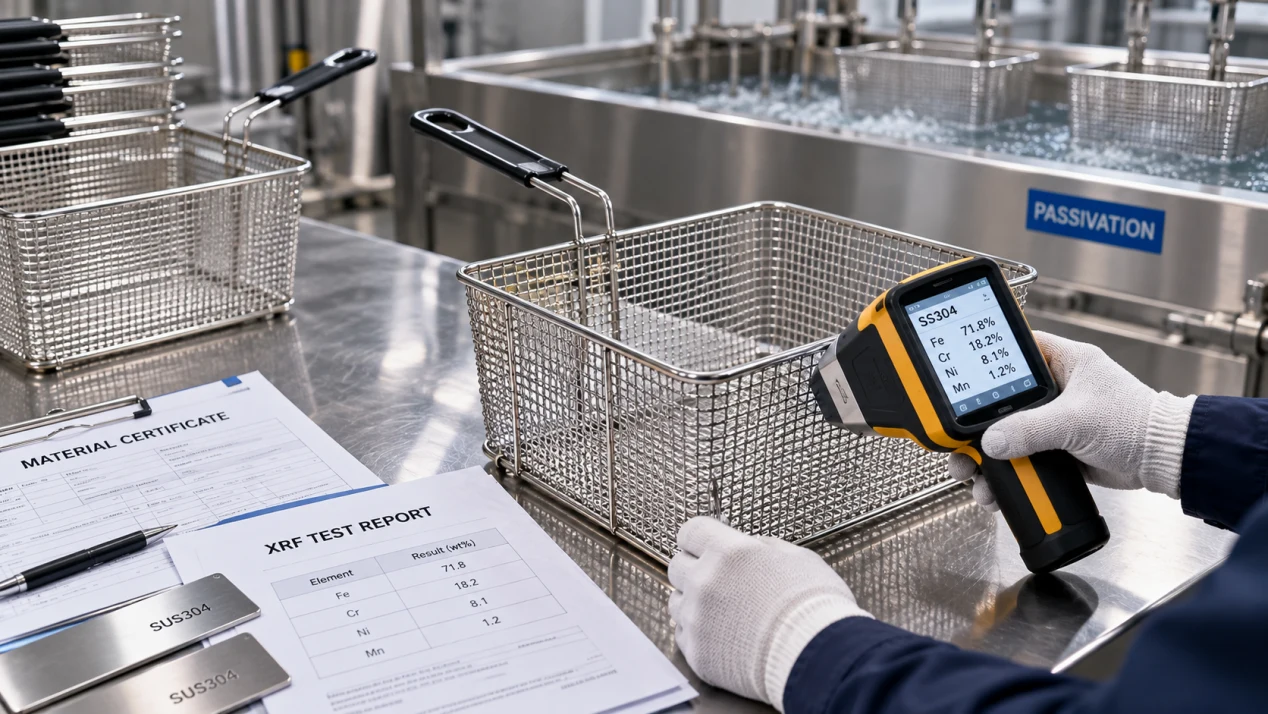
Not every stainless steel fryer basket needs a separate passivation treatment after manufacturing. A basket made from the specified alloy, fabricated with suitable tools and properly cleaned may already have an acceptable surface condition. Problems arise when free iron contamination, welding residues, or unsuitable finishing practices remain on the completed product. For OEM buyers, the question is therefore not simply whether a supplier offers passivation, but what condition the basket is in before treatment and what the proposed process is expected to achieve. A clear purchasing specification should distinguish material selection from surface preparation, describe the required finishing procedure, and establish how the finished basket will be accepted.
When Does a Stainless Steel Fryer Basket Need Additional Passivation?
A stainless steel surface normally develops a chromium-rich passive film when suitable environmental conditions are present. Manufacturing, however, can leave contamination that interferes with the expected surface condition. The need for additional treatment depends on how the basket was fabricated and whether its finished surfaces satisfy the agreed requirements.
This distinction becomes important when comparing quotations for commercial stainless steel fryer baskets . One supplier may include chemical treatment as part of its standard process, while another may quote a cleaned and polished basket without a separate passivation operation. Neither description establishes the condition of the finished product without further information.
Look at What Happened During Manufacturing
Wire cutting, bending, frame forming, and welding involve repeated contact between stainless steel and manufacturing equipment. If tools or fixtures introduce free iron contamination, the finished basket may develop localized staining despite being made from the specified stainless steel grade.
Welded intersections also deserve attention. Their geometry can make it difficult to remove processing residues, particularly where several wires meet a frame. The relevant issue is whether the completed assembly has been cleaned and finished appropriately, not whether every visible weld requires chemical treatment.
Passivation cannot correct an incorrectly specified alloy or repair a defective joint. Those problems must be resolved before the finishing process is approved.
The Treatment Sequence Matters
A supplier may passivate individual components before final assembly. If subsequent welding, grinding, or handling introduces new contamination, the earlier treatment may not address the finished basket’s condition.
Where post-fabrication passivation is required, the manufacturing specification should identify when the treatment takes place and what cleaning is needed beforehand. Buyers should also confirm whether any later operations could alter the treated surfaces.
How Is Chemical Passivation Different From Electropolishing?
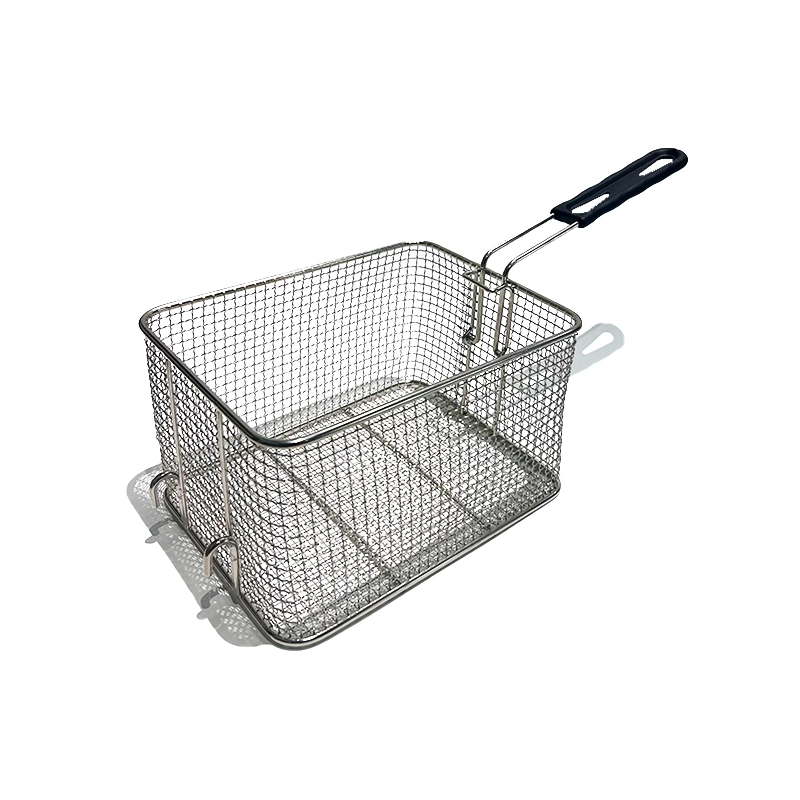
The terms are sometimes used loosely in supplier quotations, although they describe different manufacturing operations. That creates a purchasing problem when two samples have a similar appearance but have undergone different treatments.
The distinction matters particularly for baskets with tightly spaced wires and numerous welded intersections. Surface appearance can be assessed visually, but appearance alone does not establish which treatment was performed or whether it met the specified requirements.
Understand What Each Process Does
Cleaning removes manufacturing residues, while mechanical polishing modifies the surface through abrasion. Chemical passivation involves a specified chemical treatment of the stainless steel surface, including the removal of certain contaminants such as free iron.
Electropolishing is different. It removes metal through a controlled electrochemical process and can alter surface characteristics.
| Process | Main purpose | Purchasing consideration |
| Cleaning | Removes oils and manufacturing residues | Final cleanliness |
| Mechanical polishing | Changes surface texture and appearance | Approved finish |
| Chemical passivation | Treats the stainless steel surface | Specified treatment procedure |
| Electropolishing | Electrochemically removes surface metal | Finish and process requirements |
These processes should not automatically be treated as substitutes. A basket described as electropolished has not necessarily undergone the separate chemical passivation procedure specified by a buyer.
Does a Bright Surface Prove the Basket Was Treated?
A polished basket may look clean and uniform, but its appearance does not provide a reliable record of its processing history.
If the purchase order requires chemical passivation, the supplier should identify the procedure used and provide the agreed documentation. If the requirement concerns surface finish rather than a particular chemical treatment, the buyer should describe the acceptable finished condition instead of requesting an unnecessary operation.
This distinction helps purchasing teams compare quotations without paying for a process that has not been technically justified.
What Should Buyers Specify Before Ordering Passivated Fryer Baskets?
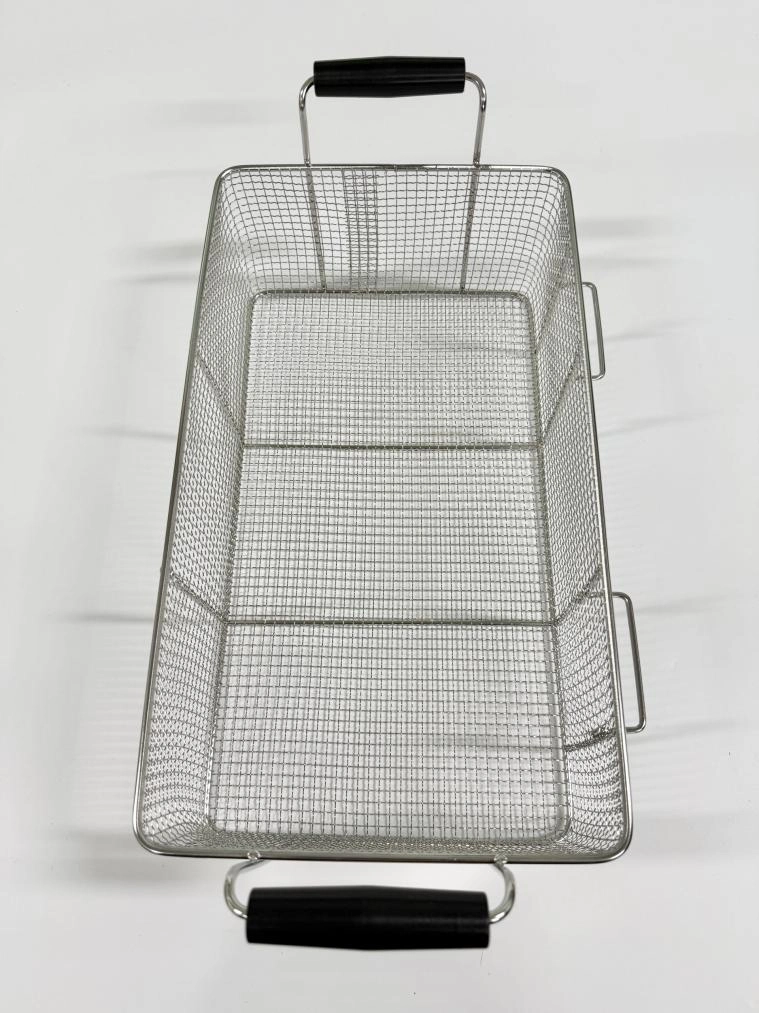
A request for a passivated fryer basket is incomplete without a material specification and a defined treatment requirement. The supplier needs to understand which components are covered, what processing sequence is expected, and how the completed product will be evaluated.
The basket drawing should remain the primary reference for the supplied construction. Surface-treatment requirements can then be added without confusing them with the mechanical characteristics of the product.
Start With the Material and Finished Assembly
The purchase specification should identify the required stainless steel grade for the relevant basket components. Where the frame, mesh, or other parts have different material requirements, those differences need to be stated.
The buyer should also identify whether the entire stainless steel assembly requires treatment or whether the requirement applies to particular components.
This is especially relevant when the basket includes an insulated handle or other non-metallic parts. Their compatibility with the proposed chemical treatment should be confirmed rather than assumed.
Which Treatment Standard Should Be Used?
ASTM A967/A967M covers chemical passivation treatments for stainless steel parts. Where it is appropriate for a project, the buyer and supplier should agree on the applicable procedure and verification requirements.
Simply writing “ASTM passivation” on the order leaves too much room for interpretation.
The RFQ should establish the material grade, treatment scope, applicable procedure, processing sequence, required surface condition, inspection method, and documentation requirements.
For customized constructions, the OEM customization process provides a route for communicating product drawings and manufacturing requirements before sample approval.
How Can Buyers Confirm That a Basket Has Been Properly Passivated?
A finished sample may look satisfactory even when the supplier cannot demonstrate that the specified treatment was completed. Conversely, minor cosmetic differences do not automatically mean that a correctly treated basket has failed.
The acceptance procedure should distinguish visible workmanship from evidence of process compliance.
Review Records and Inspect the Finished Product
Where chemical passivation is required, the supplier should provide the process documentation and inspection results specified in the purchasing agreement. These records should relate to the relevant sample or production batch.
A general statement that all stainless steel products receive surface treatment does not identify the procedure used for a particular order.
The buyer should inspect accessible surfaces, frame joints, and wire intersections for residues, staining, or other conditions addressed by the approved finish specification. If a verification test is required, its method and acceptance criteria should be agreed before production.
A visual check remains useful, but it cannot independently confirm that a particular chemical treatment was completed.
What If the Sample Fails Inspection?
The response should depend on the nature of the problem. Visible contamination, missing process records, and failure of an agreed verification test are different findings.
The affected sample or batch should be held for review under the buyer’s quality procedure. The supplier should identify the cause and propose corrective action before the material is released.
Repeating a chemical treatment without understanding the problem may not resolve a material or fabrication defect.
What Should Remain Controlled After Sample Approval?
Approval of one sample does not guarantee that every subsequent batch will follow the same manufacturing process. A supplier may change its cleaning procedure, finishing sequence, or treatment method while continuing to supply a basket under the same product reference.
For repeat OEM orders, the approved sample should therefore be connected to the material specification and the actual processing requirements.
The purchasing record should retain the approved drawing, treatment procedure, relevant inspection results, and any authorized deviations. Changes affecting those requirements should be reviewed before they enter production.
A receiving inspection can then focus on the agreed surface condition and supporting records instead of relying on whether the new shipment looks similar to an earlier sample.
If staining or corrosion appears after the basket has been used, the cause should be investigated separately. Cleaning chemicals, handling damage, operating conditions, and material selection may all be relevant. Such a finding does not, by itself, establish that the original passivation process was defective.
Professional Technical Support from Foshan Simple Technology Co., Ltd.
Foshan Einfache Technologie Co., Ltd. supplies commercial kitchen components for OEM manufacturers, distributors, and replacement-parts buyers, including fryer baskets, grease filters, adjustable legs, bullet feet, and range hood lights. Its YW-004 Heavy Deep Wire Frying Basket lists nickel-plated, 201 stainless steel, and 304 stainless steel material options, with electroplating and electrolytic polishing among the published finishing options. These descriptions do not establish that every configuration receives separate chemical passivation. For an OEM order requiring that treatment, the selected alloy, fabrication sequence, applicable procedure, component coverage, and verification records should be confirmed in the purchasing specification before production begins.
Schlussfolgerung
A passivation requirement should reflect the condition and intended application of the finished stainless steel fryer basket. Material selection, cleaning, polishing, and chemical treatment serve different purposes, so they should not be combined under one vague surface-finish description. Purchasing teams should establish the applicable treatment procedure and verification requirements before approving a production sample. Once those details have been agreed, the sample and its processing records provide a reference for repeat orders, allowing buyers to assess surface quality without relying on appearance alone or assuming that every basket needs the same chemical treatment.
Häufig gestellte Fragen
1. Does every stainless steel fryer basket require chemical passivation?
No. The requirement depends on the alloy, fabrication history, surface condition, and applicable purchasing specification. A properly manufactured and cleaned basket may already meet the agreed requirements without a separate treatment. Buyers should establish the need for passivation from the finished product’s condition rather than its material description alone.
2. Can electropolishing replace chemical passivation?
Not automatically. Electropolishing and chemical passivation use different processes. Whether electropolishing satisfies a particular purchasing requirement depends on the applicable specification and agreed acceptance criteria. A supplier should not substitute one process for another without confirming that the revised treatment meets the order.
3. Will passivation correct weak welds or an unsuitable stainless steel grade?
No. Passivation cannot repair incomplete joints, remove structural deformation, or change the base alloy. Such defects require separate manufacturing or material-control actions. The treatment should only be used for purposes supported by the specified process and the condition of the finished stainless steel surface.
4. How should buyers verify that the required treatment was completed?
Review the treatment documentation and inspection results required by the purchase specification. Where testing is necessary, the applicable method and acceptance criteria should be agreed before production. Visual inspection can identify surface problems, but appearance alone does not establish completion of a particular chemical procedure.
5. What information should be included in a fryer basket passivation RFQ?
Identify the stainless steel grade, components covered, treatment specification, processing sequence, required surface condition, verification method, and documentation requirements. If the basket includes non-metallic components or different alloys, their compatibility with the proposed treatment should also be reviewed before approving the manufacturing process.
