


5 jours par semaine de 8h30 à 17h30

How to Prevent Adjustable Leg Threads from Seizing in Wet Commercial Kitchens
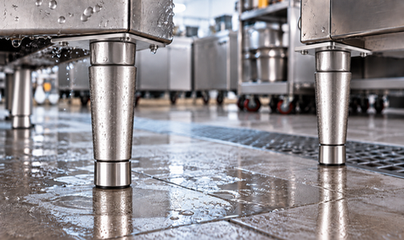
An adjustable kitchen leg that won’t turn can become a maintenance problem that needs to be fixed instead of a problem that can be leveled. There are many types of equipment that are installed on floors that get washed frequently such as refrigerated counters and stainless steel worktables. Water and cleaning chemicals can get into the threads of an adjustable leg. Over time, corrosion, metal to metal friction and buildup can make it very difficult to make an adjustment. The only way to fix the problem is to specify the proper threaded connection, to protect it during the installation, and to test it after it has been subjected to clean up after clean up – simply making the leg out of stainless steel is not enough.
Why Do Adjustable Leg Threads Seize in Wet Commercial Kitchens?
A threaded connection is a type of connection which allows two surfaces to move against each other. This connection fails when these two surfaces can no longer move against each other.
In a wet commercial kitchen there are several ways that similar problems can occur. Corrosion products can get between threads, residues from cleaning can dry in a connection and a heavily loaded stem can become impossible to turn. This could be for a number of reasons including misalignment of the joint or previous damage.
There is also a less obvious problem: galling.
Corrosion and Galling Are Different Problems
Corrosion is the chemical or electrochemical attack of a material. It can be influenced by water, salts as well as by cleaning agents. The degree of influence, however, depends on the material in question.
Galling is an example of adhesive wear. Under specific contact and load conditions, parts can transfer material to each other when in relative motion. Stainless steel parts, such as threaded components, can galling, typically when similar materials are over-torqued.
A seized stainless steel thread does not have to be rusted.
A refrigerated preparation counter situated near a washdown area could be a good choice. Adjustable feet are set to one height for months on end. When the kitchen is refurbished, one stem cannot be moved.
It is generally best to reserve judgement of the material until the root cause of the problem has been established. The possible causes of failure are corrosion, deposit formation, mechanical damage and excessive friction at the threaded interfaces.
This distinction is important, because a replacement part that is identical to the original part could cause the same problems.
Which Materials and Thread Designs Help Reduce Seizing Risk?
Stainless steel is often chosen for commercial kitchen adjustable legs as it is corrosion resistant. However, a stainless steel foot body does not necessarily mean that the internal thread is made of stainless steel.
Materials for stem, nut, sleeve, and mounting insert are different.
Check Both Sides of the Threaded Connection
The friction and wear of a stainless steel stem in contact with another stainless steel component can differ from that of a stem of the same material in contact with a suitably designed dissimilar material.
In wet environments, however, the possibility of corrosion between dissimilar metals must be taken into account for material combinations. It is essential to test material combinations as complete assemblies.
Buyers should ask for the material of each load-bearing threaded component, not only the visible leg.
The thread geometry of connecting rods must also be checked for adequate formation, for absence of burrs, for correct pitch and for sufficient axial alignment.
For an OEM order, confirm:
|
Specification |
Why it matters |
|---|---|
|
Stem material |
Influences corrosion and wear behavior |
|
Mating thread material |
Affects friction and material compatibility |
|
Thread diameter |
Must match the mounting interface |
|
Thread pitch |
Determines mating compatibility |
|
Thread finish |
Helps identify burrs or surface defects |
|
Adjustment range |
Defines the intended working positions |
|
Locking arrangement |
Influences how the position is secured |
A supplier who just states “stainless steel adjustable leg” has not provided sufficient information for us to assess the risk of thread seizing.
Should Anti-Seize Products Be Used?
A suitable assembly compound may be of value in certain threaded parts assemblies but is not a panacea for all threaded parts assembly problems.
Any lubricant or anti-seize to be used must be compatible with all materials, temperatures, cleaning down processes, equipment and manufacturer’s instructions, as well as overall hygiene of the installation.
It should not be used indiscrimately in food handling areas.
Before resorting to maintenance chemicals, review the material pairing and thread design for new OEM equipment.
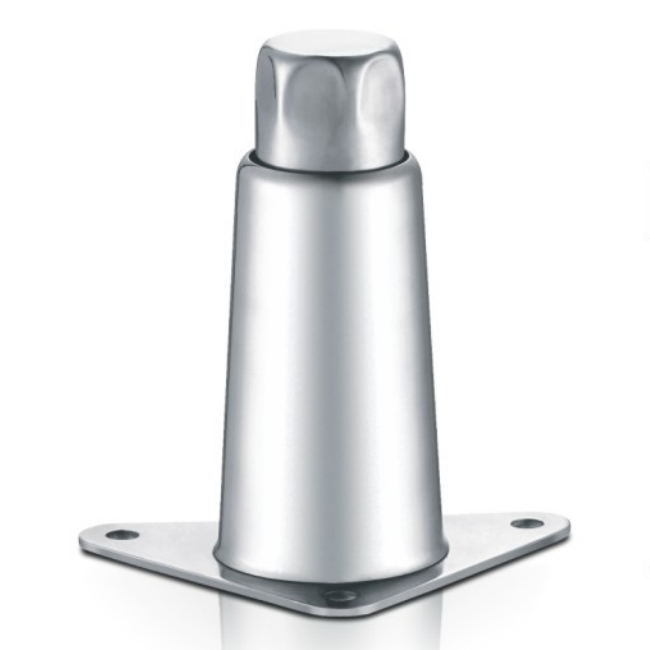
How Can Installation Practices Prevent Adjustable Legs from Becoming Stuck?
The threaded foot can receive serious damage during the first installation and may function without any problems for a long time without being noticed.
Cross-threading is one of the problems associated with this issue. By forcing a stem into a connection at an angle with a tool, the thread profile can be damaged.
Overtightening also poses problems. The resulting excessive torque can cause permanent deformation to parts or create increased contact pressure that can subsequently hinder subsequent attempts to fine-tune the part.
Keep the Adjustment Within Its Intended Range
Ensure the height to the fix is within the manufacturer’s specified height and the wire is fixed at a minimum of the thread engagement length.
Extending a leg too far will cause some combination of alignment and bending problems, depending on the design.
Make sure the equipment is lifted in the correct manner to be supported by it as recommended by the manufacturer. Do not attempt to force heavy equipment or lift it in an inappropriate or improvised manner.
Check the locking system for your level after leveling and make sure the base is seated properly on the floor.
Think About Water Exposure Before Final Installation
Where possible, the design of the installation should minimize exposure of threaded connections to standing water and to cleaning agents.
A protective sleeve or cover may be provided for some parts, but must not trap moisture and must allow for easy inspection and adjustment.
For equipment that is mounted near sinks and washed frequently, the possibility of maintenance access to the foot is important. An installer should be able to look at the foot of the equipment without having to take apart substantial parts of it.
The lowest purchase price is not always the best purchase price. A connection that becomes inaccessible or which is difficult to adjust will cost more in labor for maintenance over time.
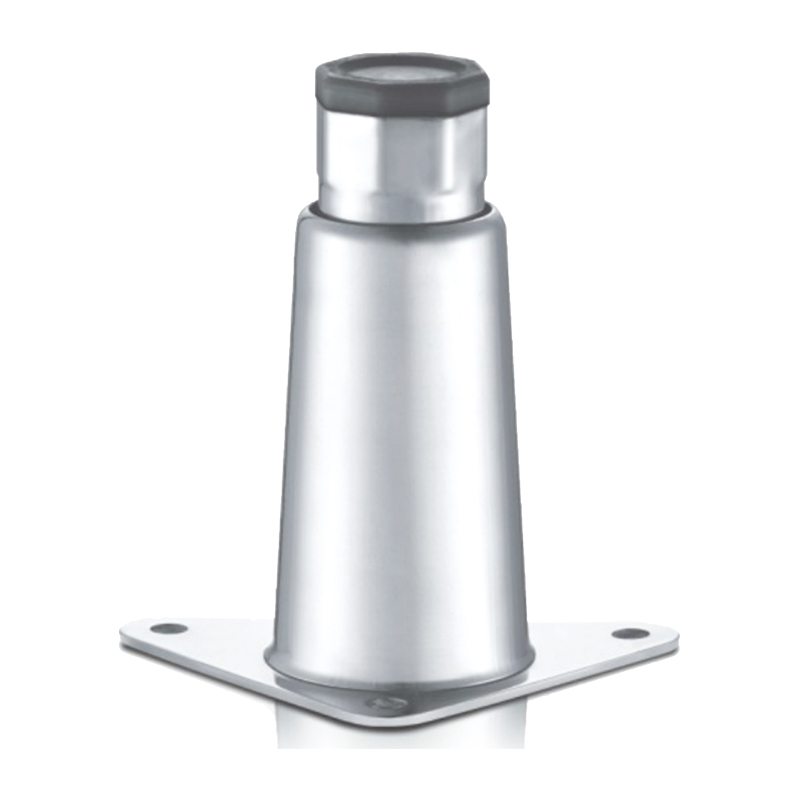
How Can Maintenance Teams Tell Whether a Seized Thread Needs Cleaning or Replacement?
The worst thing to do when an adjustable foot gets stuck is to apply even more force without finding out what went wrong.
A heavily loaded leg, a damaged stem or a corroded insert can fail when improperly handled. Make the equipment safe first. Then support the load as specified by the manufacturer before attempting to adjust or remove it.
Once access is safe, inspect the visible threads.
Examine for signs of reddish or dark corrosion, damaged thread crests, distorted components, contamination and misalignment of stem to mounting.
A leg that roughly turns differs from a leg which can not move at all.
When Is Replacement the Better Option?
Replacement deserves serious consideration when:
Threads are visibly stripped or deformed.
The stem is bent.
Corrosion has significantly damaged the connection.
The mating insert is cracked or loose.
The locking mechanism no longer works correctly.
This foot cannot be returned to its approved adjustment condition.
Cleaning may resolve issues with removable dirt and/or residue whereas damaged load-bearing threads cannot be cleaned and must be repaired.
In case one leg keeps seizing, also have a look at the position of this leg and its operating conditions. Maybe the leg is exposed to water, the legs are cleaned wrong, or are not aligned properly.
What Should OEM Buyers Test Before Ordering Adjustable Legs in Bulk?
A supplier sample should not be approved solely on the basis that it fits in the equipment and looks OK.
Thread operation matters.
1. Check the drawing: Thread diameter, pitch, adjustment, base size and mounting hole size.
Check if the leg moves smoothly through its approved range. Any binding, misalignment or damage must be noted before further testing is carried out.
For use of a component in wet environments the buyer and supplier can agree upon an application relevant test for exposure and adjustment.
Test should mimic actual cleaning chemicals, water exposure and maintenance activity. No number of test cycles can accurately determine service life of any given leg design.
Sample Approval Checklist
Male and female thread materials confirmed
Thread diameter and pitch match the drawing
Threads free from visible damage and burrs
Adjustment remains smooth within the approved range
Locking mechanism operates correctly
Base and mounting interface fit the equipment
Wet-environment exposure considered
Cleaning chemical compatibility reviewed
No unacceptable binding after agreed testing
When sourcing commercial kitchen adjustable legs, buyers should check these criteria to tell the difference between a component that simply fits and one that is suitable for the planned maintenance regime.
After this, we ask the supplier for a material list, a dimensioned drawing and a sample. If the installation is particularly tricky, it is wise to agree upon the acceptance criteria for the product before production starts instead of finding out the first time you try to adjust it and it doesn’t work.
Need Help Selecting Adjustable Legs for Wet Kitchen Environments?
Kitchen equipment buyers often concentrate on leg height, base diameter, and load capability, leaving the threaded connection for the supplier to determine. Foshan Simple Technology Co., Ltd. supplies adjustable legs and related commercial kitchen equipment components for OEM and replacement applications. Its product range includes different leg constructions for equipment such as worktables and refrigeration units. For wet-environment projects, buyers should provide details of the threaded interface, required adjustment range, equipment load, cleaning conditions, and preferred material construction. Reviewing drawings and samples against those requirements can help establish a suitable component specification before bulk orders are placed.
Conclusion
It is often misunderstood that seized adjustable leg threads are caused by visible rust. Actually corrosion, galling, contamination, damaged threads and incorrect installation can all cause similar problems. Therefore it is not just a case of checking for rust, but also the type of materials that are being mated together, the quality of the threads, the approved working adjustment, and the environment in which the item is being used. For the OEM buyer this means specifying the complete threaded assembly and then testing the sample for adjustability in simulated usage conditions. This helps to ensure that maintenance staff are working with quality parts and are notunnecessarily stripping and replacing seized items.
Questions fréquentes
1. Why do stainless steel adjustable leg threads sometimes seize?
Galling of stainless steel threads can occur. Corrosion, contamination, misalignment and damaged threads are just a few examples of problems that can cause failure of threaded connections. The cause of failure must be determined before selecting an alternative.
2. Can cleaning chemicals cause adjustable legs to become stuck?
Yes. Some chemicals can attack materials or leave deposits on threaded connections. This depends on the chemical, the concentration, the exposure, the materials used and the cleaning of the connections.
3. Should anti-seize lubricant be applied to commercial kitchen adjustable legs?
Be sure to get approval for the equipment, materials, operating environment and for the required level of hygiene before purchasing. Follow the manufacturer’s instructions for use. Anti-seize compounds are not an alternative to suitable thread design.
4. Can a seized adjustable leg be repaired?
That depends on the cause of the contamination. Removable contamination can be cleaned from the valve but things like stripped threads, bent stems, corrosion beyond cleaning and damaged mounting inserts in the valve mounting surface require replacement of the affected parts.
5. What should OEM buyers specify to reduce thread-seizing problems?
Confirm thread diameter and pitch, stem and mating materials, adjustment range, locking method, mounting interface, equipment load, environmental exposure, and sample-testing requirements before approving bulk production.
