


5 jours par semaine de 8h30 à 17h30

Why Do Baffle Grease Filters Lose Flatness After Repeated Cleaning?
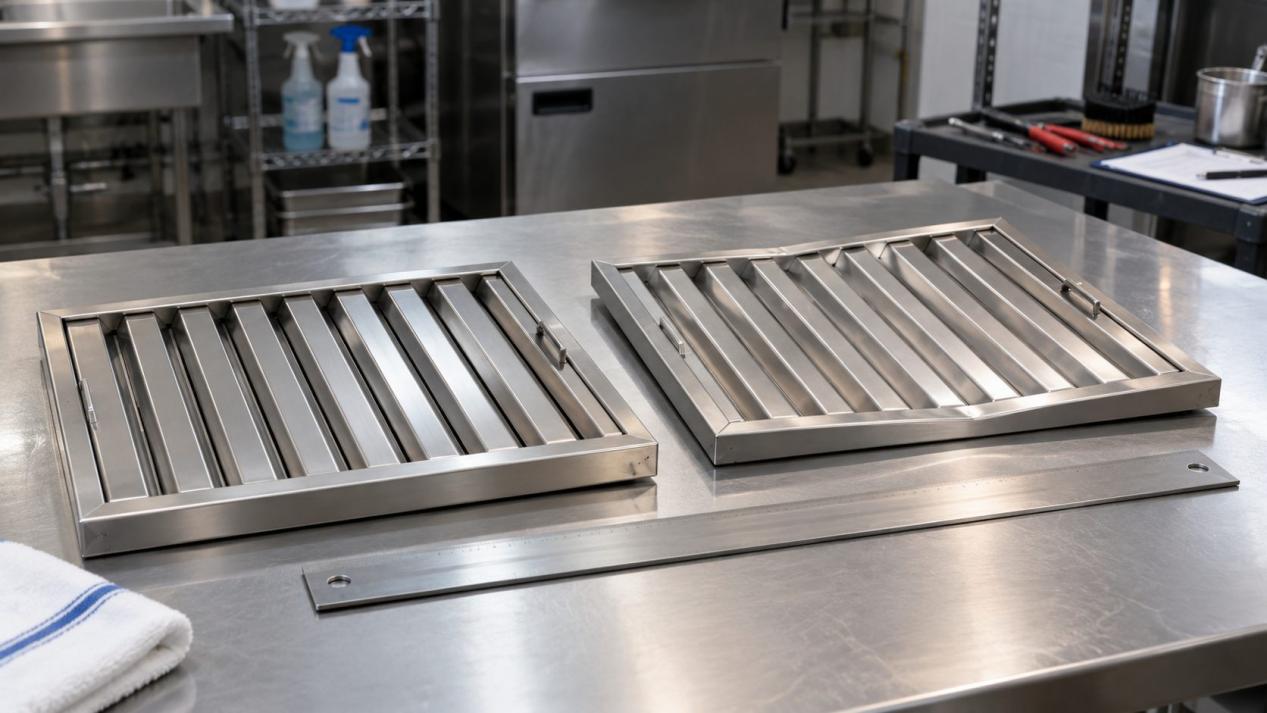
After washing, pressure on one filter corner may make the diagonally opposite corner tap the bench. The frame is then touching the surface at fewer points than it should. The sound alone cannot date the change. The twist might predate washing, disappear as the hot frame cools, or remain where a wet edge sagged between rack bars.
The distinction comes from repeating the same cold corner check. One reading before cycle one and another after cooling show whether the plane moved. The rack position and the location of the new gap then explain how it may have moved.
What Was the Cold Shape Before Cycle One?
Length and width identify the nominal size, while the two diagonals show how square the frame is. They do not show whether all four frame corners lie against one surface.
Which dimension tells whether the plane changed?
Put the unused filter handle-up on a clean, flat reference. Mark its upper face and one starting corner. Press lightly beside each corner in the same order. If the opposite corner rises, measure the opening there and photograph the scale without pushing the frame down.
That number belongs to this filter before washing. When the later opening remains on the same diagonal and close to the starting size, the cycles may have left the plane unchanged. A new opening across the other diagonal shows that the load on the frame changed during washing, handling, or cooling.
Check that the metal frame, rather than the handle, is the part touching the bench. A handle reaching below the frame or a particle caught under an edge can make the filter rock in the same way. After removing those false contact points, use the marked locations and the drawing or quality-plan tolerance for the actual plane check.
What Loads Did the Wash Rack Put Into the Frame?
The hood track supports the filter around a planned interface. A wash rack may instead leave one edge on two bars and much of the opposite span unsupported.
Does the cold gap point back to a rack contact?
A hot reading is useful when the complaint concerns immediate handling, but the residual shape appears only after draining and cooling without anything stacked on the frame. Return the cooled filter to its marked orientation and read the original corner again.
When the opening disappears, the earlier shape belonged to the hot condition. When it remains, compare its diagonal with the rack. A wet long edge hanging between bars carries its own weight differently. A narrow slot can pinch the frame at two spots. A second filter placed on top during drying can load a corner that would otherwise be free.
Direction ties the two observations together. A fresh gap running through a visible rack mark is a reason to try fuller support. A gap on another diagonal leaves the joint, incoming frame, handling, and hood interface in play. Both filters were hot; only one shows where the bending force entered.
What Happened Between the Final Rinse and the Cold Measurement?
The washer program covers only part of the interval. The filter is also lifted, allowed to drain, moved to a drying position, and eventually carried to the inspection surface.
Which observation links the process to the changed frame?
Draw the rack bars in relation to the filter and identify the edge sitting on them. Note any neighbouring item touching the frame and where the filter remains during drying. Program and detergent information give context, but missing temperature values should not be filled from memory.
Then follow the load into the metal. A polished bar mark beside the raised corner supports a rack explanation. A shifted corner joint redirects attention to the connection. Loose baffles in that same zone indicate that the movement did not stop at the outside rail. Detergent or corrosion enters the diagnosis when the joint or surface carries corresponding attack, not simply because the wash used detergent.
For routine care, the site’s guide to cleaning commercial grease filters covers the general cleaning task. The rack sketch and cold corner gaps address the separate flatness complaint.
Does the Gap Follow the Cycles or a Change in Handling?
Each filter needs its own starting line. If several different initial gaps are averaged together, the one frame that moves can disappear inside the arithmetic.
What does the shape of the measurement history suggest?
Return each sample to its marks and take cold readings at chosen intervals. A gap that appears early and then remains nearly unchanged describes a different progression from one that increases at each check. A jump immediately after moving to another rack puts the handling change ahead of total cycle count. Movement in only one sample leads back to that sample’s frame or joints.
Leave the study frames uncorrected between readings. Straightening by hand resets the frame, so the following measurement starts a different sequence. If a repaired filter is needed in service, end its study record at the repair and keep the untouched samples in the comparison.
Where Should the Corrective Change Be Made?
The gap’s location and the point in the sequence when it appeared indicate which part of the setup needs attention. Extra frame thickness cannot correct a hood track that forces a flat filter onto a twist.
What correction matches the location of movement?
Different cold gaps on unused filters point towards the frame reference or assembly check. A new gap spanning unsupported rack bars calls for a supported orientation and another cycle run. Change concentrated at a corner joint identifies the connection that needs review. When the bench reading is flat but the installed filter twists, inspect the hood track and its contact points.
The RFQ can tie acceptance to named points on the drawing, a cold conditioning state, and the rack arrangement used during sample evaluation. Alloy and section thickness still describe construction; they cannot identify the cure until the route of bending is known. A frame already bent on arrival follows the bulk-shipment packing guide rather than the washing sequence.
Need a Grease Filter Sample for a Cleaning-Cycle Review?
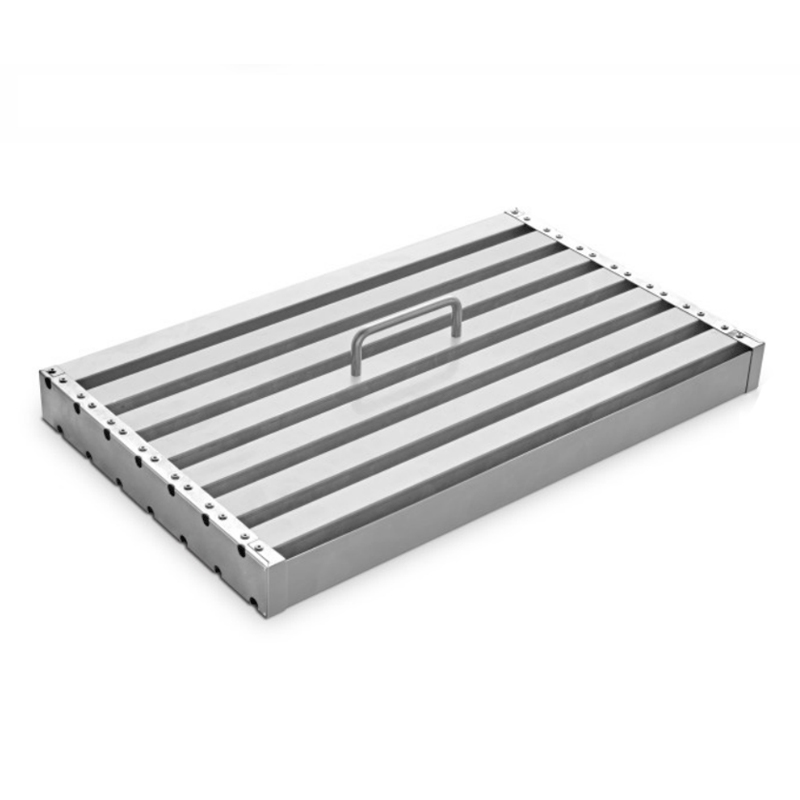
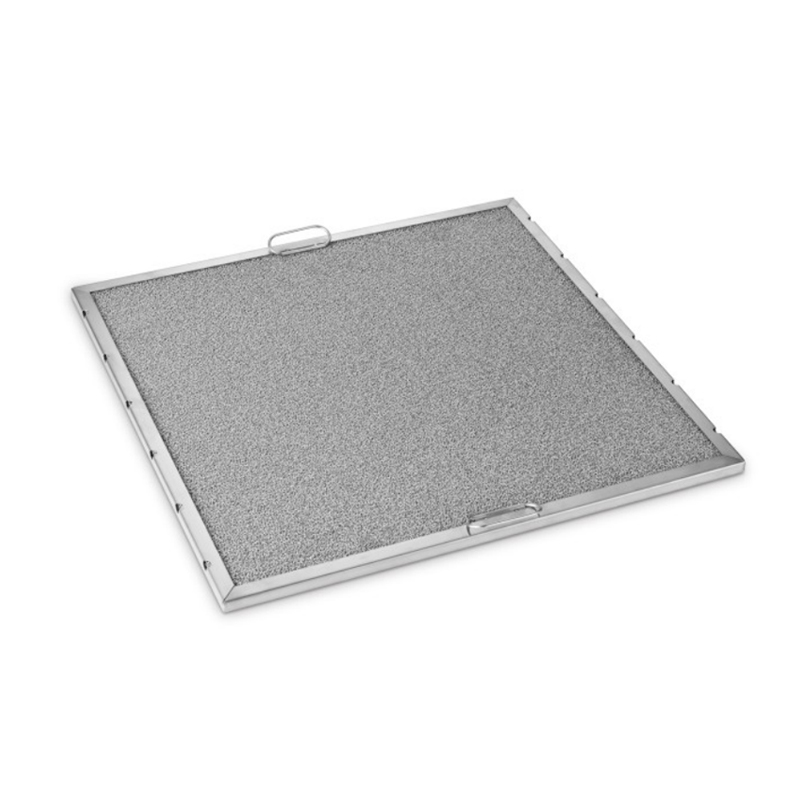
Le Foshan Simple Technology Co., Ltd. range includes stainless steel grease filters for commercial exhaust equipment with single-handle et double-handle formats. The pages identify those constructions. Their shape after repeated cycles will still depend on the washer, rack contacts, cooling position, and hood used for the project.
The physical setup can accompany a sample request: filter drawing, hood-track photograph, rack-contact sketch, and the cold corner measurement. It gives both sides the same geometry to examine without implying that a cleaning-cycle result already exists.
Conclusion
A raised corner turns a vague complaint into a location and a number. The cold reading before washing shows whether it was already there. The rack marks and the diagonal of any later change show where the wet, hot frame carried load. When those readings never move, washing should not be blamed simply because somebody first noticed the rocking afterwards.
Questions fréquentes
What does rocking on a table actually show?
It shows that the filter is not contacting the bench evenly. Before attributing that to the frame, check the bench surface and make sure a handle or trapped debris is not propping up an edge.
Why does the cold reading matter after a hot check?
The hot reading describes the shape during immediate handling. The cold reading, taken after unloaded draining and cooling, shows whether a difference remained.
Which items make the supplier review reproducible?
Identify the marked sample and drawing revision, then provide the cold readings by interval, photographs in one orientation, the rack-contact sketch, wash program, and close views of any joint or corner that changed.
