


5 giorni alla settimana dalle 8:30 alle 17:30

Fan Guard Drawing Revisions: Controlling Repeat Orders Without Silent Specification Drift
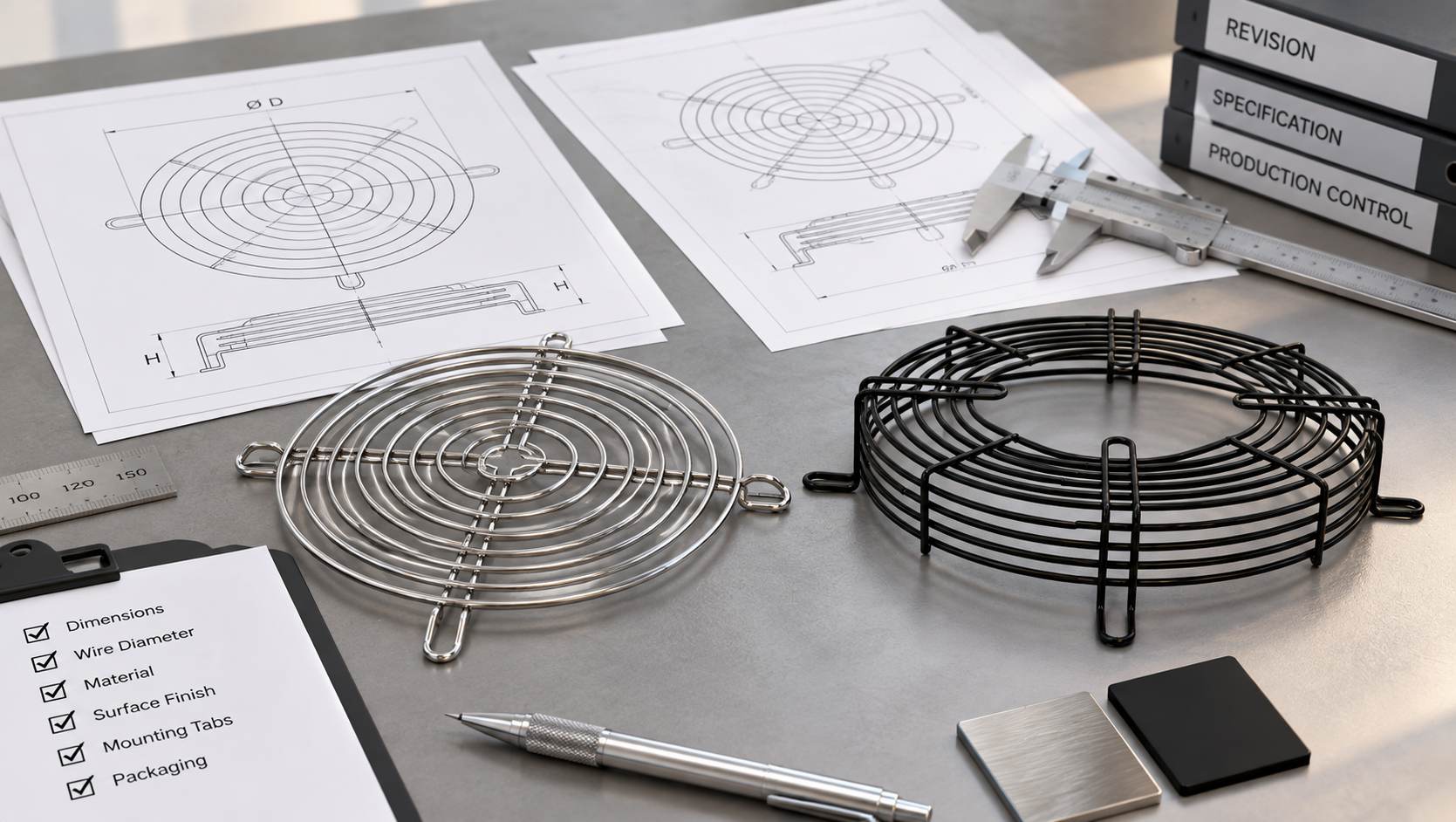
A repeat fan guard order can fail even when the supplier has made the same general product before. The cause is often specification drift: one wire diameter changes, a mounting tab moves, a profile is adjusted, or a material substitution enters production without the buyer realizing that the new batch no longer matches the originally approved configuration. For OEM manufacturers and component buyers, repeat-order control therefore depends on more than keeping an old purchase order. The released drawing, revision history, approved sample, supplier change process, and purchase-order reference all need to point to the same version of the product. Without that connection, “same as last order” can become an unreliable instruction.
Which fan guard details are most likely to drift between repeat orders?
A wire fan guard looks simple, but its final geometry comes from several separately controlled features. A supplier may reproduce the overall diameter correctly while changing another detail that affects fit or appearance.
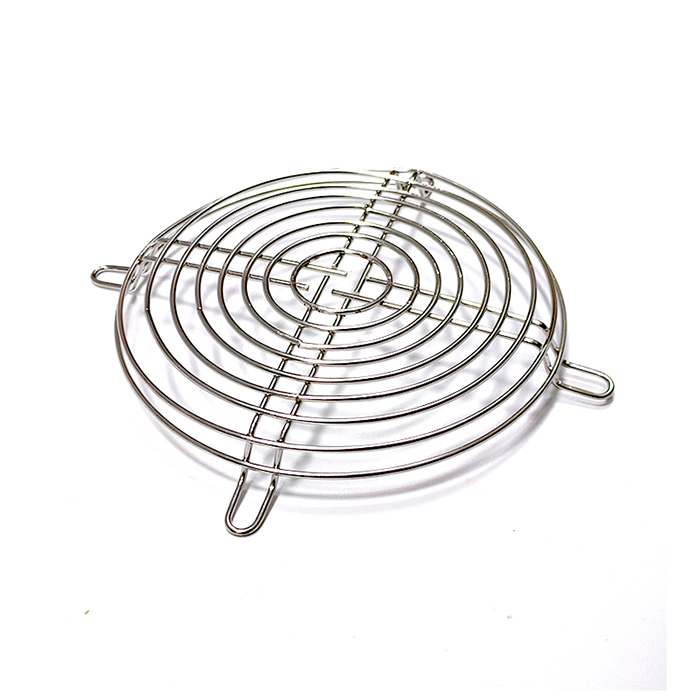
For commercial fan guard components, the buyer should identify which characteristics define the approved configuration rather than relying on one general product name.
Typical controlled features include:
-
outside dimensions;
-
flat or convex profile;
-
wire diameter;
-
ring and radial-wire arrangement;
-
mounting-hole location;
-
tab shape;
-
material;
-
surface finish;
-
overall height.
Changes can happen for practical production reasons. A supplier may replace wire stock, modify a forming fixture, change a coating process, or make a tooling adjustment. None of those actions automatically means the new product is unacceptable, but they should not enter a repeat order without review when they affect controlled features.
“Same size” does not mean “same specification”
If the purchase order only lists an outside diameter, a later production batch may technically satisfy that order while differing from the original approved sample.
A better repeat-order specification points to a controlled drawing number and revision.
That reference tells purchasing, quality, and the supplier exactly which version is being ordered.
When should a change create a new drawing revision?
Not every production adjustment needs a new revision. The purpose of revision control is to capture changes that alter the agreed specification or the way the part interacts with the equipment.
Buyers should define this rule with the supplier before repeat orders become routine.
A useful change review can distinguish among three categories:
| Change Type | Typical Action |
|---|---|
| No effect on controlled specification | Internal supplier control |
| Controlled feature changes but remains interchangeable | Drawing revision and approval |
| Compatibility or function changes | New part number or separate specification |
The exact decision depends on the buyer’s engineering system.
Compatibility should drive the decision
Suppose the supplier moves a mounting tab by several millimeters. Even if the new arrangement looks cleaner, it can affect installation. That change deserves formal review.
If a coating supplier changes while the required finish and approved appearance remain unchanged, the buyer may treat the change differently, depending on the project requirements.
The important point is that the supplier should not decide silently which changes are significant to the equipment manufacturer.
For custom fan guard programs, the OEM customization process can support drawing confirmation and sample review before a revised construction is released.
What should appear in a fan guard revision history?
A revision history should make it possible for someone who was not involved in the original project to understand what changed.
Statements such as “updated drawing” provide very little help six months later.
A better revision record describes the specific change.
Examples might include:
-
mounting-hole spacing revised;
-
wire diameter updated;
-
guard profile height changed;
-
mounting-tab geometry revised;
-
finish requirement updated;
-
material specification changed.
Each entry should carry a date and revision identifier according to the buyer’s drawing-control system.
The drawing and purchase order must use the same revision
A frequent problem occurs when engineering releases a new drawing but purchasing continues using an old purchase-order template.
The supplier then receives conflicting instructions: an old revision on the PO and a newer file by email.
That ambiguity should be resolved before production starts.
The purchase order should reference the current approved drawing where the buyer’s system requires it. If the supplier uses its own internal drawing number as well, a cross-reference table can connect the two.
For organizations sourcing several categories through a commercial kitchen product center, this cross-reference becomes particularly useful because one supplier may have different internal naming conventions for many components.
How should a revised fan guard be approved before the next bulk order?
A drawing revision is not complete simply because someone has changed the PDF. When a controlled feature changes, the buyer should decide whether a new sample or dimensional confirmation is required.
The level of approval can match the importance of the change.
For a minor documented feature that does not affect equipment compatibility, drawing approval may be enough. For mounting, profile, material, or wire-structure changes, a physical sample may provide stronger evidence.
Compare the revised sample with both references
The new sample should be compared with:
-
the revised drawing; and
-
the previously approved product.
This comparison answers two different questions.
The first confirms that the supplier manufactured what the new drawing requires. The second shows what actually changed from the previous version.
A practical revision-approval checklist may include:
-
drawing number and revision are correct;
-
changed features are clearly marked;
-
unchanged critical dimensions remain consistent;
-
mounting points fit the equipment;
-
profile provides the intended clearance;
-
material and finish match the revised specification;
-
supplier confirms production can repeat the change;
-
revised sample is identified and dated;
-
old stock disposition is decided;
-
purchasing records are updated.
The last two points are often missed.
A revised part can be technically correct while old stock remains in the warehouse. Buyers need to decide whether old and new versions can be mixed or whether the old stock must be consumed, segregated, reworked, or removed.
How can buyers prevent old and new fan guards from being mixed?
Revision control fails if the physical parts cannot be connected back to the drawing version.
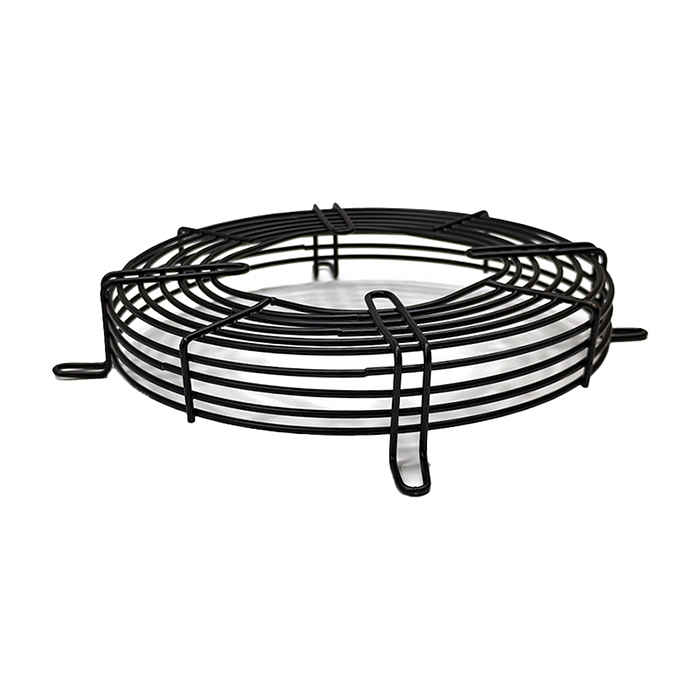
Where old and new versions look different, separation is straightforward. Where the change is subtle, packaging and stock identification become more important.
Supplier cartons can include the buyer part number, drawing revision, production batch, and quantity. If inner packages are used, identification may need to continue inside the master carton.
At receiving, staff should verify the revision before placing the shipment into existing stock.
Do not combine stock until interchangeability is confirmed
If two revisions are fully interchangeable, the buyer may allow them to share inventory after engineering approval.
If not, they should remain separated.
This is particularly important when mounting tabs or profile geometry change. An operator may not notice the difference until the guard reaches the equipment.
A good transition plan answers:
-
Can old and new guards be used on the same equipment model?
-
Can they be mixed within one production order?
-
Should the old stock be consumed first?
-
Does the BOM need a new part number?
-
Does service inventory need the old version?
Those decisions belong to engineering and purchasing, not to line operators.
What should be included in every repeat fan guard order?
Once a fan guard has been ordered several times, purchasing teams may be tempted to shorten the specification to an old supplier code and quantity.
That approach works only while nothing changes.
A safer repeat order still identifies the current controlled reference.
The purchase package should include the buyer part number, current drawing revision, quantity, applicable material and finish references, packaging requirements, and any sample or inspection requirement that remains active.
If a previous deviation was approved only for one batch, it should not automatically become the new standard.
Ask suppliers to notify buyers before changing controlled features
Change notification is one of the most useful repeat-order controls.
The supplier should know which characteristics cannot be modified without approval.
For fan guards, those may include wire size, material, ring layout, mounting geometry, profile, finish, and forming method where it affects the finished specification.
A supplier change request does not have to be complicated. It needs to identify what is changing, why it is changing, whether dimensions or materials are affected, and whether a new sample is available.
That information allows the buyer to make a decision before the revised product enters a production batch.
Professional Technical Support from Foshan Simple Technology Co., Ltd.
Foshan semplice tecnologia Co., Ltd. supplies commercial kitchen and equipment components for OEM, distribution, and repeat-order programs, including stainless-steel wire fan guards in flat and convex configurations. One product reference is the SP-FG03 Convex Stainless Steel Fan Guard. For customized or repeat OEM orders, buyers can provide controlled drawings, part references, material and finish requirements, mounting information, sample records, packaging instructions, and change-notification expectations so later production batches remain connected to the same approved specification rather than relying on informal descriptions such as “same as last time.”
Conclusione
Repeat fan guard orders are most reliable when the specification itself is controlled from one batch to the next. Buyers should connect each part number to a released drawing, maintain a clear revision history, review changes before production, and decide how old stock will be handled when a new version appears. Supplier change notification and revision labeling make that process easier. The goal is not to prevent every manufacturing change; it is to prevent an unreviewed change from silently becoming the new product after the original sample has already been approved.
Domande frequenti
1. Does every fan guard production change require a new drawing revision?
No. Internal process adjustments that do not change the controlled product specification may remain under supplier control. Changes affecting dimensions, material, finish, mounting, or other approved features should be reviewed.
2. Why is “same as last order” risky on a repeat purchase order?
The previous batch may not reflect the latest approved drawing, and supplier processes or materials may have changed. Referencing the current controlled revision gives both parties a clearer production target.
3. Should buyers request a new sample after every drawing revision?
Not necessarily. The need for a sample depends on what changed. Mounting, profile, material, or structural changes usually justify stronger verification than a minor documentation correction.
4. How should old fan guard stock be handled after a revision?
First determine whether the old and new revisions are fully interchangeable. If they are not, separate the stock and define whether the old parts will be consumed, reworked, retained for service, or removed.
5. What changes should suppliers report before a repeat fan guard order is produced?
Buyers should define the controlled features, which may include wire diameter, material, ring layout, mounting geometry, profile, finish, and any production change that affects the approved finished component.
