


5 Days a week from 8:30 am to 5:30 pm

Why Do Commercial Baffle Grease Filters Rattle When the Exhaust Fan Runs?
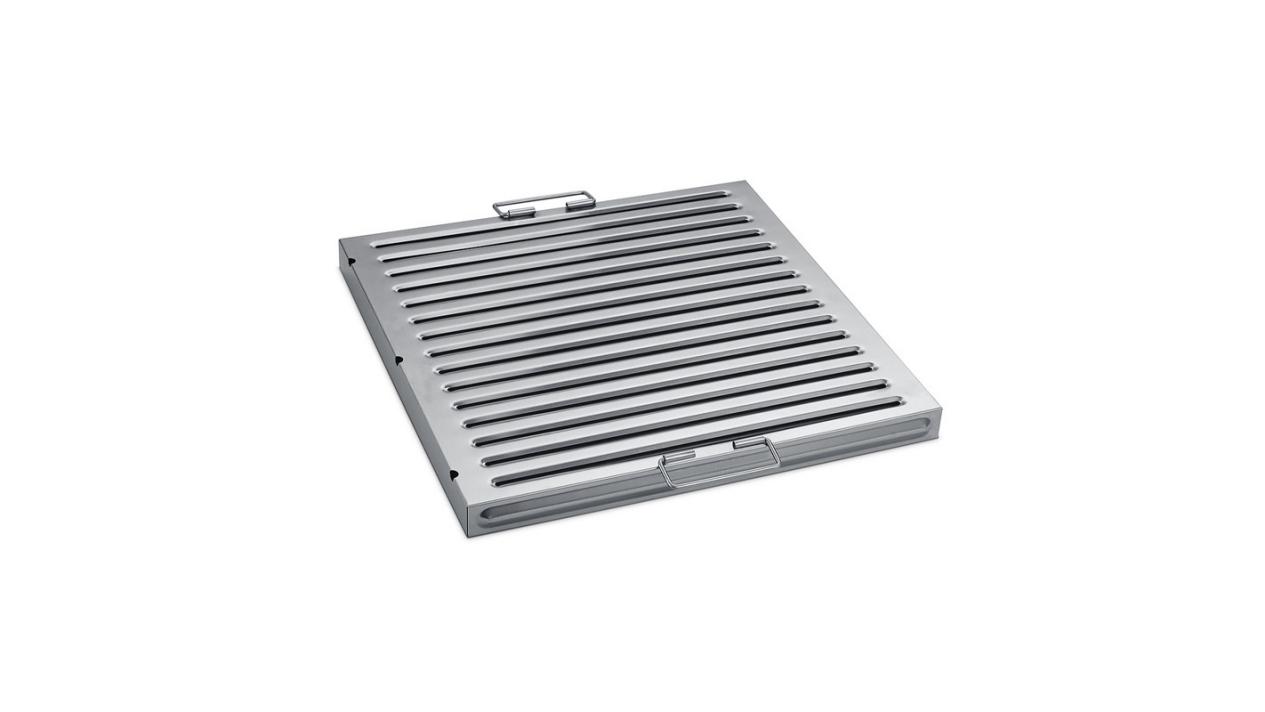
A loose filter need not visibly shake to make a conspicuous rattle. Check the handle and baffle joints as well as the outer edge against its rail. These contacts can produce similar sounds. Before specifying a replacement, check whether the noise travels with one panel during a permitted position exchange. If the opening stays noisy with a sound panel, investigate its support and the vibration reaching it rather than immediately reducing filter clearance.
Where in the Filter Bank Does the Noise Begin?
Observe from outside, with the complete filter bank in its normal installed condition. Write down the position and fan setting rather than relying on a recording without that context.
Listen through the operating sequence
Include startup and rundown in the observation instead of recording only the fan at steady speed. Noise confined to a short part of that sequence may involve amplified vibration, but is not enough evidence to label the filter resonant. A rotating assembly or the hood panel may be exciting an otherwise sound filter. If several adjacent panels respond together, their common support deserves attention before individual filter dimensions are changed.
Do not touch or restrain a running filter bank. Follow the service isolation procedure before handling a filter. Keep all required filters installed for cooking and normal extraction. Where safe reproduction needs powered measurements, that work belongs with qualified personnel using suitable non-contact observation.
Where Can a Seated Filter Still Move?
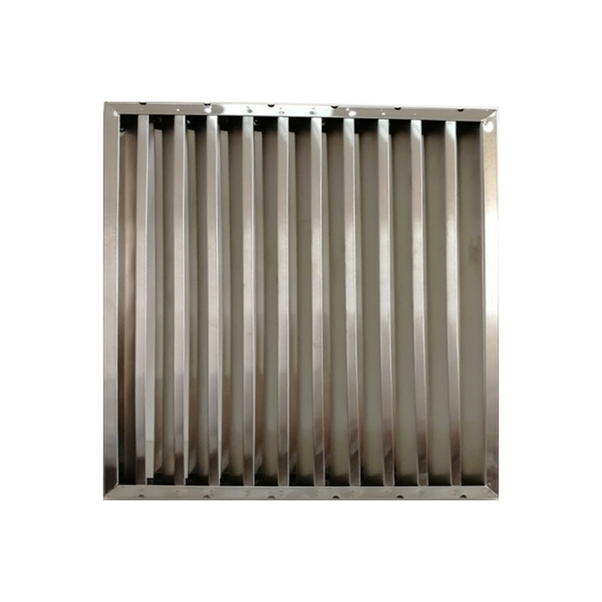
A flush-looking face does not show how much movement is available behind it at the supporting edges. The frame may touch a rail without being properly retained by it.
Examine the support surfaces with the fan isolated
Compare any polished patch on the edge with the surface opposite it on the support. A few bright contact points among otherwise dull surfaces may show where repeated impacts occur. Also check whether the handle can strike the panel while the frame itself stays seated. Then inspect the baffle joints, since movement there would not be cured by changing the outer fit.
Check how far each edge enters its intended support and whether every specified retainer is engaged. Check the retainers against the instructions for the installed hood, not pictures of a different design. A deposit on the rail or a bent support may be enough to stop the panel seating fully. The filter dimension guide helps identify the envelope to order; rail overlap and free movement must still be checked in the hood.
Does the Noise Follow the Filter or Its Position?
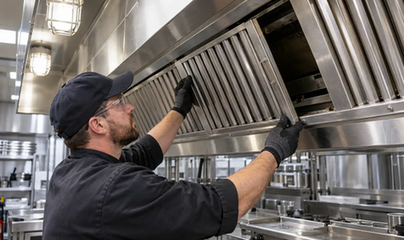
Where the manufacturer permits it, a controlled exchange between equivalent positions can separate a suspect panel from a suspect opening.
Exchange only equivalent positions
Identify the suspect panel and label its starting position while the equipment is isolated. The comparison panel must suit the same opening, including its drainage orientation and retaining arrangement. If the hood instructions permit an exchange, move the panel while isolated and refit the complete bank before observing it again. Repeat at the setting that originally produced the sound.
A noise that moves with the panel warrants a closer check of that panel’s frame, handles and joints. A noise left at the original opening warrants a closer check of the support and surrounding hood, even with a replacement in place. It may be the pairing that is unsuitable rather than a dimension outside either component’s individual drawing. That is an interface problem to resolve against the installed configuration.
Why Is Packing a Noisy Gap Not Enough?
A strip of packing can quiet metal contact without being a suitable kitchen exhaust component. The absence of chatter says nothing about whether the added material belongs in an exhaust hood.
Leave the designed service and drainage paths usable
Tape, foam, wedges and unapproved screws do not belong in this diagnostic trial. They may quiet the contact while obstructing drainage or removal. A different restraint needs the hood manufacturer’s approval and must leave the specified orientation and cleaning access usable.
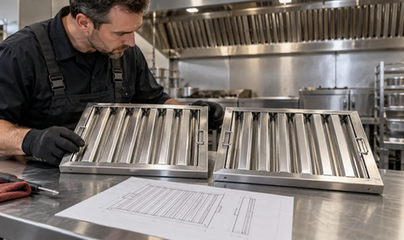
For the sample trial, obtain the mating support drawing as well as the filter drawing. Check the bank cold and under the intended operating condition using a safe method. Thermal movement can alter a clearance, so a quiet bench fit is incomplete evidence about a hot hood. Noise acceptance should identify the fan condition and installation; a universal gap or sound limit cannot be inferred from a product photograph.
What Should a Replacement Baffle Filter Sample Confirm?
Foshan Simple Technology Co., Ltd. lists the BH221 commercial grease filter and BH223 industrial baffle filter. Approval for a rattling bank should address the purchased filter’s fit against the actual rails and retaining features, not merely its overall dimensions. The sample discussion can include the marked contact locations, support drawing, and fan setting associated with the noise. These listings establish the product range, not an acoustic result for the buyer’s hood; the assembled sample must demonstrate the agreed installed behaviour.
Conclusion
Trace the chatter to the parts that meet. Its operating pattern tells when to observe; contact marks and a valid position exchange help show where to look. Resolve a moving handle, loose joint, or support mismatch through the intended construction, while investigating shared hood vibration when the noise stays with the opening. A quiet replacement trial must preserve the filter’s retention, drainage, and service access.
FAQs
1. Does noise at one fan speed prove filter resonance?
No. Vibration from the hood structure or fan mount can reach a filter that is otherwise sound. The speed identifies where to repeat the observation, but not which component caused it.
2. Can a correctly sized replacement still rattle?
Yes. Overall size does not describe every rail contact or retaining feature. Check the installed engagement and movement between the matching parts.
3. Is padding the filter edge an acceptable cure?
Obtain approval for the specific hood before adding an edge restraint. A quiet improvised repair may still obstruct cleaning, drainage or removal, or alter the intended exhaust assembly.
