


5 dagen per week van 8:30 tot 17:30 uur

What Information Should You Check on a Commercial Hood Light Before Ordering a Replacement
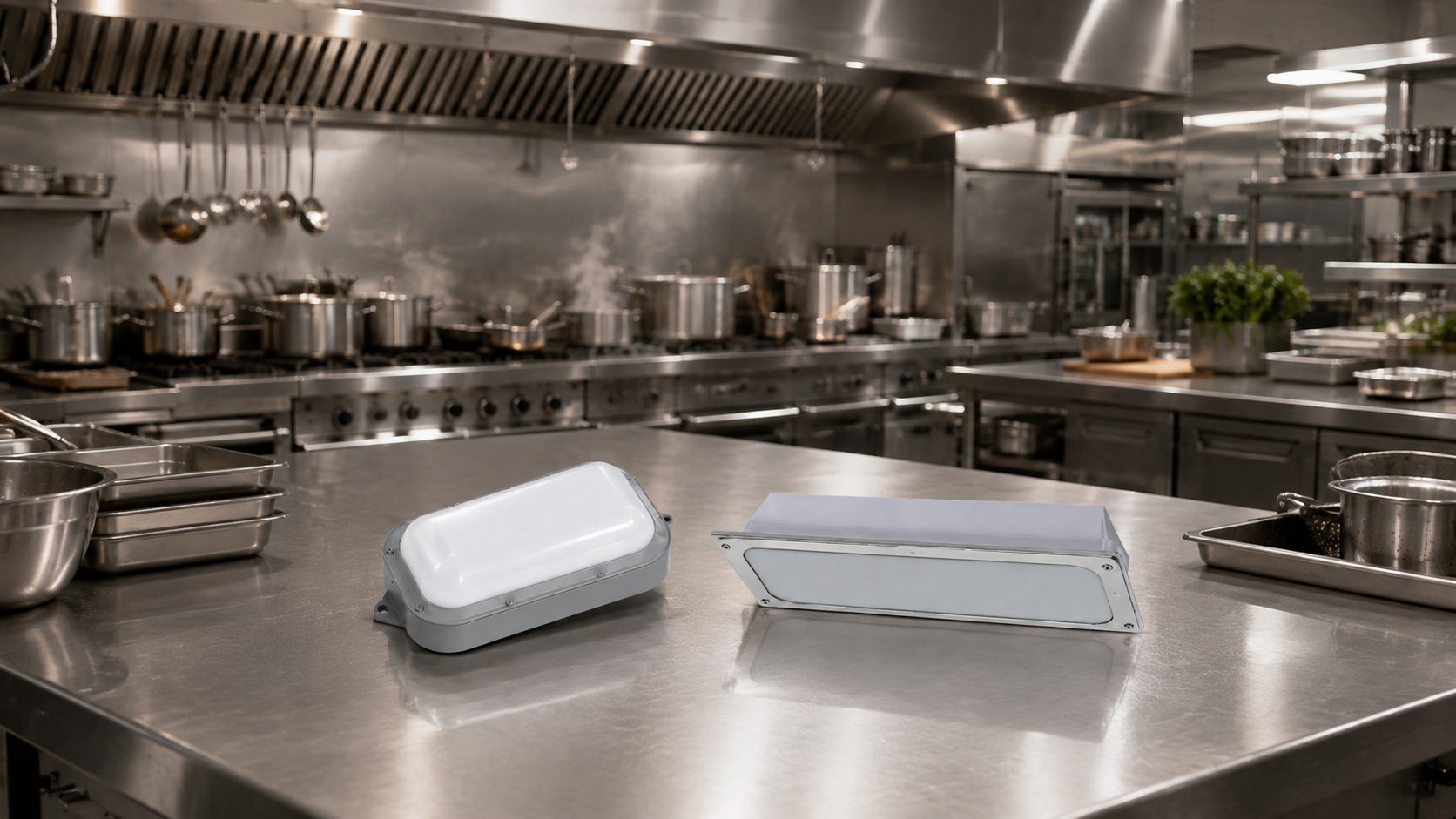
What Information Should You Check on a Commercial Hood Light Before Ordering a Replacement?A commercial hood light replacement should not be ordered simply because the new fixture looks similar to the old one. For hood manufacturers, foodservice equipment distributors, kitchen contractors, and restaurant maintenance teams, a workable replacement specification needs to cover the electrical supply, fixture dimensions, mounting arrangement, wiring connection, environmental protection, and lighting performance. Two commercial hood lights can have almost identical visible faces while using different voltages, housing depths, cutout dimensions, drivers, or connectors. Before ordering a replacement hood light, record the existing fixture and hood installation systematically so the supplier can confirm compatibility rather than matching from a photograph.
Which Electrical Specifications Should You Confirm Before Ordering?
Electrical compatibility should be checked before comparing appearance. A fixture that fits perfectly into the hood can still be unusable if the voltage or driver arrangement is different from the existing installation.
The most useful source is usually the label on the old fixture, followed by the hood wiring diagram, equipment manual, or approved parts list. If those records are missing or unreadable, a qualified technician should identify the circuit. Guessing from another hood in the same kitchen is risky because similar equipment may have been purchased at different times or modified during service.
Voltage, Power, and Supply Type
Record the rated input voltage and whether the fixture operates on AC or DC. Wattage should also be noted, but wattage alone does not establish compatibility. It primarily describes electrical power consumption and should be reviewed together with the supply and driver.
For an LED fixture, determine whether the driver is integrated into the light housing or installed separately elsewhere in the hood. A replacement with an integrated driver may not connect in the same way as a fixture designed to operate from an external driver.
A useful purchasing record includes:
| Electrical Item | What the Buyer Should Confirm |
|---|---|
| Rated voltage | Existing supply and replacement requirement |
| Supply type | AC or DC |
| Rated wattage | Existing fixture and proposed replacement |
| Driver arrangement | Integrated or external |
| Connection | Plug, terminal block, or hard-wired lead |
| Control method | Standard switch, dimmer, or other control |
Connector and Wiring Arrangement
The connector deserves more attention than it usually receives. A fixture with the correct voltage may still require field modification if its cable length, connector style, or terminal position differs from the original.
For replacement programs covering multiple sites, photograph both sides of the connector before the old fixture is discarded. Record cable length and cable-exit position as well. These small details often determine whether a replacement is genuinely interchangeable or merely electrically similar.
If an apparently correct new light still operates poorly after installation, the problem may sit upstream in the circuit. The guide on why LED hood lights flicker even after replacement covers driver, voltage, wiring, and moisture-related diagnostic issues in more detail.
Which Dimensions and Mounting Details Determine Whether the Fixture Will Fit?
Once the electrical requirements are clear, measure the physical installation. The most common mistake is recording only the visible length and width of the old light.
The part of the fixture hidden above or behind the hood surface is often just as important. A replacement may have the correct face dimensions but a deeper housing, different mounting tabs, or a different cable-exit position.
Overall Size Versus Cutout Size
For recessed lighting, distinguish between the outer trim dimensions and the hood cutout. The visible trim is normally larger because it covers the edge of the opening. Measure the housing that enters the hood separately.
For surface-mounted lighting, note the base dimensions and screw pattern instead of assuming a cutout is involved. The distinction between these two installation approaches is covered further in the comparison of recessed and surface-mounted commercial hood lights.
A replacement drawing should normally include the overall length and width, housing depth, cutout dimensions where relevant, mounting-hole spacing, mounting-hole diameter, cable-exit location, and any projection of the cover below the hood surface.
Why Housing Depth Is Easy to Miss
Housing depth becomes important where wiring, ductwork, insulation, or another hood component sits directly behind the fixture. A replacement can fit the opening and still fail during installation because the rear housing collides with something inside the hood.
Measure from the hood mounting surface to the nearest obstruction rather than measuring the old light alone. Where the installation is tight, include that available depth on the RFQ.
For unusual or older hoods, a side photograph of the removed light placed beside a ruler provides useful context, but the photograph should support the dimensions rather than replace them.
Which Environmental Specifications Matter in a Commercial Kitchen?
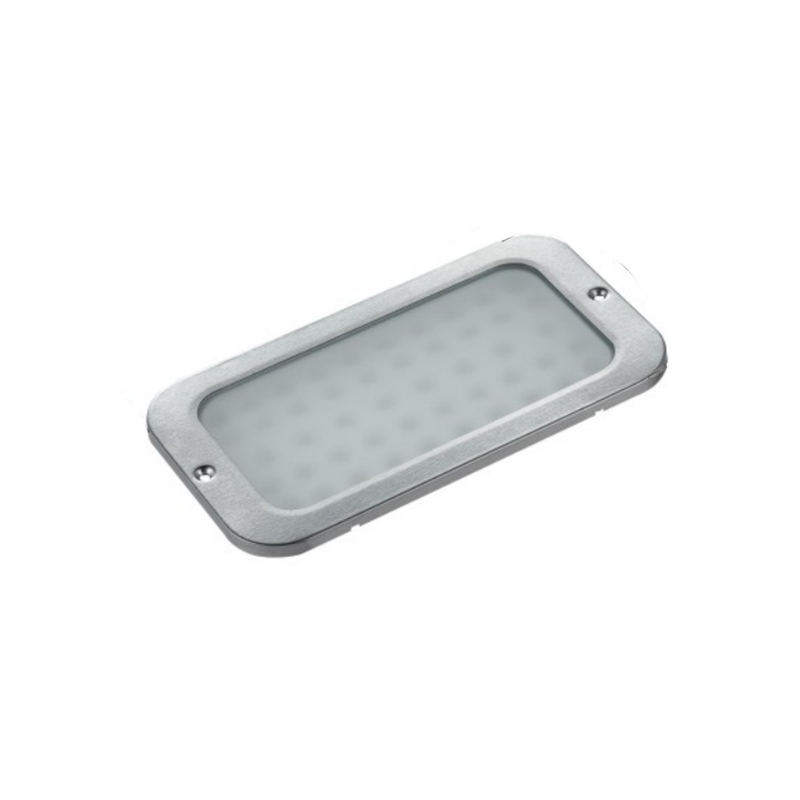
Commercial hood lighting works in a harsher environment than general indoor lighting. Heat, steam, airborne grease, detergents, and frequent cleaning all affect the fixture. For replacement buyers, environmental suitability should therefore be treated as a specification rather than a marketing description.
Match the IP Requirement to the Cleaning Process
Terms such as “waterproof” are too broad for technical purchasing. Where an IP rating is required, buyers should understand the actual exposure around the fixture.
A kitchen where the hood is wiped with damp cloths presents a different water challenge from equipment exposed to direct spraying or aggressive washdown. Selecting a higher rating without understanding the cleaning process may add unnecessary specification, while choosing too little protection can leave the fixture unsuitable for the site.
The differences between common protection levels are discussed in IP65, IP67, or IP69K for commercial range hood lights.
Housing, Cover, and Seal Condition
Material selection should be reviewed alongside sealing. Ask what the housing and lens are made from and how the cover is retained. The visible lens should tolerate routine cleaning without becoming difficult to wipe, while gaskets and cable entries need to remain properly seated after maintenance.
When replacing a failed fixture, inspect the surrounding hood opening as well. A damaged mounting surface, distorted panel, or deteriorated cable entry can compromise a new fixture even when the product itself is correctly specified.
Environmental suitability is therefore a property of the complete installation, not just the light.
Which Lighting Performance Details Should Buyers Compare?
A technically compatible fixture still needs to provide useful illumination. This becomes particularly important when only one light in a multi-light hood is being replaced.
Lumens, Wattage, and Color Temperature
Wattage and brightness should not be treated as the same specification. Wattage describes electrical input; luminous flux, normally stated in lumens, describes total light output. For replacement purchasing, comparing both gives a clearer picture than simply choosing another fixture with the same wattage.
Color temperature should also be recorded. Installing one noticeably cooler or warmer light among several existing fixtures can create uneven visual conditions across the cooking line.
Where available, compare:
-
Rated wattage
-
Luminous flux
-
Color temperature
-
Light distribution or beam characteristics
-
Number and spacing of fixtures
For a direct replacement, matching the existing lighting characteristics is often the least disruptive option. If the project is an upgrade, evaluate all hood lights together rather than changing one fixture at a time without a lighting plan.
Why One Working Sample Can Be More Useful Than a Catalog
For an OEM program or a large replacement order, a sample can expose problems that a specification sheet does not show clearly. Install the sample in a representative hood and inspect mechanical fit, connector accessibility, cover position, light distribution, and operation under normal kitchen conditions.
The aim is not merely to see whether the fixture turns on. The aim is to confirm whether technicians can install, service, and replace it consistently.
What Should Be on a Commercial Hood Light Replacement Checklist?
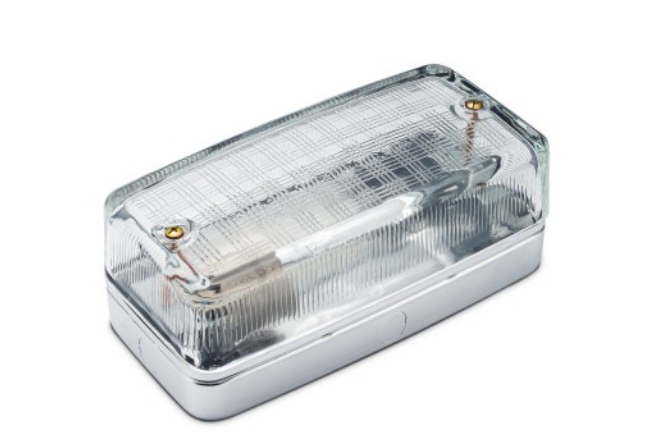
Before submitting an RFQ, gather the information while the original fixture is still available. Once a damaged light has been discarded, details such as connector orientation or rear housing depth are difficult to reconstruct.
Photograph the product label, front face, rear housing, connector, cable entry, mounting arrangement, and empty hood opening. If several hood models are involved, assign each replacement specification a site or equipment reference number.
-
Before ordering, confirm:Rated voltage and AC/DC supply
-
Wattage
-
Integrated or external driver
-
Connector or wiring arrangement
-
Overall fixture dimensions
-
Hood cutout dimensions
-
Housing depth and internal clearance
-
Mounting-hole spacing
-
Cable-exit position
-
Required environmental/IP protection
-
Housing and lens material
-
Light output
-
Color temperature
Sample fit for non-standard or volume ordersA complete measurement sheet gives suppliers something that can be checked against production drawings and gives the purchasing team a reference for incoming inspection.
How Does Foshan Simple Technology Co., Ltd. Support Hood Light Replacement Projects?
Foshan Eenvoudige Technologie Co., Ltd. supplies commercial kitchen components for OEM, distribution, and replacement-parts projects, including range hood lights, grease filters, fryer baskets, adjustable legs, and bullet feet. For buyers evaluating hood-light replacements, the company provides product-level information that can be compared with an existing fixture after the electrical and mechanical requirements have been documented. One example in its lighting range is the SP-232BH Range Hood Anti Oil Fume LED Light. Replacement enquiries are easier to assess when buyers provide fixture labels, drawings, hood-opening dimensions, connector information, installation photographs, and expected quantities rather than relying on appearance alone.
Conclusie
Ordering a commercial hood light replacement is a specification-matching task rather than a simple lamp purchase. Record voltage, driver arrangement, connector type, fixture and cutout dimensions, housing depth, mounting pattern, environmental protection, light output, and color temperature before requesting quotations. The next practical step is to create a one-page replacement sheet and send it with photographs to the supplier. For unusual fixtures or volume orders, approve one sample on the actual hood before committing to production.
Veelgestelde vragen
1. What information should I photograph before removing an old commercial hood light?
Photograph the label, front face, rear housing, connector, cable entry, mounting arrangement, and hood opening. These images help support dimensional and electrical records when identifying a replacement.
2. Is matching the wattage enough for a replacement hood light?
No. Buyers should also confirm voltage, supply type, driver configuration, connector, dimensions, mounting pattern, environmental protection, light output, and color temperature.
3. Why can a replacement hood light fit the opening but still not install correctly?
Housing depth, mounting-hole spacing, cable position, connector clearance, or rear components can differ even when the visible face dimensions are similar.
4. Should a replacement commercial hood light have the same color temperature?
For a direct replacement, matching the existing color temperature generally helps maintain consistent lighting across the cooking line. Planned lighting upgrades may use a different specification.
5. Should buyers test a hood light sample before bulk ordering?
For non-standard fixtures or volume projects, yes. A sample allows the buyer to check mounting, electrical compatibility, connector access, light distribution, sealing, and serviceability on representative equipment.
