


5 dagen per week van 8:30 tot 17:30 uur

Why Grease Filters Develop White Film After Washing and How to Investigate It
White film on a washed stainless steel grease filter calls for a check of the rinse water, chemical delivery and metal surface. Hard-water deposits and cleaning residues are plausible starting points. A persistent change in the metal needs a different follow-up. Establish when the mark appears and whether it can be removed using an approved cleaning method before deciding on the corrective action.
The first useful evidence is a comparison of the same filter before washing, after rinsing and after drying. Photograph it under consistent lighting. Then determine whether the problem follows one filter, a batch of replacement stock or everything washed through the same equipment.
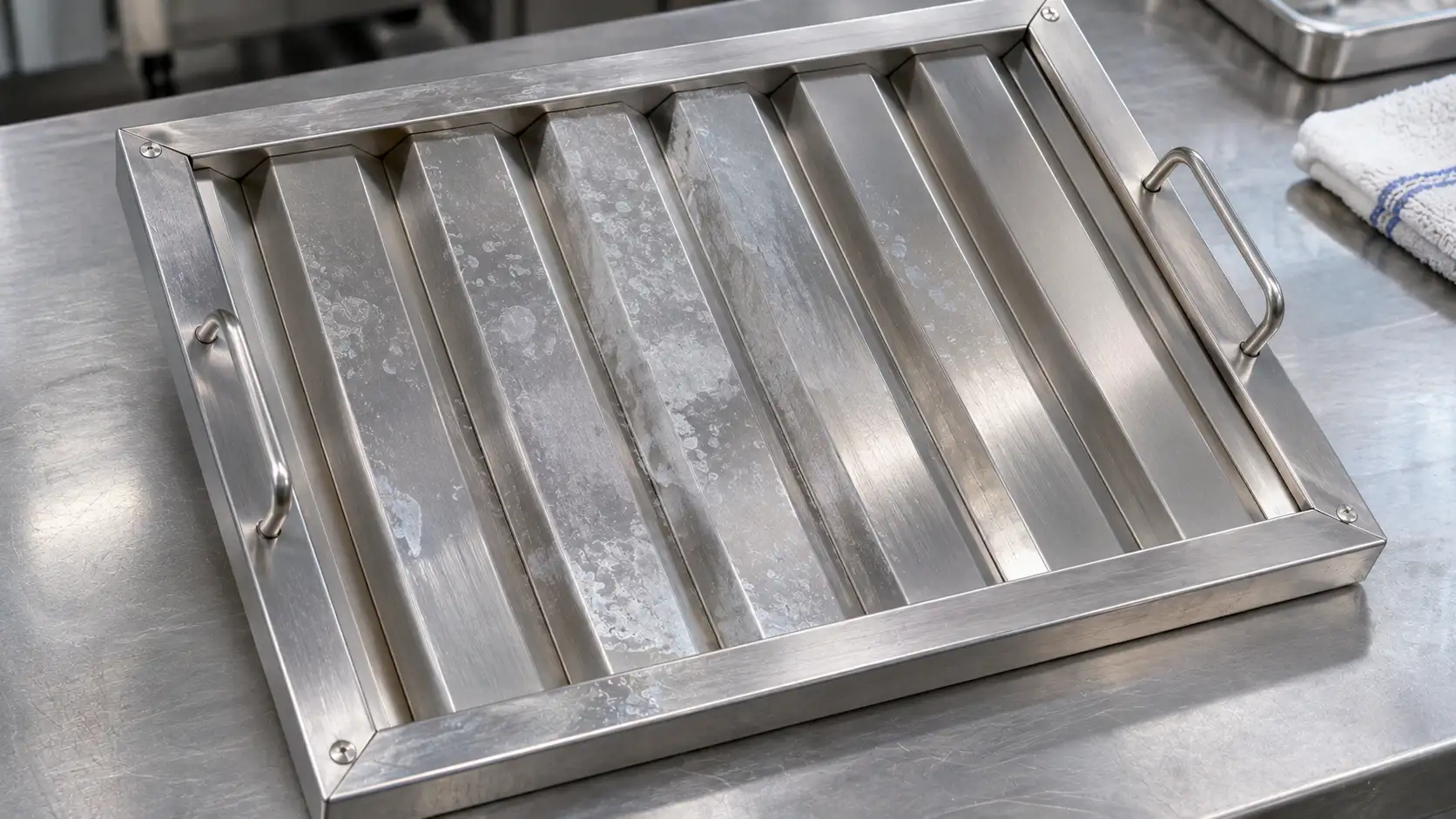
Record where the white marks appear
Mark the affected areas on a photograph. Droplet-shaped outlines, a broad haze and a deposit concentrated around overlaps describe different patterns. Include both faces and the perimeter. Note whether the film is visible while the surface is wet or becomes apparent as it dries.
Keep the filter identity attached to that record. A BH222 square stainless steel grease filter has a defined frame and channel arrangement that should be identified when discussing an affected sample. Record its quoted material and production lot as well as the model.
Inspect other compatible items from the same wash. Similar marks on several unrelated items strengthen the reason to investigate shared water or washing conditions. A mark confined to one filter warrants comparison with its starting finish and local construction details.
The pattern gives direction to the investigation. It leaves the chemical identity of the deposit open until appropriate checks support a conclusion. Keep a representative affected area intact if a supplier or specialist may need to examine it.
Include a photograph before the filter enters the washing process. Replacement stock may have a different surface finish from older panels, and the initial record helps establish whether a visible haze was already present. Use the same viewing angle for the wet and dry observations. Check that the inspection cloth and tray are clean, since either can introduce another visible deposit during handling. If the mark first appears after transfer to storage, add that transfer to the investigation and record the surfaces that contacted the filter.
Check the water that reaches the final rinse
Hard water can leave mineral spotting and cloudy deposits after washing. Ask the warewashing service provider to check the water actually used by the machine and identify its treatment arrangement. Record the sampling location with each result.
An incoming-water reading and a reading after treatment describe different points. If the system has a softener, verify its current operation and service requirements. A historic result from the building supply leaves the current machine condition unresolved.
Use an appropriate hardness test and follow its instructions. Electrical conductivity or a general dissolved-solids reading measures a different property and needs its own interpretation. Ask the water-treatment provider to explain which measurement answers the question being investigated.
For a controlled comparison, the cleaning owner may approve a final rinse using water of a known specification. Keep the wash method, filter and drying conditions consistent. Record whether the spotting changes after that single adjustment, then repeat the observation if the result is unclear.
This comparison helps investigate the water contribution. A clear-looking surface after one rinse still needs the normal inspection and release checks for the filter.
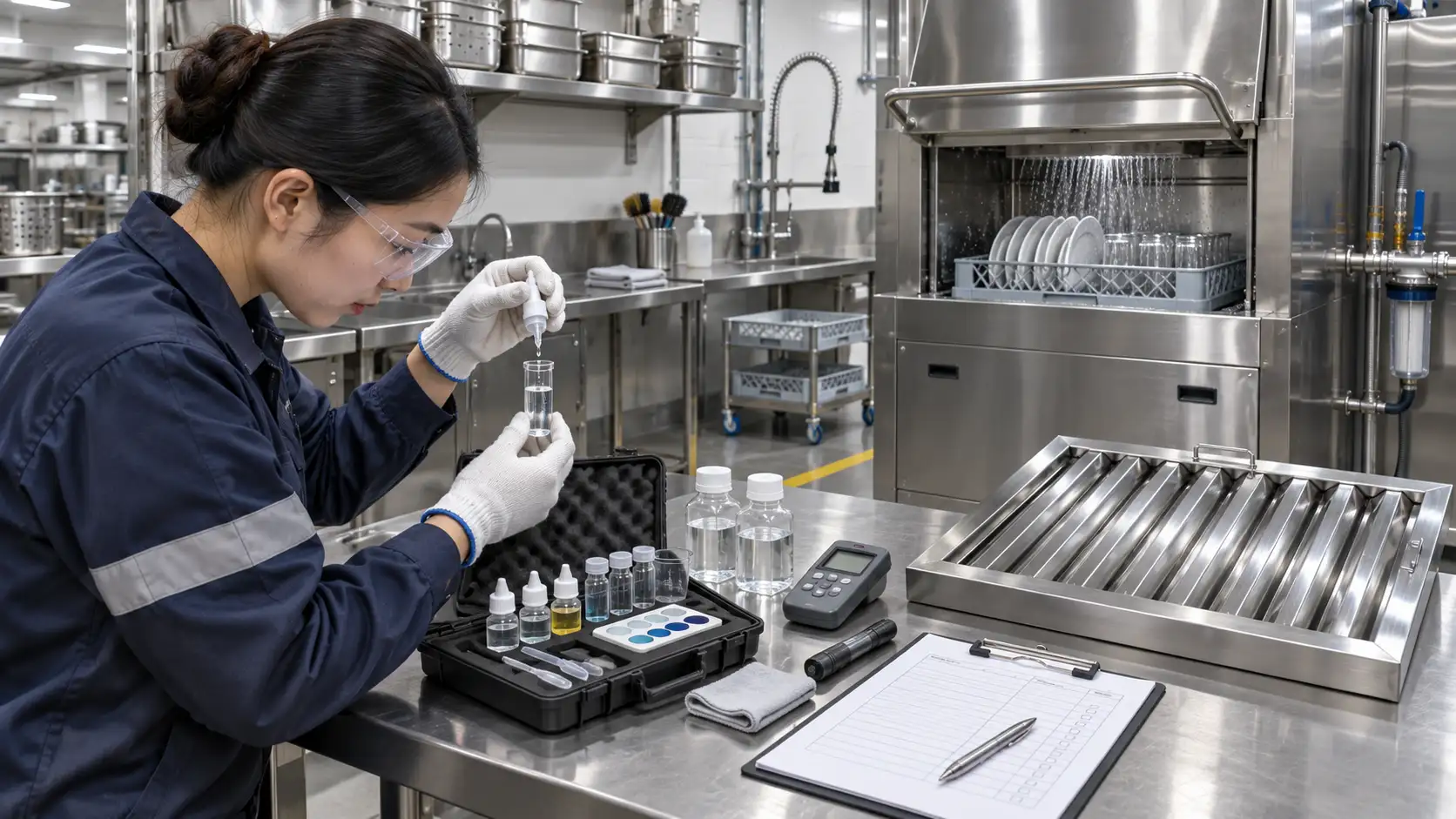
Review chemical delivery and rinse coverage
Record the exact cleaner, concentration control and rinse arrangement used for the affected load. Include any recent product change, service adjustment or manual addition. Ask the chemical service provider to verify delivery against the cleaner and machine instructions.
More detergent changes the process and may complicate the diagnosis. Start by checking the intended setting and whether the dispenser supplies it consistently. The correct concentration depends on the product, water and approved washing method.
Inspect the loading arrangement for blocked spray access. Closely nested filters or a frame pressed against a rack support may receive uneven rinsing. Compare one approved loading adjustment while retaining the same wash programme. Record the starting arrangement so the change can be reproduced.
Review spray arms, nozzles and machine maintenance with the service provider. Mineral buildup or an obstruction can affect how rinse water reaches the load. Any machine correction should be followed by another observation using the previously affected filter configuration.
Distinguish a removable deposit from a surface change
Use the filter manufacturer’s approved cleaning procedure on a small identified area. Record the method and its effect after the surface has dried. Keep the original photograph beside the comparison so a change in lighting does not look like a change in the metal.
A deposit that transfers or clears suggests further investigation of removable contamination. A mark that persists, or an area showing roughness or pits, needs a surface-condition review. Appearance alone gives limited information about the cause, particularly where residue and surface damage occur together.
|
Observation after approved cleaning |
Next check |
Evidence to retain |
|
White rings return after drying |
Rinse water and treatment condition |
Water result and marked photographs |
|
Film varies with rack position |
Spray access and rinse coverage |
Before and after loading arrangement |
|
Residue persists around joints |
Local cleaning access and chemistry |
Close view and cleaner reference |
|
Surface remains rough or pitted |
Material and surface assessment |
Preserved sample and service history |
A different baffle filter channel arrangement may change access for washing and inspection. Compare the actual configuration before applying a cleaning result from another model. Keep material suitability and geometry documented separately.
Use a compatible deposit-removal treatment only after the filter manufacturer and chemical provider confirm the method. A dishmachine delimer has a defined purpose and application instructions. Its suitability for a removable filter assembly needs confirmation, including every material and component exposed to it.
Agents containing hydrochloric acid can cause pitting of stainless steel. Select a documented compatible treatment and keep its concentration, contact time and rinse requirements together. A persistent surface problem should go to the supplier or a materials specialist for assessment.
Follow the pattern across loads and locations
Create a short log linking each observation to its filter, wash date and machine. Include the water or dosing checks performed and the one process change under evaluation. This reveals whether a claimed improvement survives another comparable load.
Hypothetical comparison across two locations
Imagine replacement filters from one identified lot are washed at two kitchens. White spotting appears after drying at one location, while the other location records an acceptable surface under its agreed inspection. The first location also observes spotting on other washed items. This hypothetical pattern would direct the initial investigation toward its shared washing conditions.
The next step would be to verify water, dosing and rinse coverage at that location. A confirmed cause would require the corresponding evidence. If individual filters continued to show an unexplained surface change after the shared process was corrected, preserve those samples for supplier review.
Keep the conclusion as specific as the observations. A site-level pattern can help choose the next investigation without resolving every affected panel’s condition.
Confirm the correction before returning to routine washing
Recheck the previously affected configuration after the approved correction. Inspect both faces, channels and frame details using the normal release procedure. Confirm that the filter is clean, dry and in acceptable physical condition before reinstallation.
Record the accepted water and chemical controls where staff can use them. Include who checks the treatment equipment, when the service provider is contacted and how a recurring mark is reported. These details make the correction repeatable across shifts.
For replacement sourcing, send Simple the filter drawing or model, stated material, cleaner reference and photographs of the affected surface. Discuss a stainless steel grease filter sample for compatibility review using your intended washing process.
Veelgestelde vragen
Does white film mean the stainless steel is rusting
White film can involve deposits or residues. Inspect and investigate the surface before identifying a cause. Roughness, pits or persistent unexplained changes warrant supplier or specialist assessment.
Will changing to 304 stainless steel remove white spots
Minerals and cleaning residues can remain on stainless steel surfaces. Check the washing conditions alongside the specified grade before selecting a material change as the corrective action.
Is a water hardness result enough to prove the cause
It identifies one process condition. Relate it to the actual rinse water, the observed marks and a controlled follow-up. Chemical delivery and rinse coverage may also need investigation.
Should staff scrub the filter until the finish looks bright
Use the approved cleaning method and preserve the specified finish. Escalate marks that persist after that method so the next treatment addresses the identified problem.
What information helps investigate recurring white film
Provide the model and lot, material specification, photographs before and after drying, water sampling location, cleaner details and loading arrangement. Include which other items showed the same symptom.
