


5 дней в неделю с 8:30 до 17:30

What Does NFPA 96 Say About Commercial Grease Filters?
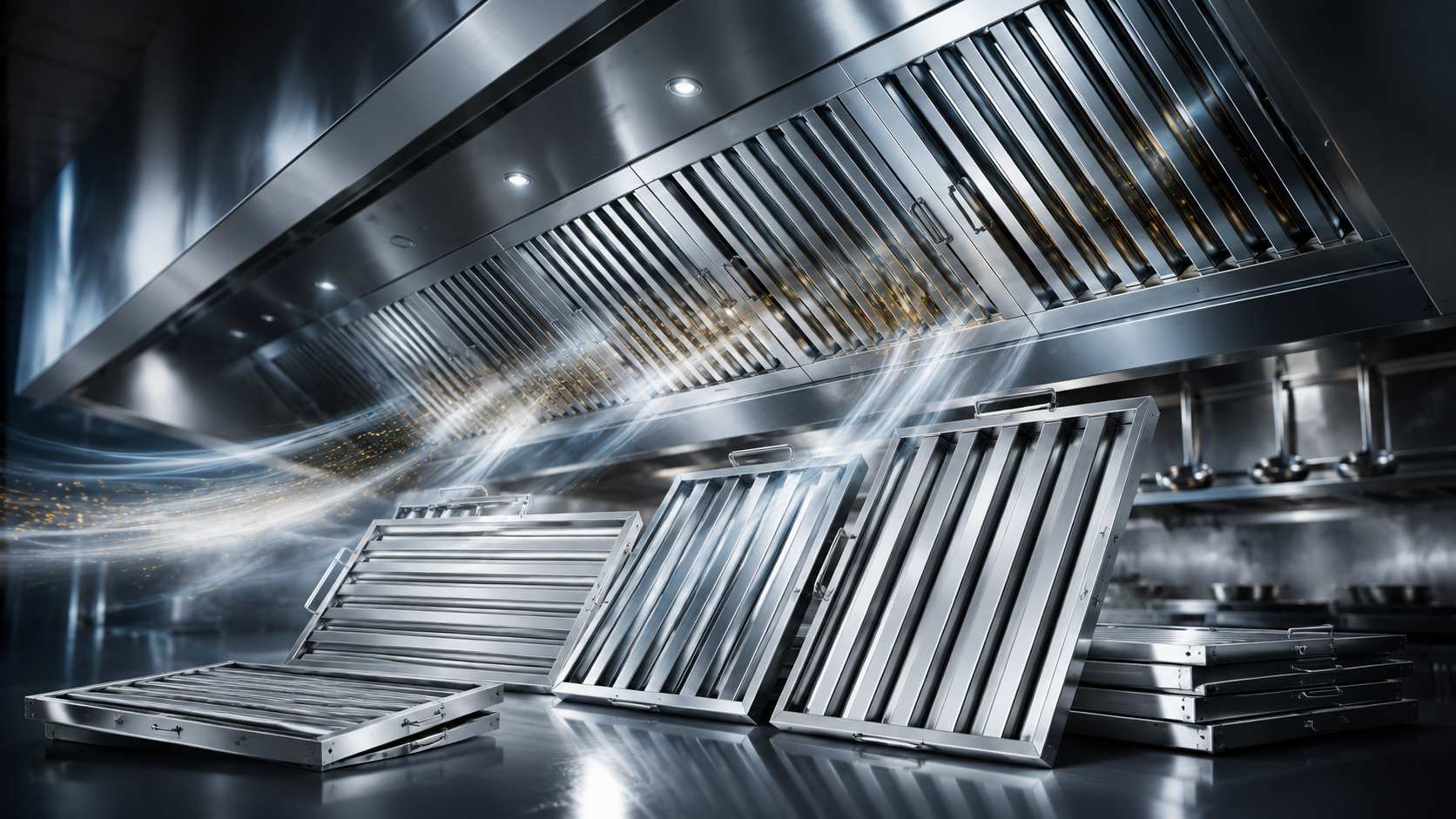
Commercial grease filters are not simple screens placed inside an exhaust hood. They are part of a fire-protection system intended to control grease-laden cooking vapors before those contaminants enter the ductwork. NFPA 96(Standard for Ventilation Control and Fire Protection of Commercial Cooking Operations)addresses grease removal devices in Chapter 6 and covers equipment use, inspection, testing, and maintenance in Chapter 12. This article uses the 2024 edition as its technical reference, but restaurant operators, consultants, and equipment buyers should confirm which edition has been adopted by the local authority having jurisdiction before specifying a product.
What types of commercial grease filters does NFPA 96 require?
NFPA 96 focuses on whether a grease removal device is suitable for commercial cooking exhaust service, not merely whether it fits inside the hood. Buyers should therefore look for evidence that the exact filter model has been evaluated for its intended application.
Why does product listing matter?
The 2024 edition requires listed grease filters or other listed grease removal devices for commercial cooking operations. Removable filters that are not an integral part of a specific listed hood are generally expected to be listed to the applicable filter standard and carry identification connecting the product to that evaluation.
UL 1046 covers single-stage and multi-stage grease filters intended for commercial cooking exhaust hoods. Its tests examine whether a grease-loaded filter limits downstream flame projection and drains collected grease without returning it to the cooking surface. A seller’s general statement that a filter is “code compliant” is not a substitute for documentation covering the exact model being purchased.
Are mesh grease filters allowed?
NFPA 96 restricts the use of mesh filters because a simple mesh construction should not automatically be treated as an acceptable primary grease removal device. A mesh filter may be permitted when it has been evaluated as part of a listed hood or in combination with a listed primary filter under the applicable test standard.
This distinction is important when replacing older filters. A product may physically fit the existing track yet fail to match the hood’s listing or approved filter arrangement. Buyers should check the hood data plate, equipment manual, filter markings, and local approval requirements before substituting a different construction.
How must grease filters be installed in a commercial hood?
Correct installation allows grease to drain toward the collection system while forcing contaminated exhaust air through the filter bank. Gaps, poor orientation, or inaccessible filter tracks can undermine the intended function even when the filters themselves are listed.
Why must all exhaust air pass through the filters?
Filters should form a complete barrier across the designated exhaust path. Missing filters, undersized replacements, large gaps, or poorly seated frames can allow grease-laden air to bypass the removal device and deposit contaminants farther inside the hood and duct system.
During installation, technicians should confirm the filter width, height, thickness, frame direction, and track engagement. A filter should sit securely without being forced into a frame that bends its housing. Operators should also avoid running a filter-equipped exhaust system while filters are removed for washing, since unfiltered cooking vapors can travel directly into the exhaust system.
Why are angle and drainage important?
Commercial grease filters are installed at an angle of at least 45 degrees from horizontal in the standard arrangement. This orientation encourages captured grease to move toward the lower edge rather than remain trapped inside the filter. The lower edge works with a grease drip tray and collection arrangement designed to control drainage.
The filter must also be accessible for removal. If equipment placement, ceiling construction, or an incorrectly sized track prevents safe removal, routine cleaning becomes harder and damaged filters may remain in service longer than they should. Designers should verify removal clearance before fixing the hood and cooking line in their final positions.
How often should commercial grease filters be inspected and cleaned?
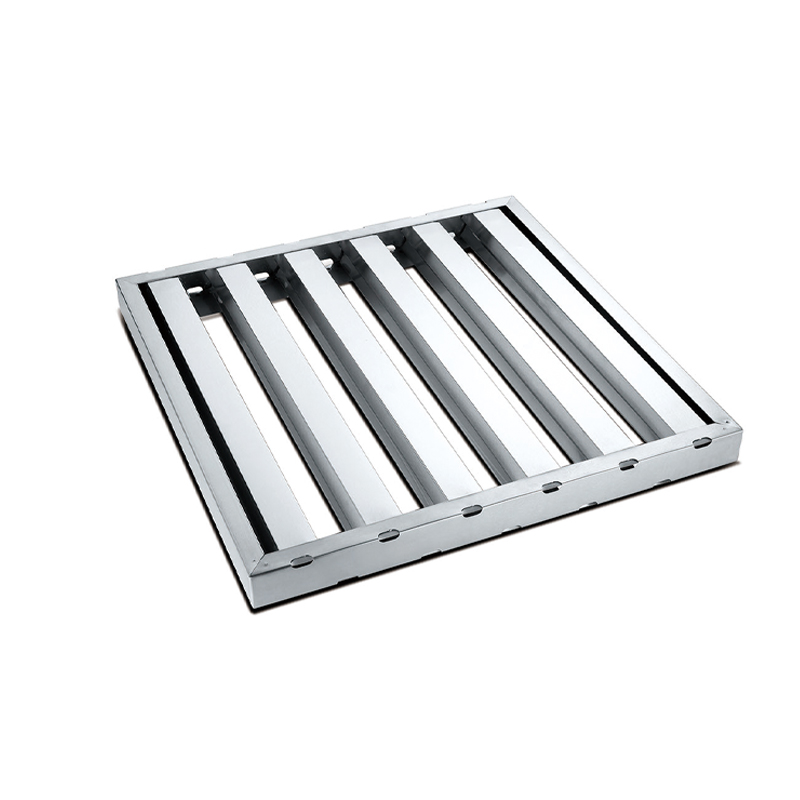
NFPA 96 does not provide one universal calendar interval that fits every removable grease filter in every kitchen. A low-volume café and a high-output operation using fryers or charbroilers can accumulate grease at very different rates.
What determines the cleaning frequency?
The exhaust system should be inspected according to the cooking operation and cleaned when grease contamination reaches the applicable trigger. NFPA 96 also requires hoods, grease removal devices, fans, ducts, and related components to be cleaned before surfaces become heavily contaminated with grease or oily sludge.
Kitchen managers should establish a filter-cleaning schedule based on actual buildup, cooking volume, fuel type, menu, operating hours, and manufacturer instructions. In a busy kitchen, removable filters may require staff attention far more frequently than the professional inspection interval for the complete exhaust system. Local fire codes or health requirements can impose additional procedures.
What should staff inspect between professional services?
Routine checks should look for heavy grease deposits, blocked passages, distorted baffles, cracked welds, loose frames, corrosion, missing filters, and improper orientation. Staff should also inspect the drip tray and collection container so accumulated grease does not overflow or drain back toward the cooking appliances.
Cleaning should not deform the filter or leave chemical residue that can enter the exhaust stream. After washing, each unit should be dry, correctly oriented, and firmly seated before cooking resumes. A filter that has been crushed or permanently distorted should be evaluated for replacement rather than forced back into the hood.
Which mistakes create the greatest compliance and fire risks?
Many filter problems originate during replacement and cleaning rather than during the original hood installation. Procurement teams may order the nearest nominal size, while kitchen staff may unknowingly reinstall filters backward or leave gaps between frames.
Why is the wrong replacement filter a serious problem?
A replacement must match more than the external dimensions. The buyer should review listing information, frame thickness, baffle orientation, material, handle position, drainage direction, and compatibility with the hood. Using an unverified filter may alter airflow resistance or conflict with the approved hood assembly.
Material claims also need context. NFPA 96 calls for listed, rigid, noncombustible filter construction capable of tolerating normal operation, handling, and cleaning. A thin frame that bends during routine washing can create bypass gaps even if it appeared acceptable when new.
Does a listing prove high grease-capture efficiency?
Not necessarily. UL 1046 primarily addresses fire-related behavior, including flame penetration and grease drainage. The standard’s published scope states that it does not measure grease-capture efficiency or physical robustness. Capture efficiency can be evaluated separately through an appropriate test method, such as ASTM F2519.
Buyers comparing filter designs should separate listing status from airflow and filtration performance. Useful technical information may include pressure drop at a stated airflow, grease-capture data, construction details, cleaning method, and dimensional tolerance. Test conditions should accompany every numerical claim so products are compared on the same basis.
How should buyers evaluate a commercial grease filter supplier?
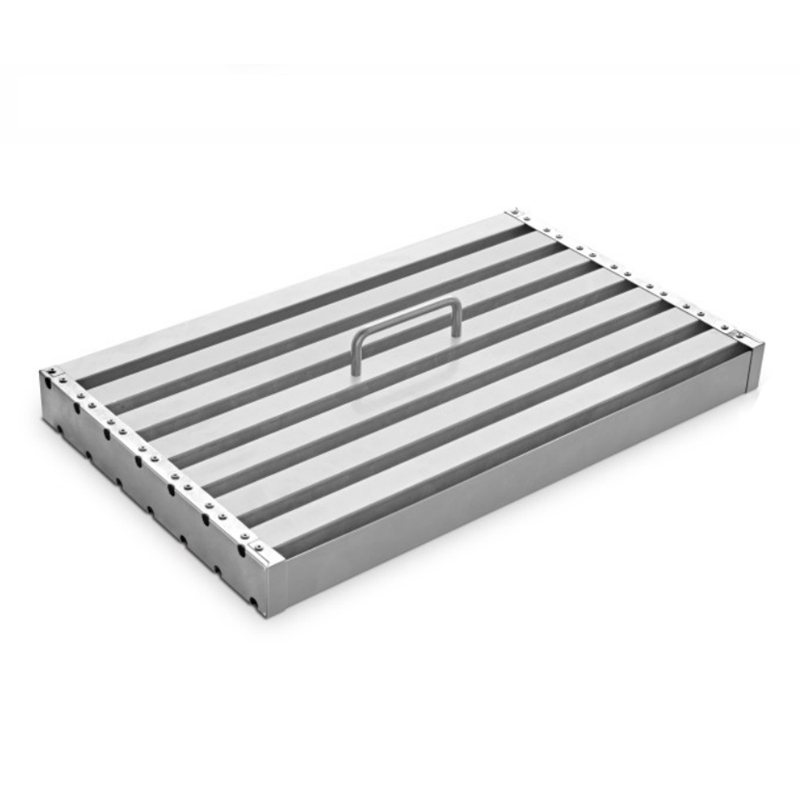
A reliable purchasing process starts with the hood model and operating conditions. The supplier should receive the exact filter opening, current filter dimensions, cooking equipment type, fuel, exhaust arrangement, cleaning method, and any listing information shown on the hood.
Which documents should buyers request?
Procurement teams should ask for a product drawing, material description, model identification, listing or certification evidence, installation direction, and cleaning guidance. The submitted documents should correspond to the product marking and quotation rather than describe a broad family of filters.
A sample fit check is worthwhile for replacement projects. Technicians can confirm that the filter enters the track without excessive force, leaves no bypass gap, drains in the correct direction, and can be removed with the cooking equipment in place. Approval records should identify the exact sample and any later design changes.
Which commercial details influence long-term maintenance?
Replacement availability, production consistency, packaging, minimum order quantity, and lead time affect the practical value of a filter program. Individual filters should be protected from frame distortion during transportation, especially when several sizes are delivered to one project.
Buyers should also establish a clear part-number system for each hood. Relying on handwritten dimensions can result in filters being moved between incompatible exhaust systems. Keeping an approved spare set allows cleaning rotation without operating the hood with an incomplete filter bank.
How can a commercial kitchen supplier support grease filter projects?
Foshan Simple Technology Co., Ltd. supplies commercial kitchen products for buyers developing new facilities or replacing existing equipment. Grease filter discussions can cover frame dimensions, material selection, baffle construction, installation direction, cleaning access, packaging, and order quantity. Buyers should provide hood drawings, filter-track measurements, cooking equipment details, and target market requirements before requesting a quotation. Sample coordination can help confirm fit, drainage orientation, handling, and removal clearance before volume purchasing. The supplier may also assist with specification review, customization requirements, production scheduling, and shipping arrangements. Final approval should still include listing verification, local code review, incoming inspection criteria, and confirmation from the project’s authority having jurisdiction.
Вывод
NFPA 96 treats commercial grease filters as functional fire-safety components within the complete kitchen exhaust system. Filters must be properly evaluated, constructed, installed, accessible, and maintained so grease-laden air cannot bypass them. Buyers should verify listing evidence, hood compatibility, drainage direction, dimensions, and cleaning requirements before approving a product. Because adopted editions and local requirements vary, final selection should be reviewed with the responsible designer and authority having jurisdiction.
Часто задаваемые вопросы
1. Does NFPA 96 require commercial grease filters to be listed?
Yes. The standard requires listed grease filters or other listed grease removal devices for commercial cooking operations. Buyers should verify that the listing evidence and product marking apply to the exact filter model.
2. Can a commercial hood use aluminum grease filters?
Material suitability depends on the filter’s listing, hood configuration, and adopted code edition. A material description alone does not establish acceptance; buyers should verify the complete product evaluation with the authority having jurisdiction.
3. How often should restaurant grease filters be cleaned?
Cleaning frequency depends on cooking volume, menu, operating hours, grease accumulation, and local requirements. Filters should be cleaned before buildup interferes with airflow, drainage, safe handling, or exhaust-system cleanliness.
4. Why must grease filters be installed at an angle?
The angled position encourages captured grease to drain toward the lower edge and collection system. Incorrect orientation can retain grease inside the filter or interfere with the intended drainage path.
5. Can a kitchen operate while grease filters are being cleaned?
A filter-equipped commercial exhaust system should not operate with its filters removed. Kitchens should keep a clean spare set or schedule filter washing outside cooking hours to maintain a complete filter bank.
