


5 أيام في الأسبوع من الساعة 8:30 صباحاً إلى الساعة 5:30 مساءً

Fan Guard Fastener Retention: Preventing Loose Mounting Hardware in OEM Equipment
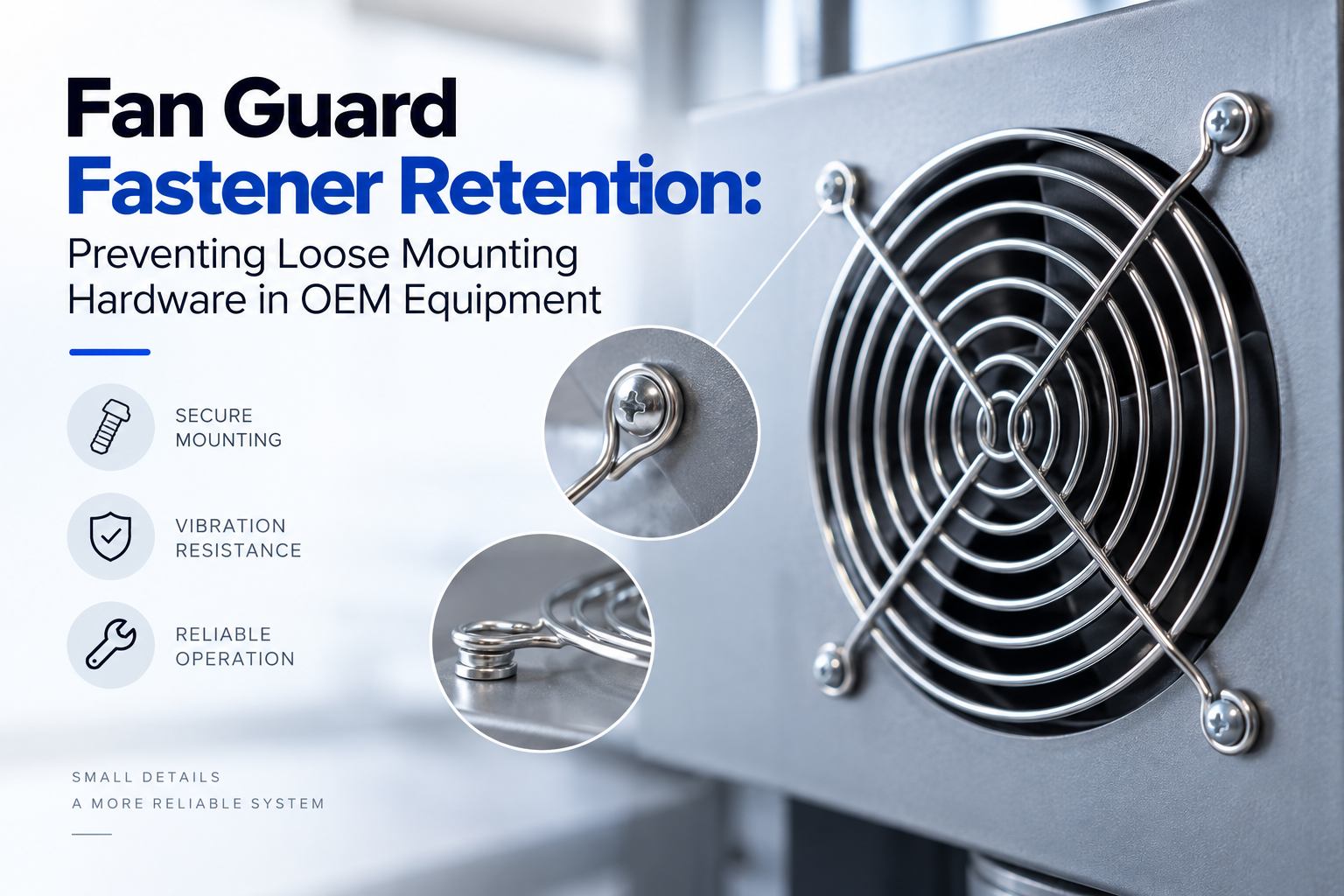
A fan guard must remain securely attached throughout the equipment’s intended operation, not merely fit correctly when first installed. For OEM purchasing managers, production engineers, and quality teams, this means evaluating the relationship between the guard’s mounting points, fasteners, supporting frame, and operating vibration. A guard can have the correct outside dimensions and wire construction yet develop movement if its fasteners lose retention or its mounting surfaces deform. Choosing a suitable fastening arrangement requires more than specifying screw size. The assembly method, clamping surface, service requirements, and access for maintenance must be considered together before the component enters repeat production.
Why Can a Correctly Installed Fan Guard Become Loose During Operation?
A fan guard may appear secure immediately after assembly but develop movement when the equipment operates. This can happen because the fastener loses clamping force, the supporting material deforms, or vibration produces relative movement between the guard and its mounting surface.
The cause is not always the fastener itself. A mounting tab that does not sit flat may bend when the screw is tightened, leaving the assembly under uneven stress. Similarly, a fastener that is too short for the mating connection may appear installed without providing the intended engagement.
Distinguish Fastener Loosening From Mounting Deformation
When movement is discovered, inspect the guard and supporting structure before deciding to use a different fastener. A loose screw and a distorted mounting tab may produce similar symptoms, but they require different corrective actions.
A practical investigation should identify whether the screw has rotated, the mating thread has become damaged, the tab has bent, or the equipment-side mounting surface has moved.
For OEM buyers, the important lesson is that the entire fastening interface needs to be controlled. A stronger screw cannot compensate for an unsuitable mounting surface, and additional tightening may deform a thin mounting tab rather than improve retention.
Which Fastener Details Should Be Included in the OEM Specification?
The purchase specification should identify the fastener arrangement rather than stating only that the guard must be securely mounted. A supplier drawing normally establishes the guard geometry, but the equipment manufacturer also needs to define how that geometry connects to the finished assembly.
The selected fastener must be compatible with the mounting-hole dimensions, mating material, available installation space, and intended service procedure.
Thread, Bearing Surface, and Engagement
Thread size and pitch should match the mating component. Where the fastener engages a threaded insert, nut, or tapped frame, the required engagement must be established for that exact connection.
The bearing surface also matters. A screw head that contacts only a small portion of a mounting tab may distribute force differently from a suitable washer or flanged fastener.
Buyers should avoid introducing extra washers or changing screw-head geometry without checking clearance. An added component may interfere with a nearby panel or change the position of the guard relative to the fan.
| Specification | What the buyer should confirm | Why it matters |
| Fastener size | Matches the mounting interface | Prevents assembly mismatch |
| Thread specification | Compatible with the mating component | Supports correct engagement |
| Head and bearing arrangement | Suitable contact with mounting surface | Helps maintain controlled clamping |
| Fastener length | Appropriate for the complete joint | Avoids inadequate engagement or interference |
| Retention method | Suitable for the intended assembly | Addresses loosening under service conditions |
| Installation access | Tools can reach the fastener | Supports repeatable assembly and maintenance |
These are specification categories rather than universal fastener recommendations. The final dimensions and installation requirements should come from the actual equipment design.
How Should Vibration Be Considered When Selecting a Fastening Method?
Fans and their surrounding equipment may experience vibration during normal operation. The level and characteristics of that vibration depend on the fan assembly, operating speed, structural support, and surrounding machinery.
A mounting arrangement that works on one fan assembly should not automatically be assumed suitable for every other installation. The relevant question is whether the complete guard connection remains stable under the intended equipment conditions.
Mechanical Retention and Service Requirements
Different fastening arrangements provide different approaches to retention. Some rely on the clamping force of a conventional threaded connection, while others incorporate a locking feature.
The selection should reflect how often the guard needs to be removed. A guard intended for periodic cleaning or maintenance may require a different assembly approach from one that is rarely accessed after production.
A retention method should not make routine servicing unnecessarily difficult or encourage technicians to damage the mounting interface during removal.
For buyers comparing commercial fan guard components , the mounting method should therefore be reviewed alongside the intended maintenance procedure rather than treated as a separate hardware decision.
Why More Tightening Is Not Always the Answer
Applying additional tightening force without an approved installation specification can damage threads, bend mounting tabs, or distort the supporting frame.
The equipment engineer should establish the applicable assembly requirements for the chosen fastener and mating materials. Where a tightening torque is required, it should be validated for the specific connection and documented rather than copied from an unrelated assembly.
If a guard repeatedly loosens, investigate the mounting geometry, fastener arrangement, equipment vibration, and mating-thread condition before changing the installation procedure.
What Should Buyers Check on a Production-Representative Fan Assembly?
A bench inspection confirms whether the guard and fasteners have been manufactured to the intended specification, but the completed fan assembly provides more useful evidence about mounting stability.
The sample should be fitted using the planned production method. All mounting points should align without pulling the guard sideways or forcing its tabs into position.
Inspect the Assembly Before and After Operation
Before testing, record the position of the guard, fasteners, and mounting tabs. Check the connection for visible gaps, uneven contact, or components that appear to be under unnecessary bending stress.
The equipment can then be evaluated under the operating conditions defined by the OEM engineering team. Where the project requires a vibration or endurance test, the test method and acceptance criteria should be agreed in advance.
After the evaluation, inspect whether the guard has moved relative to the equipment frame, whether the fasteners remain in their intended position, and whether any mounting tab or supporting surface shows deformation.
Any movement should be investigated rather than automatically attributed to a defective screw.
Check Blade Clearance After Mounting
The fastening method must not reduce the intended clearance between the guard and rotating parts.
A mounting tab that bends during tightening can change the guard’s position. On a compact fan assembly, even a local change in profile may be relevant.
With the equipment safely isolated, verify the installed clearance according to the applicable equipment procedure. The approved fastening arrangement should maintain that geometry without requiring the guard to be manually bent after assembly.
What Should Be Controlled Before Repeat Production?
Once the mounting arrangement has been evaluated on representative equipment, the approved fastener and installation details should become part of the controlled production specification.
A repeat order should not allow substitutions that alter the bearing surface, thread engagement, or retention arrangement without engineering review.
The purchasing package should identify the approved guard drawing, mounting interface, fastener specification, installation method, and any project-specific inspection requirement.
A practical release checklist includes:
-
Mounting holes match the approved drawing.
-
All mounting tabs contact the intended support surfaces.
-
Fastener size and thread match the equipment interface.
-
The approved bearing arrangement is used.
-
Fastener length does not create interference.
-
The retention method matches the approved design.
-
Installation access is adequate.
-
The guard remains stable under the agreed evaluation.
-
Blade clearance is maintained after mounting.
-
Production changes to the fastening arrangement require approval.
For projects involving customized equipment, the OEM customization process can provide a route for communicating drawings and component requirements. The final approval, however, should remain tied to the equipment manufacturer’s controlled assembly specification.
Professional Technical Support from Foshan Simple Technology Co., Ltd.
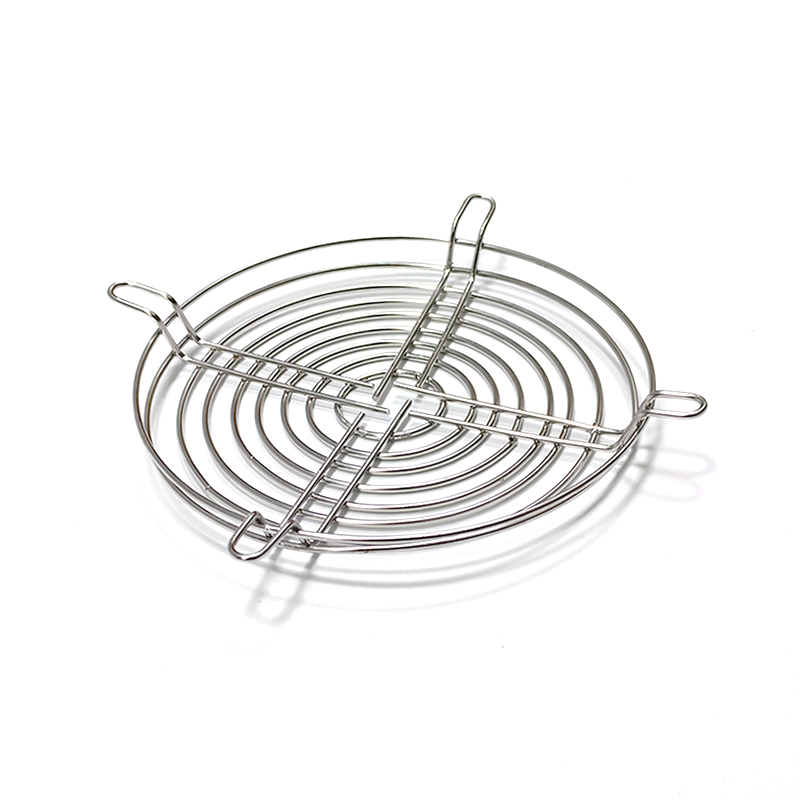
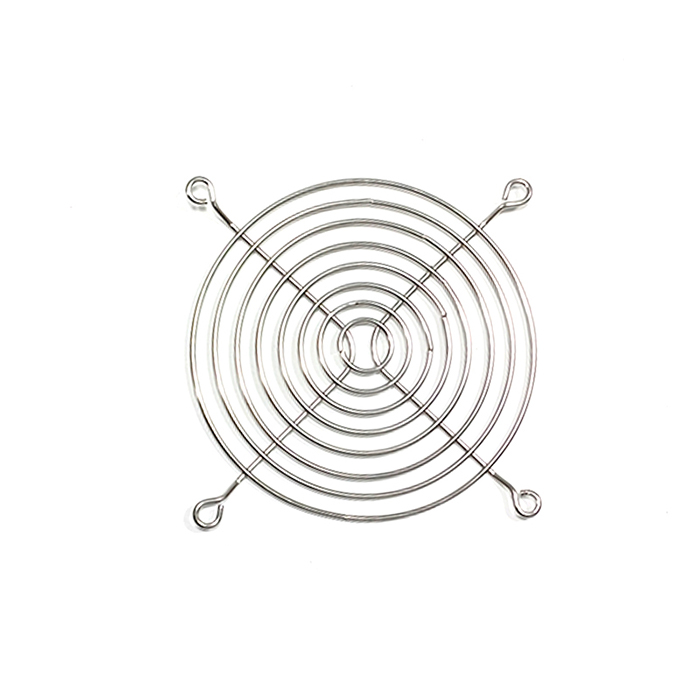
Foshan Simple Technology Co., Ltd. supplies commercial kitchen and equipment components for OEM, distribution, and replacement applications. Its product range includes wire fan guards alongside grease filters, adjustable legs, bullet feet, fryer baskets, and range hood lights. The SP-FG03 Convex Stainless Steel Fan Guard provides a product-level reference for buyers reviewing a raised wire-guard construction. For OEM integration, the equipment-side mounting drawing, guard geometry, intended fastening method, available installation space, and operating conditions should be supplied together. These details help establish whether the proposed component can be assembled consistently without changing the intended fan clearance or surrounding equipment structure.
استنتاج
Fan guard fastening should be approved as a complete equipment interface rather than judged by whether the screws feel tight after installation. Fastener dimensions, mounting-tab contact, mating-thread condition, retention method, vibration exposure, and maintenance access all contribute to the assembly’s suitability. OEM buyers should evaluate a production-representative sample under agreed operating conditions and record any movement or deformation before approving bulk production. The final drawing and assembly instructions should then preserve the accepted fastening arrangement so later substitutions do not introduce new mounting problems.
الأسئلة الشائعة
1. Can a fan guard become loose even when the mounting screws are correctly sized?
Yes. Fastener size is only one part of the connection. An uneven mounting surface, damaged mating thread, insufficient engagement, unsuitable retention arrangement, or equipment vibration can contribute to movement even when the nominal screw dimensions match the drawing.
2. Should a locking fastener be used on every commercial fan guard?
Not automatically. The appropriate retention method depends on the equipment design, operating vibration, mounting materials, and maintenance requirements. The OEM engineering team should establish the fastening specification for the intended assembly rather than applying one method to every fan guard.
3. Can additional tightening prevent a fan guard from vibrating?
Additional tightening is not a reliable substitute for correct joint design. Excessive force can deform mounting tabs or damage threads. If movement occurs, inspect the complete connection and follow the approved installation specification before changing the fastening method.
4. Why should blade clearance be checked after the guard is installed?
Fastening can affect the final position of the guard, particularly where mounting tabs or supporting surfaces deform during assembly. Clearance should therefore be verified on the completed equipment rather than assumed from the uninstalled guard’s dimensions alone.
5. What should an OEM buyer include in a fan guard fastening specification?
Include the guard drawing, mounting-hole details, fastener dimensions, mating-thread requirements, bearing arrangement, intended retention method, installation access, and applicable assembly conditions. Any project-specific tightening or operating-test requirements should be established by the equipment engineering team.
