


5 أيام في الأسبوع من الساعة 8:30 صباحاً إلى الساعة 5:30 مساءً

Fryer Basket Handle Insulation: How Can OEM Buyers Evaluate Heat Exposure and Grip Design?
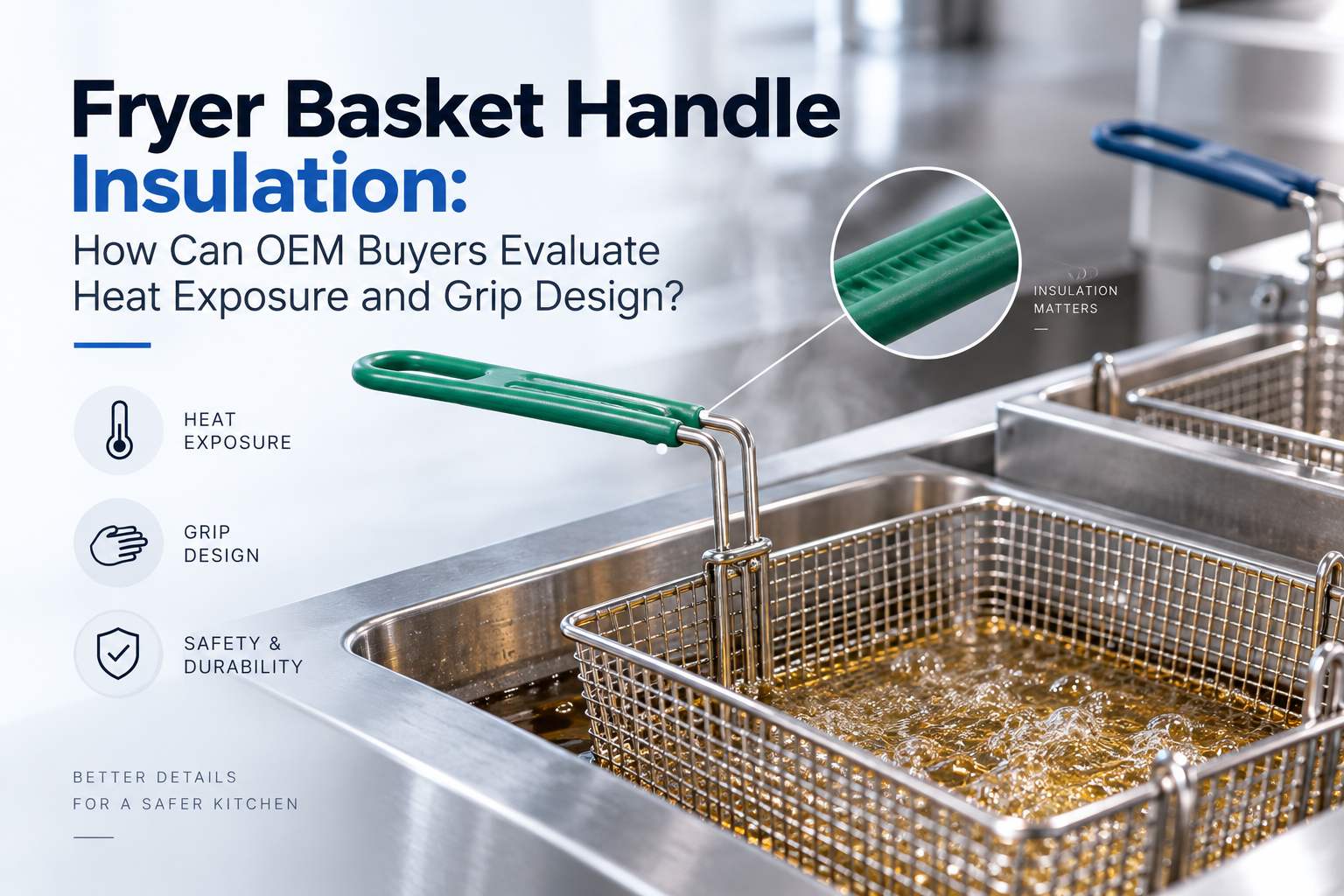
A fryer basket handle should be evaluated under the cooking conditions in which it will actually be used, not simply by checking whether an insulated grip is fitted. For OEM purchasing managers, fryer manufacturers, and technical buyers, handle insulation involves several connected decisions: the distance between the grip and hot surfaces, the materials used, the way heat reaches the handle, and whether the grip remains secure after repeated heating and cleaning. A handle that appears comfortable during a room-temperature inspection may behave differently once the basket has been exposed to hot oil and frequent lifting. The purchasing specification should therefore define the working conditions before the handle construction is approved.
Why Can an Insulated Fryer Basket Handle Still Become Uncomfortable to Hold?
An insulated grip does not prevent every part of a fryer basket handle from becoming hot. Heat can travel from the basket frame through the metal handle, while hot air and nearby equipment surfaces can warm the grip from outside. These two paths should be considered separately because a material that limits heat transfer through the handle may still be unsuitable when positioned too close to a hot fryer surface.
The geometry of the handle is particularly important. A grip positioned directly above an exposed hot area may receive more heat than one located farther from the cooking zone. However, increasing handle length without considering the surrounding equipment can create a different problem: the grip may project into a walkway or interfere with another fryer.
Heat Transfer Through the Metal Handle
The connection between the basket frame and the insulated grip determines how heat can travel toward the operator’s hand. Buyers should examine the metal section that passes through or connects to the grip, including any exposed metal near the normal holding area.
A grip that covers only a small section of the handle may leave accessible hot metal close to the operator’s fingers. Conversely, extending the insulating material into an unsuitable location can expose that material to conditions beyond its intended use.
The supplier should identify the construction and materials of the complete handle assembly rather than describing the product simply as an insulated commercial fryer basket.
External Heat Exposure During Cooking
Handle placement should also be reviewed on the intended fryer. The position of the oil vat, basket hanger, adjacent cooking equipment, and surrounding panels can influence how much external heat reaches the grip.
A sample should be checked in its normal operating position and in the drainage position. If the handle comes close to a hot panel while the basket is hanging, that condition should be included in the evaluation rather than overlooked because the grip remains away from the oil itself.
Which Handle Materials and Construction Details Should Purchasing Teams Compare?
Material selection cannot be reduced to choosing between metal and plastic. The grip material, metal support structure, attachment arrangement, and surface geometry all influence how the finished handle behaves.
A supplier may offer different grip constructions for different basket designs. Before comparing quotations, purchasing teams should establish whether the alternatives are intended for the same operating conditions and whether their attachment methods are compatible with the required basket geometry.
Grip Material and Intended Temperature Range
The grip material should have a stated operating-temperature suitability for its intended application. Buyers should request this information from the supplier rather than assuming that every polymer or rubber-like material will behave similarly near commercial frying equipment.
The material also needs to remain suitable for the cleaning process. Exposure to detergent, hot water, and repeated handling can affect the condition of an insulating grip over time.
A useful material review considers:
| Specification | Purchasing question | Why it matters |
| Grip material | What material is specified? | Establishes the construction being purchased |
| Temperature suitability | Under what conditions is it intended to operate? | Helps evaluate the cooking environment |
| Grip dimensions | What area is available for normal hand contact? | Affects handling and control |
| Attachment method | How is the grip retained? | Influences movement during service |
| Cleaning compatibility | Which cleaning conditions are permitted? | Helps prevent unsuitable maintenance |
| Replacement arrangement | Can a damaged grip be replaced separately? | Affects spare-parts planning |
The table provides a comparison framework, not a universal acceptance standard. Temperature limits and material characteristics should come from the exact supplier specification rather than being inferred from appearance.
Grip Retention and Exposed Edges
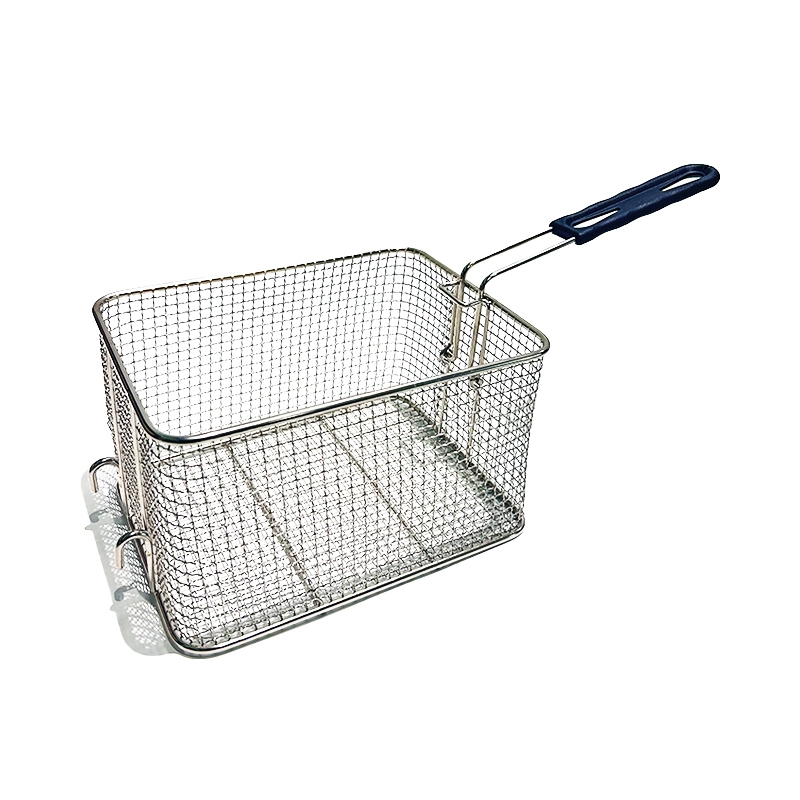
A grip can have suitable insulating properties yet remain unsuitable if it moves during lifting or exposes a sharp metal edge. Inspect how the grip attaches to the underlying handle and whether it can rotate, slide, or loosen during ordinary operation.
Where the handle contains joints, caps, or transitions between materials, check that these features do not interfere with the operator’s normal hand position. A visually smooth sample may still be uncomfortable if a raised joint presses against the hand when the loaded basket is lifted.
How Should Buyers Evaluate Handle Geometry on the Intended Fryer?
A handle should be approved in relation to the fryer, not independently of it. The basket’s operating path determines where the grip will sit during immersion, lifting, drainage, and removal.
Two baskets with similar body dimensions can place the operator’s hand in different locations because of handle length, angle, or attachment position. These differences may not be obvious from catalog photographs.
Grip Position During Lifting and Drainage
Place the sample in the intended fryer while the equipment is cool and safely isolated. Check that the grip can be reached naturally without requiring the operator to lean across the cooking surface or rotate the wrist awkwardly.
Next, place the basket in its drainage position and inspect the grip’s distance from surrounding equipment. The handle should remain accessible while the basket is supported by its intended hanger.
The purpose is to understand the working geometry before thermal evaluation. A grip that cannot be reached comfortably in the correct position will not become suitable merely because its material has a favorable temperature specification.
Clearance Around Adjacent Equipment
Where two baskets operate side by side, both handles should be evaluated together. One grip may interfere with the neighboring basket or restrict access when both baskets are hanging.
For an OEM production program, the approved drawing should record handle angle, overall projection, grip position, and relevant clearances. These details allow the purchasing team to compare repeat orders without relying solely on the original sample.
What Should a Thermal Sample Evaluation Include Before Bulk Ordering?
A meaningful thermal evaluation needs agreed operating conditions. Testing an empty basket briefly in a cool environment provides little information about how the handle behaves during a normal cooking cycle.
The buyer and equipment engineer should define the intended fryer, cooking conditions, basket loading, operating sequence, and measurement locations. Any applicable temperature limits must come from the equipment requirements or an appropriate validated specification; they should not be invented for the purchasing document.
Compare Initial and Repeated Operation
The sample should first be inspected in an unused condition. Record the grip’s attachment, position, appearance, and relationship with exposed metal.
A qualified team can then evaluate the basket under a representative operating sequence, including lifting and drainage. Suitable measurement equipment should be used where grip temperature is part of the approval requirement; personnel should not rely on touching a heated handle to determine whether it is safe.
After the sample has cooled, inspect the grip again for movement, cracking, deformation, discoloration, or changes around the attachment points. A material may retain its general shape but no longer sit securely on the handle, making both thermal and mechanical inspection necessary.
For higher-volume projects, more than one sample should be evaluated where the buyer’s quality plan requires evidence of production consistency.
Which Handle Specifications Should Be Frozen Before OEM Production?
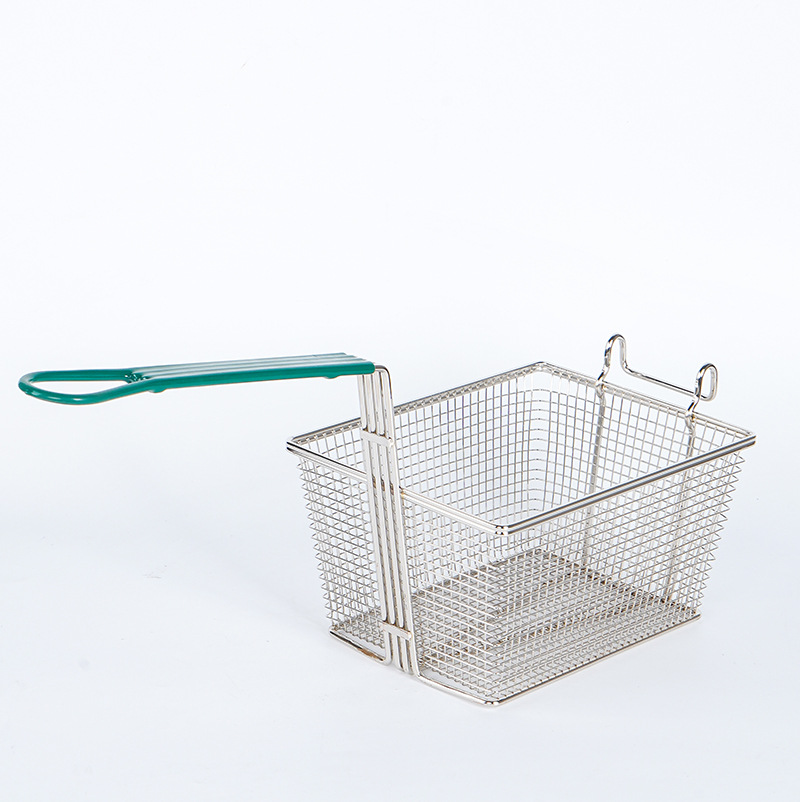
Once the sample has passed the agreed evaluation, the purchasing specification should capture the features responsible for its performance. An order describing only “fryer basket with insulated handle” leaves substantial room for variation between batches.
The controlled drawing should identify the basket and handle geometry, grip material, attachment construction, exposed metal areas, and the working positions relevant to the fryer.
Before release, purchasing and engineering teams should confirm:
-
Grip material matches the approved specification.
-
Handle length and angle match the drawing.
-
Grip attachment remains secure.
-
No unintended exposed metal enters the normal holding area.
-
The handle clears surrounding equipment.
-
The basket hangs correctly in the drainage position.
-
Thermal evaluation follows the agreed operating conditions.
-
Cleaning does not produce unacceptable grip deterioration.
-
The approved sample is retained or documented.
-
Any later material or construction change requires review.
These controls should be focused on the characteristics that affect actual use. Unnecessary cosmetic requirements can complicate sourcing without improving the function of the handle.
A repeat order should remain tied to the same approved material and geometry unless a revised construction has been evaluated.
Professional Technical Support from Foshan Simple Technology Co., Ltd.
Foshan Simple Technology Co., Ltd. supplies commercial kitchen components for OEM, distribution, and replacement applications. Its product range includes fryer baskets with different body dimensions, handle arrangements, and material options, alongside grease filters, adjustable legs, bullet feet, and range hood lights. The Heavy Deep Wire Frying Basket with Round Corners and Insulated Handle provides a product-level reference for buyers evaluating an insulated-handle construction. For OEM enquiries, the existing fryer configuration, handle drawing, grip material requirements, operating conditions, and order quantity should be documented before a proposed basket is approved. These details allow the component specification to be compared with the actual equipment application.
استنتاج
Fryer basket handle insulation should be evaluated through the complete working arrangement rather than the grip material alone. Heat transfer, external exposure, handle angle, grip retention, fryer clearance, and cleaning conditions all influence whether the assembly is suitable for the intended application. Before bulk ordering, purchasing teams should define a representative operating procedure and obtain the supplier’s material and construction specifications. The accepted sample and drawing can then serve as the reference for production and incoming inspection, reducing the risk of receiving handles that fit the basket but behave differently during service.
الأسئلة الشائعة
1. Does an insulated fryer basket handle remain cool throughout operation?
Not necessarily. Grip temperature depends on material, handle construction, cooking conditions, and exposure to nearby hot surfaces. Buyers should verify the intended operating limits and evaluate the complete handle assembly under representative fryer conditions rather than assuming that insulation eliminates all heat exposure.
2. Should buyers specify the grip material in an OEM fryer basket drawing?
Yes. A material description helps prevent substitutions that could change the handle’s thermal, mechanical, or cleaning characteristics. The drawing should also identify grip dimensions and attachment details, with the exact material properties confirmed through supplier documentation rather than visual inspection.
3. Can a longer handle reduce heat exposure?
A longer handle can change the grip’s distance from the cooking area, but length alone does not establish thermal suitability. It may also create interference with adjacent equipment or restrict movement. The handle should be evaluated in the intended fryer before its geometry is approved.
4. What should be inspected after a fryer basket handle undergoes a thermal test?
After the sample cools, check the grip for deformation, cracking, discoloration, looseness, and movement relative to the metal handle. Compare these observations with the original sample record and confirm whether the assembly still meets the agreed handling and dimensional requirements.
5. What information should buyers provide when requesting insulated-handle fryer baskets?
Provide the fryer model or installation drawing, basket dimensions, handle geometry, expected operating conditions, grip material requirements, cleaning method, and order quantity. Where the project requires thermal evaluation, the acceptance procedure and applicable temperature limits should also be agreed before sample approval.
