


5 أيام في الأسبوع من الساعة 8:30 صباحاً إلى الساعة 5:30 مساءً

How Should OEM Buyers Diagnose Fan Guard Resonance at Specific Operating Speeds?
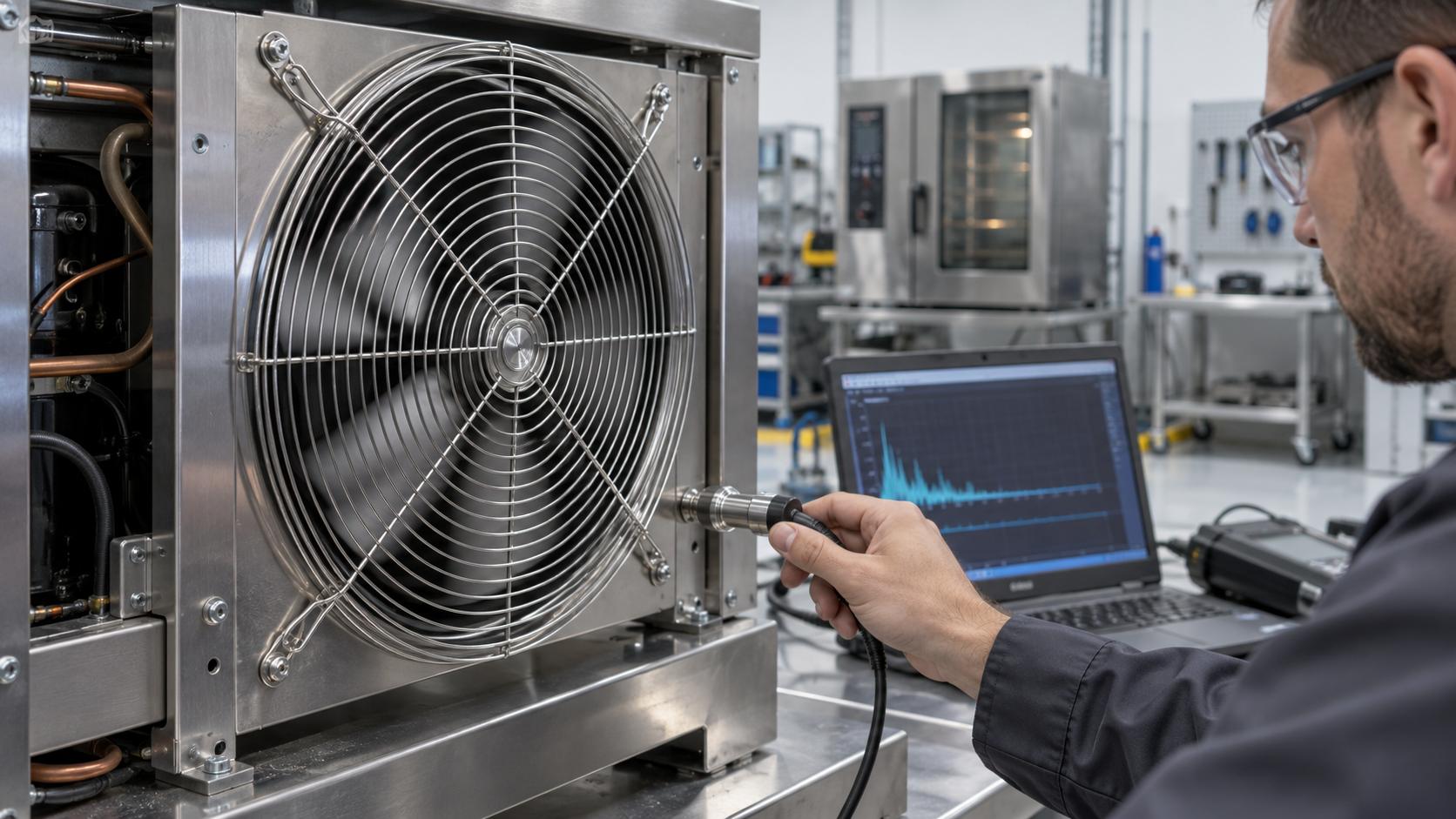
The note with a returned sample can say “buzzing,” although a supplier trying the guard later hears nothing unusual. There is no need to assume either party has missed something obvious: the buyer may have noticed an event during acceleration that the supplier never encountered at steady rated speed. The first exchange of information ought to establish that difference, before more samples are shipped.
The short interval in which the buzz is heard gives the test a place to concentrate, without settling what caused it. It suggests looking at the relationship between the fan’s repeating forces and the structure around it. The guard may be involved, but the panel carrying the guard can be involved too. Buying a heavier guard without establishing that relationship is a rather uncertain way of solving the problem.
Why Would a Guard Be Quiet Above and Below the Problem Speed?
Begin at the fan and ask how its forces reach the guard through the mounting. Sound may come from a responding part some distance from the source, so another recording, however loud, can leave the route of excitation unexplained.
How do excitation and mounting interact?
Rotor imbalance, motor forces, and airflow can introduce periodic excitation into the assembly. Blade-related pressure pulses are another possibility. For illustration only, take six blades turning at 1,200 rpm. The shaft makes 1,200/60 = 20 turns per second, and the six blades make 6 × 20 = 120 passages per second at a fixed position. That corresponds to a 120 Hz blade-pass frequency. No product rating is implied by these example numbers. Their usefulness is in showing why a speed reading needs to be interpreted with the actual fan configuration.
Construction and mounting determine the guard’s natural frequencies. Excitation sweeping close to one of those frequencies can amplify motion for a short interval before the response falls away again. To decide whether this explains the complaint, the engineer still has to investigate the joints and panel and rule out blade contact. Loose joints are particularly troublesome because movement at the connection changes the support condition as well as producing noise of its own.
The observation to send back is consequently more specific than “noisy guard”: the speed at onset, the interval of strongest response, and the speed at which it subsides. Whether that pattern returns on another sweep is part of the evidence.
What Would Make a Reproduction Test Convincing?
The supplier’s fixture deserves as much scrutiny as the sample. A result on a rigid bench mount cannot be assumed to describe a guard fitted to a thin equipment panel.
Would the production panel support the tabs in the same way?
Look at where each tab is clamped and what sits under it. A washer or a different fastening arrangement changes that interface, while the construction of the panel determines how the load is carried beyond the tab. Blade clearance and cable routing also need to be recorded before the first run. Without that information, the parties may spend time exchanging samples when the difference lies in how the samples were installed.
A useful run includes the interval where the noise was reported. If the controller barely pauses there, arrange a controlled sweep through the interval in both directions; leaving the fan at its final speed would skip the very event being investigated. Actual rpm belongs in the record beside audible behavior and visible motion. Controller commands alone can leave uncertainty about the speed that was reached.
Run the unchanged arrangement again before trying a modification. Otherwise, how would anyone know whether the modification had helped or whether the original noise simply failed to return? The work belongs with personnel trained to test rotating equipment. They need the guard in place and a means of observing from outside the hazard area, using remote or non-contact observation where practicable. Nobody should attempt the familiar shortcut of holding the guard still by hand while the fan runs.
Where Is the Motion Largest When the Noise Appears?
A recording lets another person hear the complaint. It does not locate the largest motion, and that is where the investigation can become more useful to purchasing.
What do matched measurement locations reveal?
Take readings from more than the part named in the complaint. The frame and a mounting tab are useful places to compare with the panel, with a point on the housing giving a reference. The instrument has to suit the measurement, and its positions need to be identified in the record. Mark the positions on an installed photograph: “near the edge” is not enough for someone trying to place a sensor the same way next week. Frequency plotted against measured rpm helps separate a tone tracking rotation from amplification around a frequency that stays nearly fixed. The latter may warrant looking for a structural mode, with the mounting investigation still open.
Use the original fan and panel for the second guard, and assemble it by the same procedure. This leaves the sample as the intended difference between runs. A complaint following one sample would justify examining that sample’s forming, welds, tabs, and dimensions. A similar response from the replacement would make the common panel and fan worth a closer examination before requesting yet another sample. A difference between samples would instead give the inspection of their construction a specific purpose. Neither result closes the investigation on its own.
Changing several things together spoils that advantage. After a trial involving new fasteners, an altered wire, and an added weight, it may be impossible to recover which alteration quieted the guard without repeating the work. Alterations of that sort belong in controlled engineering trials after the initial assembly has been documented.
Could Another Engineer Rebuild the Sample Test From the Record?
The person conducting the test may remember small fixture details that are absent from the report. Those details need to reach the file while they can still be checked; otherwise a colleague reconstructing the setup later must guess what the report leaves out.
How are configuration and acceptance kept together?
Besides the guard revision and fan reference, the record needs panel construction, orientation, material and finish, mounting details, and assembly method. The sweep procedure, measurement positions, photographs, and observed response interval complete the practical description. The fan guard diameter and mounting-hole spacing guide can help with the fit review, but a correct fit is not evidence of an acceptable vibration response.
Acceptance then becomes a discussion about specified behavior. The sample request needs to say what the OEM will reject. Blade contact and persistent interference are concrete observations, as is unstable movement at the mounting. Noise acceptance needs a criterion suited to the application; “sounds better” leaves room for disagreement. If vibration numbers are to determine acceptance, the OEM should establish them through its engineering or quality plan for this equipment. Another machine’s limit cannot do that work merely because it is available. Get this discussion into the request before the sample is run, while there is still time to resolve differences in interpretation.
Does the Next Order Still Match the Tested Configuration?
An approved configuration needs an identity that purchasing can recognize when a substitute is proposed.
Which changes should reopen the review?
A change in profile, wire arrangement, or tab shape is more than a visual difference when the investigation concerns vibration. Weld position and material matter as well, along with the interface carrying the guard. It is also possible to retain the approved guard and lose the approved operating condition by substituting the fan or panel, or running over a different range of speeds. The approved drawing and mounting record therefore belong with the order information; appearance alone is a weak check on a proposed substitution. The relevant sweep should be repeated where the change affects the approved condition.
Fastener retention remains a separate check. Its question is whether the connection remains secure in the specified test. There is still a separate question about what happens as the fan passes through the troublesome speeds. Retain the evidence for each check, so a secure fastener is not taken to mean that the vibration complaint has been resolved.
Need a Fan Guard Sample for the Investigation?
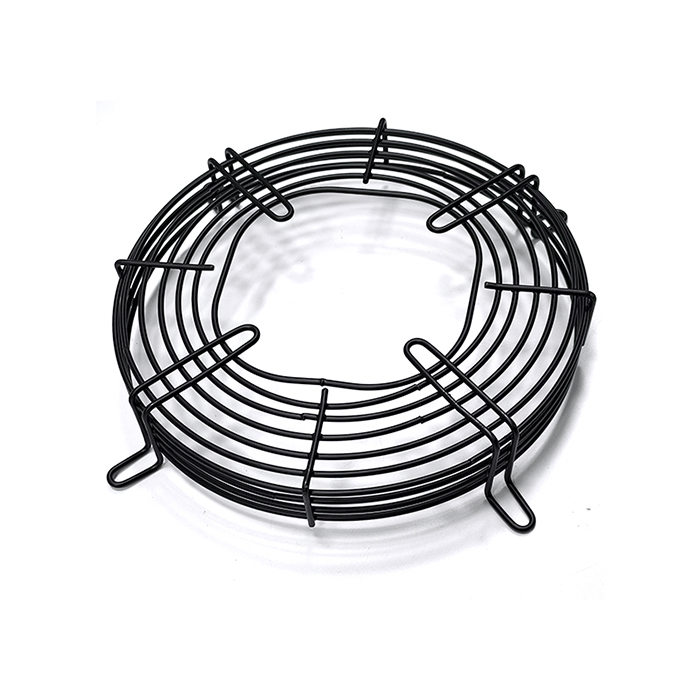
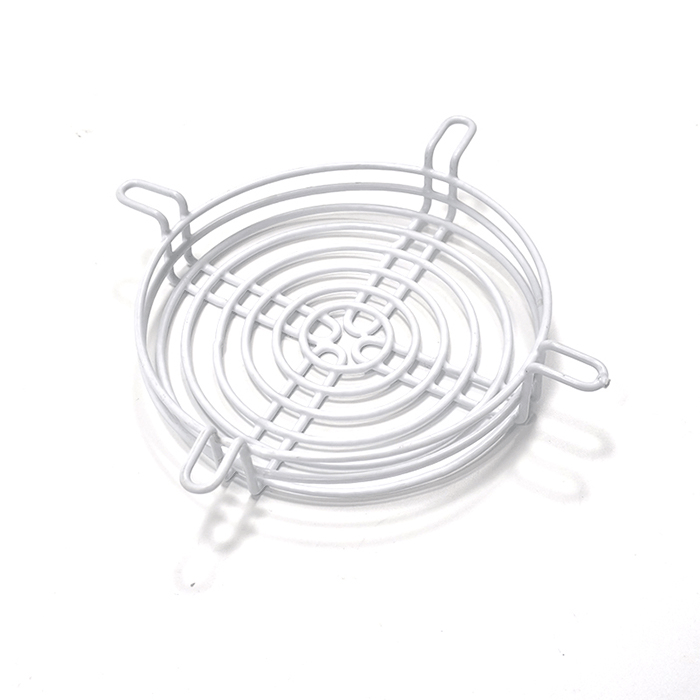
شركة فوشان للتكنولوجيا البسيطة المحدودة provides stainless steel wire-mesh و convex fan guard product pages that buyers can use when discussing a cooling or ventilation sample. The installation-specific vibration result still needs a test: the construction shown on either page does not establish the response of the guard on the buyer’s panel. An inquiry with the drawing, panel details, fan reference, clearance, speed range, and acceptance proposal gives the discussion a defined installation. The test for the intended installation is what will settle approval.
استنتاج
The purchase decision should follow the investigation: find the troublesome operating condition, reproduce it, and determine where the assembly responds. Ordering another construction too early risks restarting the same investigation with different parts. An order accompanied by the tested mounting record and agreed criteria gives the next substitution a much clearer point of comparison.
الأسئلة الشائعة
Does a noise recording prove resonance?
A recording lets the supplier hear the event. It needs the rpm and installation record to be useful for diagnosis, with repeat runs and suitable measurements helping establish whether resonance or another fault is involved.
Could thicker wire change the result?
A diameter change affects mass as well as stiffness. It is a design change to evaluate on the assembly, with a repeat of the relevant speed sweep showing whether the original complaint has actually been resolved.
What should accompany a returned sample?
Include the drawing revision, installed photographs, observed speeds, and measurement locations. Preserve the mounting and comparison records so the supplier knows which conditions produced the complaint.
