


5 Days a week from 8:30 am to 5:30 pm

How to Choose the Right Hinge for Commercial Refrigeration Equipment
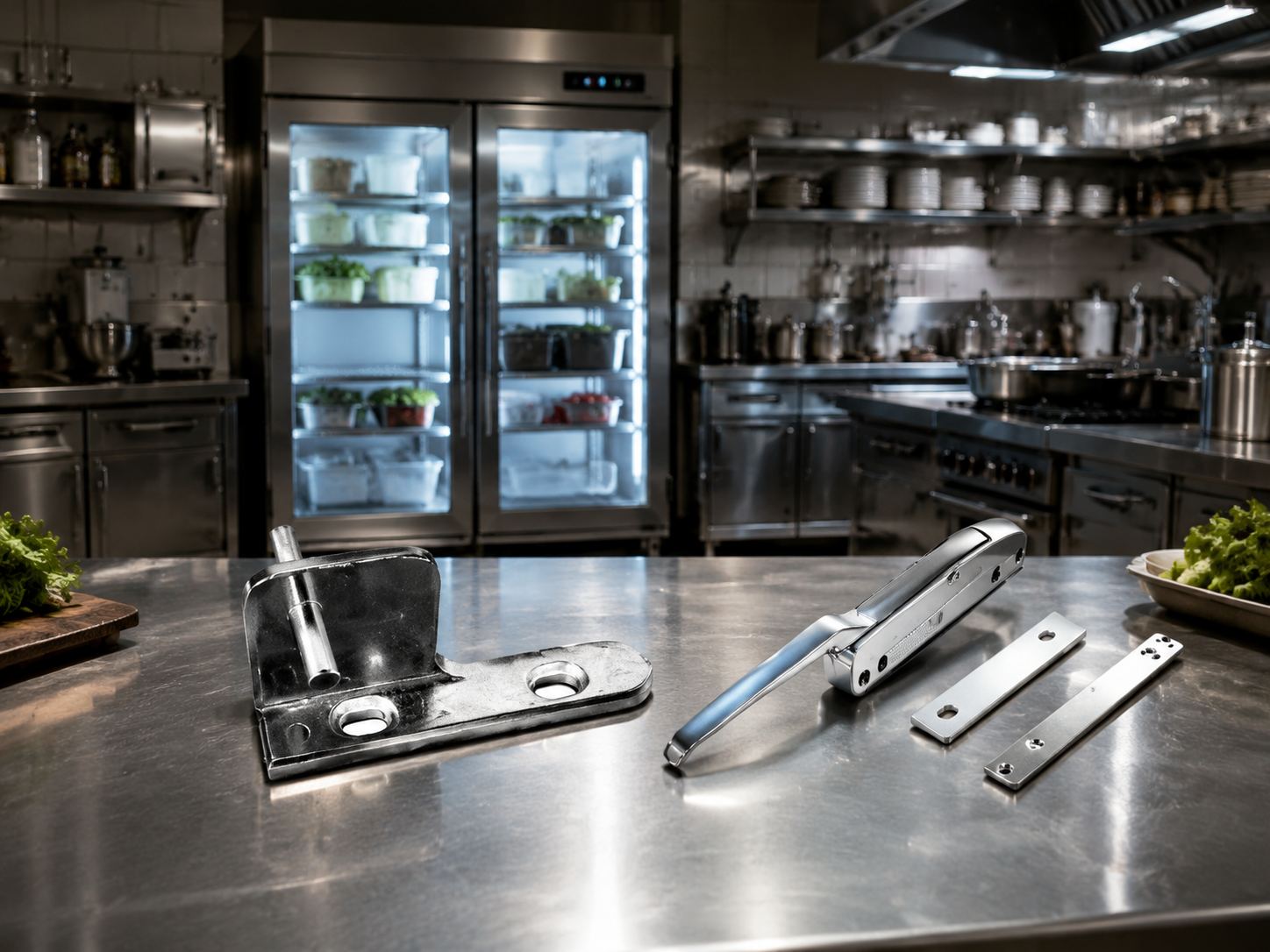
A refrigeration hinge is a very small part and the performance of that part can have a huge impact on whether or not a cooler door closes properly or not. And whether or not that door opens properly or not. And whether or not that door is going to last for the long life of the cooler. And who is going to be responsible for fixing that part. And whether or not that part is going to be covered under warranty. And what is ultimately the cost of that part. The correct commercial hinges must be matched to the weight of the door, the cabinet in which it is to be installed, the usage of the door, the corrosion that will be encountered by the hinges, and the documentation of the supplier.
Why does hinge selection matter for refrigeration equipment performance?
A refrigerator door is opened and closed hundreds of times in kitchens, stores and food preparation areas. A hinge is required to support the door and return the seal to the cabinet face.
How can the wrong hinge affect temperature control?
Hinge sag, hinge bind or hinge movement can result in a door not coming into proper contact with the gasket to assure a tight seal of warm air, such leakage can result in condensation, frost, extended compressor operation to compensate for the loss of cooled air and customer complaints relative to the product’s ability to hold conditions. Although such a condition can appear to be adequate during a receiving inspection, it can readily fail when the cabinet is loaded with merchandise, moved or subject to cleaning. It is recommended that the door weight, door’s center of gravity, the door’s opening angle and whether the hinge is designed to support self-closing of the door be evaluated.
What installation issues cause early failure?
Early failures in door hinge design typically occur due to several common factors. Misaligned mounting holes, thin cabinet panels, over-tightened screws, absence of spacers, and hinges not being ‘left’ and ‘right’ handed all can create problems. When a door twists on the hinge leaf, the screws will release and the seal will lose its compression. For OEM production the hinge drawing should include information such as hole spacings and offsets, pin diameters, cabinet mounting thicknesses and required reinforcements.
Which refrigeration hinge types should buyers compare first?
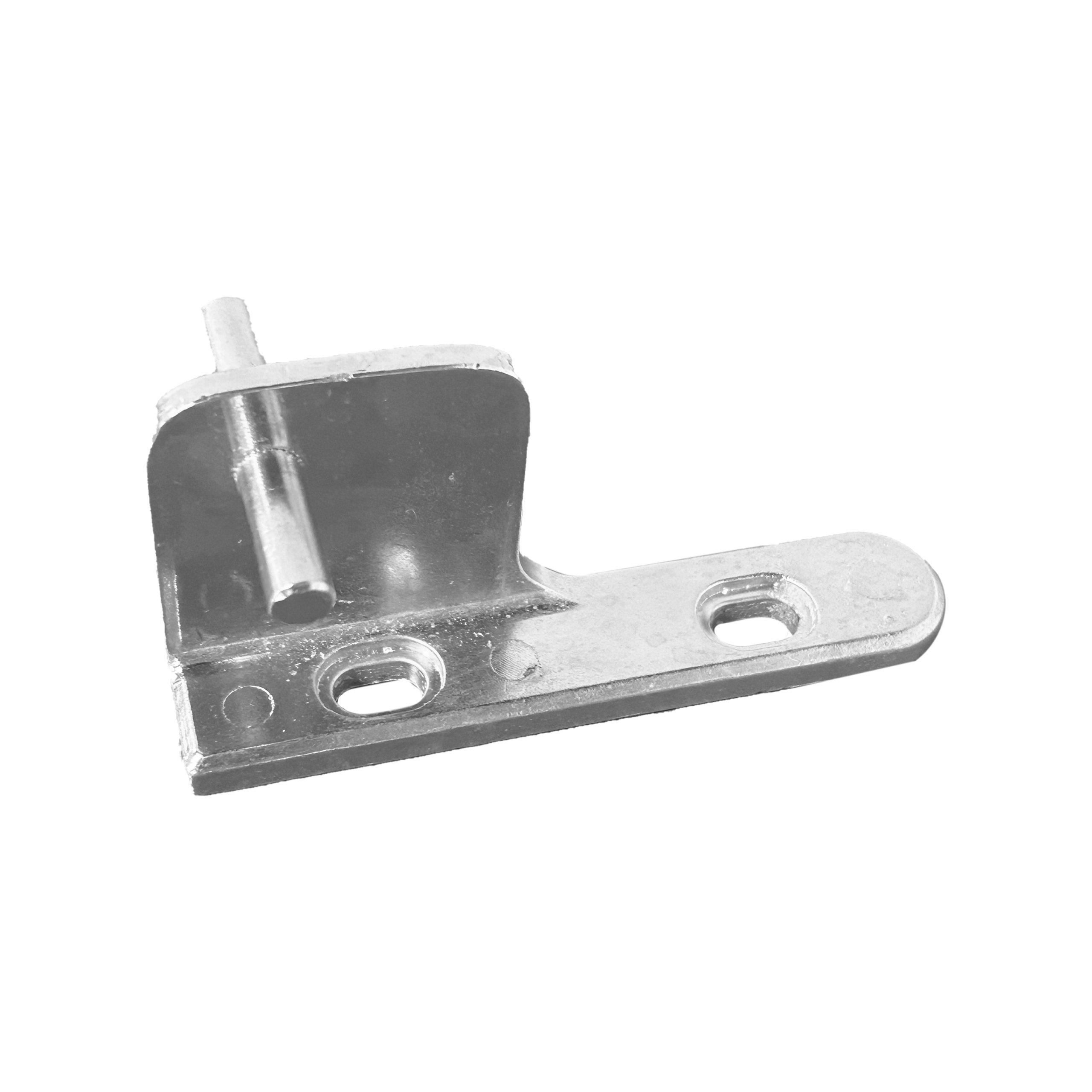
The main decision factors are not limited to the material. Compare function, mounting, adjustability and maintenance access before inquiring prices.
When is a self-closing hinge the safer option?
For a reach-in refrigerator, freezer, display cabinet or prep counter application where doors are left open by staff members, a self-closing hinge is a useful feature. It enables the door to automatically return to the closed position which will assist in food safety practices. It is essential to test the closing force, the stop angle, for any sign of spring fatigue, noise etc and also assess whether the part can be serviced/ replaced without removal of the complete door.
When does a stainless steel hinge make sense?
Stainless steel hinges are appropriate for use in wet kitchen environments including seafood processing, bakery proofing areas, dishwashing areas and outdoor service counters. While stainless steel generally resists corrosion better than plated steel in wet environments subject to contact with water, salt, detergents and subject to varying temperatures, there is a cost factor. Not all stainless steel hinges are made equal. While some are better than others, it is essential to check drawings or material declarations to establish the grade, thickness, polish and load bearing capacity of any hinge.
|
Hinge option |
Good fit |
Risk to check |
|
Self-closing hinge |
High-use doors |
Spring fatigue and closing force |
|
Lift-off hinge |
Service access |
Accidental door removal |
|
Adjustable hinge |
Field alignment |
Thread looseness |
|
Stainless hinge |
Wet or corrosive areas |
Grade and thickness |
What specifications should appear in a commercial hinges RFQ?
A clear RFQ helps to avoid disputes when working conditions are also clearly described in the tender in addition to the physical appearance of the part. When producing custom articles for the commercial kitchen this is particularly important.
Which mechanical details determine fit and service life?
First, identify the intended door application, such as chiller doors, freezer doors, under-counter refrigerator doors, worktop refrigerator doors, display doors, or insulated cold-room panel doors. Then specify the door weight, height, width, number of hinges, opening angle, hinge mounting position, mounting-hole centres, hinge-pin diameter, door-leaf thickness, hinge offset from the door edge, target gasket compression, and operating temperature range. For heavy doors, apparent hinge strength alone is not sufficient; the design must also provide a properly engineered load path through the hinges, fasteners, door structure, and surrounding frame.
What documents should the buyers request from the supplier?
Request 2D drawings, photos of assembled samples, material details, surface finish, packaging method, carton labels, installation instructions, and available spare parts. For bulk orders, also ask about MOQ, sample lead time, production lead time, tolerance control, and whether the hinge has passed internal cycle or salt-spray testing. If test data is supplied, buyers should confirm the test method, date, sample size, and whether results apply to the exact ordered model.
What sanitation, compliance, and maintenance risks should buyers check?
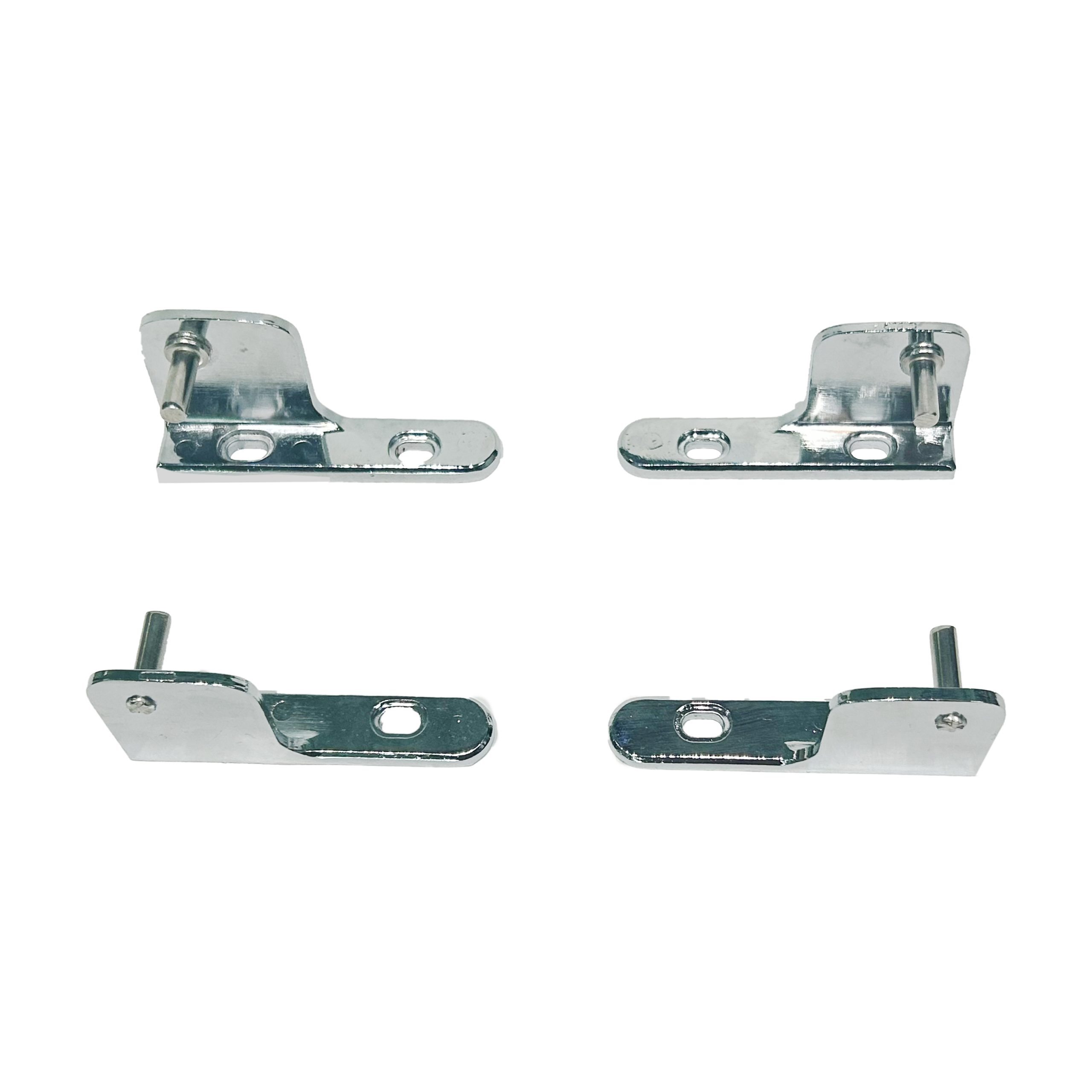
A hinge would ideally be placed in the vicinity of where food is stored, door gaskets, condensate drain, and cleaning chemicals. Ideally it would support you in sanitation rather than creating additional cleaning challenge areas.
Which food equipment standards are relevant?
The FDA Food Code 2022 is a model code, the FDA does not issue product certificates. The model code is intended for adoption by government jurisdictions and sets minimum requirements for safe retail food systems. It includes criteria for equipment, facilities, cleanability and more. NSF/ANSI 7 covers minimum food protection and sanitation criteria for commercial refrigerators and freezers as well as their components and accessories. NSF/ANSI 51 covers criteria for materials and finishes used in commercial foodservice equipment components.
How should maintenance teams inspect hinges?
Loose screws, cracked leaves, bent pins, rust, door drop, gasket gaps, broken springs and noise on closing should all be inspected during routine cleaning of hinges. The cleaner should also check that the cleaner is suitable for the hinge finish and plastic bushings nearby. Hinges that cannot be cleaned around the pin, base or screw pocket of the hinge create avoidable inspection problems. When replacing hinges, ensure that they are of the same offset and have the same number and pattern of holes as the original hinges unless the door frame has been redesigned.
Which supplier can support refrigeration hinge sourcing for commercial kitchen products?
Foshan Simple Technology Co., Ltd. is a China commercial kitchen equipment supplier and replacement parts supplier, who provides all sorts of commercial kitchen equipment and accessories to customers all over the world, not just a products catalog. Products listed on Simple website include Refrigerator Spring Hinges, Triangular Freezer Hinges, Commercial Grease Filters, Adjustable Height Restaurant Equipment Stands, Deep Fryer Baskets, Fryer Parts, Fan Covers, etc. Simple Technology can help customers select the most suitable hinge for their refrigeration hinge projects, including comparison of hinge materials, hinge mounting style, hinge size, hinge samples, equipment part packaging, MOQ, customization, etc. On the website, users can read information about using hinge for refrigerator and freezer, such as self-closing style hinges and positioner style hinges. And there are more details about each products on the product pages. It is always better for customers to compare customer service drawings and material list, product prices, shipping and delivery terms and conditions and after sales service etc before placing orders.
Conclusion
The first thing to consider when purchasing a refrigeration hinge is the door not a pretty picture in a catalog. Match the style of hinge, the material, the method of mounting, and the closing action of the door to the cabinet in question and the typical use. For a wet or corrosive kitchen, stainless steel is a good starting point but grade, thickness, and quality of construction are still important. Look for a commercial hinge that is cleanable, has spare parts readily available, and is maintained realistically. Use a disciplined RFQ process to help make your choice installable, inspectable, and replaceable.
FAQs
1. What is the most important factor when choosing a refrigeration hinge?
Generally it is three things that are most important for a door: the weight of the door, the compression of the gaskets and the mounting geometry. If these three points are not matched even the most expensive hinge can be insufficient and will sag or leak.
2. Are stainless steel hinges always better for refrigeration equipment?
No. While Stainless Steel Can Be Useful In Wet or Corrosive Environments, Other Key Characteristics Such As Grade, Thickness, Finish, Pin Design & Load Capacity Must Also Be Considered By Buyers.
3. When should buyers choose self-closing commercial hinges?
Used for frequently used doors to a fridge and freezer, eg where doors are often left ajar by staff. Check the closing force and serviceability before purchasing.
4. What documents should be requested before ordering hinges?
Please provide: drawings, dimensions, material information, surface finish, instructions for installation, packaging details, sample delivery times, MOQ, lead times, test reports for exact model.
5. Can a hinge affect refrigeration energy use?
Indirectly yes. A sagging or incorrectly hung hinge can result in a poor seal by the gasket allowing warm air to leak out whilst system is operating. Additional pressure on rest of system to operate.
